
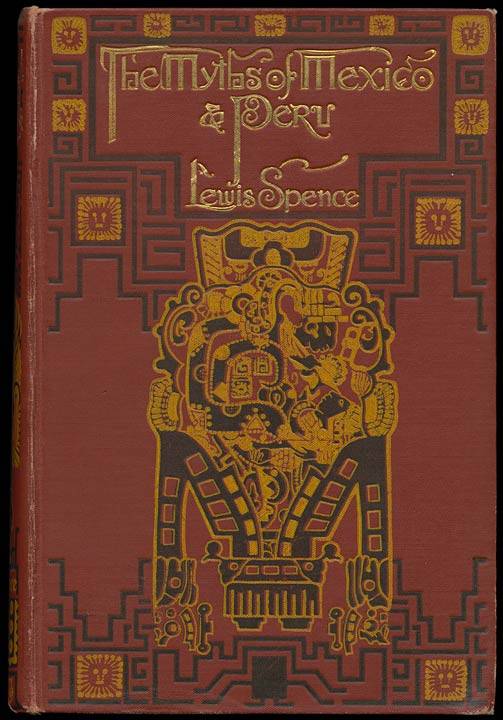
The Fire-God
This deity was known in Mexico under various names, notably Tata (Our Father), Huehueteotl (Oldest of Gods), and Xiuhtecutli (Lord of the Year). He was represented as of the colour of fire, with a black face, a headdress of green feathers, and bearing on his back a yellow serpent, to typify the serpentine nature of fire. He also bore a mirror of gold to show his connection with the sun, from which all heat emanates. On rising in the morning all Mexican families made Xiuhtecutli an offering of a piece of bread and a drink. He was thus not only, like Vulcan, the god of thunderbolts and conflagrations, but also the milder deity of the domestic hearth. Once a year the fire in every Mexican house was extinguished, and rekindled by friction before the idol of Xiuhtecutli. When a Mexican baby was born it passed through a baptism of fire on the fourth day, up to which time a fire, lighted at the time of its birth, was kept burning in order to nourish its existence.