
The Project Gutenberg eBook of The Ocean World: Being a Description of the Sea and Its Living Inhabitants.
Title: The Ocean World: Being a Description of the Sea and Its Living Inhabitants.
Author: Louis Figuier
Contributor: Charles Ottley Groom Napier
Release date: December 11, 2014 [eBook #47626]
Most recently updated: October 24, 2024
Language: English
Credits: Produced by Chris Curnow, Jane Robins and the Online
Distributed Proofreading Team at http://www.pgdp.net (This
file was produced from images generously made available
by The Internet Archive)
THE OCEAN WORLD.
LONDON: PRINTED BY WILLIAM CLOWES AND SONS, STAMFORD STREET AND CHARING CROSS.
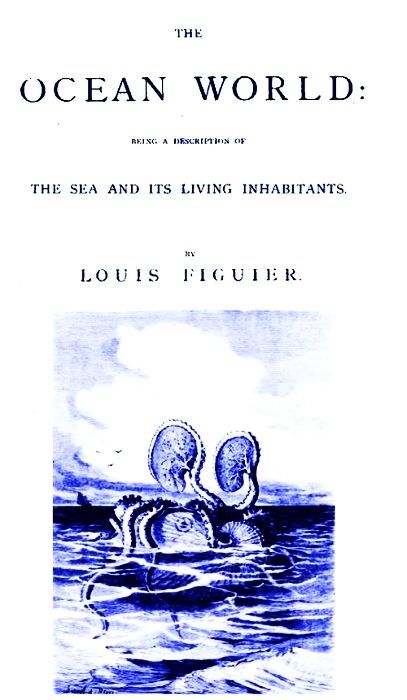
Plate I.—The Argonaut sailing in the open sea.
THE
OCEAN WORLD:
BEING A DESCRIPTION OF
THE SEA AND ITS LIVING INHABITANTS.
BY
LOUIS FIGUIER.
THE CHAPTERS ON CONCHOLOGY REVISED AND ENLARGED
BY CHARLES O. GROOM-NAPIER, F.G.S., &c.
WITH 427 ILLUSTRATIONS.
LONDON:
CASSELL, PETTER, AND GALPIN;
AND 596, BROADWAY, NEW YORK.
PREFACE.
"Our Planet is surrounded by two great oceans," says Dr. Maury, the eminent American savant: "the one visible, the other invisible; one is under foot, the other over head. One entirely envelopes it, the other covers about two-thirds of its surface." It is proposed in "The Ocean World" to give a brief record of the Natural History of one of those great oceans and its living inhabitants, with as little of the nomenclature of Science, and as few of the repulsive details of Anatomy, as is consistent with clearness of expression; to describe the ocean in its majestic calm and angry agitation; to delineate its inhabitants in their many metamorphoses; the cunning with which they attack or evade their enemies; their instructive industry; their quarrels, their combats, and their loves.
The learned Schleiden eloquently paints the living wonders of the deep: "If we dive into the liquid crystal of the Indian Ocean, the most wondrous enchantments are opened to us, reminding us of the fairy tales of childhood's dreams. The strangely-branching thickets bear living flowers. Dense masses of Meandrineas and Astreas contrast with the leafy, cup-shaped expansions of the Explanarias, and the variously-branching Madrepores, now spread out like fingers, now rising in trunk-like branches, and now displaying an elegant array of interlacing tracery. The colouring surpasses everything; vivid greens alternate with brown and yellow; rich tints, ranging from purple and deepest blue to a pale reddish-brown. Brilliant rose, yellow, or peach-coloured Nullipores overgrow the decaying masses: they themselves being interwoven with the pearl-coloured plates of the Retipores, rivalling the most delicate ivory carvings. Close by wave the yellow and lilac Sea-fans (Gorgonia), perforated like delicate trellis-work. The bright sand of the bottom is covered with a thousand strange forms of sea-urchins and star-fishes. The leaf-like Flustræ and Escharæ adhere like mosses and lichens to the branches of coral—the yellow, green, and purple-striped limpets clinging to their trunks. The sea-anemones expand their crowns of tentacula upon the rugged rocks or on flat sands, looking like beds of variegated ranunculuses, or sparkling like gigantic cactus blossoms, shining with brightest colours.
"Around the branches of the coral shrubs play the humming-birds of the ocean: little fishes sparkling with red or blue metallic glitter, or gleaming in golden green or brightest silvery lustre; like spirits of the deep, the delicate milk-white jelly-fishes float softly through the charmed world. Here gleam the violet and gold-green Isabelle, and the flaming yellow, black, and vermilion-striped Coquette, as they chase their prey; there the band-fish shoots snake-like through the thicket, resembling a silvery ribbon glittering with rose and azure hue. Then come the fabulous cuttle-fishes, in all the diaphanous colours of the rainbow, but with no definite outline.
"When day declines, with the shades of night this fantastic garden is lighted up with renewed splendour. Millions of microscopic medusæ and crustaceans, like so many glowing sparks, dance through the gloom. The Sea-pen waves in a greenish phosphorescent light. Whatever is beautiful or wondrous among fishes, Echinoderms, jelly-fishes and polypi and molluscs, is crowded into the warm and crystal waters of the Tropical ocean."
It is stated on the Title-page that "The Ocean World" is chiefly translated from M. Louis Figuier's two most recent works. In justice to that gentleman, we must explain this statement. The History of the Ocean is to a large extent, but not wholly, compiled from "La Terre et les Mers," one of the volumes of M. Figuier's "Tableau de la Nature;" but the larger portion of the work is a free translation of that author's latest work, "La Vie et les Mœurs des Animaux." Other chapters, such as "Life in the Ocean," the chapter on Crustaceans, and some others, are compiled from various sources; they will not be found in either of M. Figuier's volumes; but in other respects his text has been pretty closely followed.
M. Figuier's plan is to begin the study of animals with the less perfect beings occupying the lower rounds of the Zoological ladder, his reason for doing so being an impression that the presence of the gradually perfecting animal structure, from the simplest organisms up to the more perfect forms, was specially calculated to attract the reader. "What can be more curious or more interesting to the mind," he asks, "than to examine the successive links in the uninterrupted chain of living beings which commence with the Infusoria and terminate in Man?"
The work, he hopes, is not without the impress of a true character of novelty and originality; at least he knows no work in which the strange habits and special interests of the Zoophytes and Molluscs can be studied, nor any work in which an attempt is made to represent them by means of designs at once scientifically correct and attractive from the picturesque character of the illustrations, most of which have been made from specimens selected by Monsieur Ch. Bévalet from the various museums in Paris.
One of those charming plain-speaking children we sometimes meet with lately said to M. Figuier, "They tell me thou art a vulgariser of Science. What is that?"
He took the child in his arms, and carried it to the window, where there was a beautiful rose-tree in blossom, and invited it to pull a rose. The child gathered the perfumed flower, not without pricking itself cruelly with the spines; then, with its little hands still bleeding, it went to distribute roses to others in the room.
"Thou art now a vulgariser," said he to the child; "for thou takest to thyself the thorns, and givest the flowers to others!"
The parallel, although exaggerated, is not without its basis of truth, and was probably suggested by the criticism some of his works have met with; the critics forgetting apparently that these works are an attempt to render scientific subjects popular, and attractive to the general reader.
In the present edition of "The Ocean World" it is only necessary to add to the above (dated January, 1868), that the work has been revised throughout, and some not unimportant errors corrected. For several of these I am indebted to Mr. C. O. G. Napier, who has rearranged the whole of the Mollusca. Mr. David Grieve has kindly revised and added to the Crustacea; and to the Messrs. Johnston of Montrose, and Dr. Wilson Johnston of the Bengal service, I am indebted for some valuable practical information respecting the salmon and the various modes of taking it.
W. S. O.
March 1, 1869.
CONTENTS.
| PAGE | |
| CHAPTER I. | |
| The Ocean | 1 |
| Depth of the Sea 5 | |
| Colour of the Ocean | 11 |
| Phosphorescence | 13 |
| Saltness of the Sea | 15 |
| CHAPTER II. | |
| Currents of the Ocean | 27 |
| Trade-winds | 28 |
| Gulf Stream | 31 |
| Storms | 32 |
| Tides | 35 |
| Polar Seas | 43 |
| Antarctic Seas | 50 |
| CHAPTER III. | |
| Life in the Ocean | 60 |
| CHAPTER IV. | |
| Zoophytes | 68 |
| Foraminifera | 87 |
| Infusoria | 97 |
| CHAPTER V. | |
| Polypifera | 116 |
| CHAPTER VI. | |
| Corallines | 119 |
| Tubiporinæ | 120 |
| Gorgoniadæ | 121 |
| Isidians | 124 |
| CHAPTER VII. | |
| Zoantharia | 147 |
| Madreporidæ | 149 |
| Porites | 162 |
| Actiniaria | 181 |
| Minyadinians | 193 |
| CHAPTER VIII. | |
| Acalephæ | 195 |
| Medusadæ | 213 |
| Rhizostoma | 219 |
| Vilelladæ | 229 |
| Ctenophora | 254 |
| CHAPTER IX. | |
| Echinodermata | 259 |
| Asterias | 260 |
| Crinoidea | 270 |
| Echinidæ | 280 |
| MOLLUSCA. | |
| General Definition | 301 |
| CHAPTER X. | |
| Molluscoida | 303 |
| Tunicata | 309 |
| Ascidians | 309 |
| CHAPTER XI. | |
| Acephalous Mollusca | 316 |
| Acephalous Mollusca | 316 |
| CHAPTER XII. | |
| Acephalous Mollusca | 344 |
| Mytilidæ | 344 |
| CHAPTER XIII. | |
| Cephalous Mollusca | 391 |
| Their Characteristics | 391 |
| CHAPTER XIV. | |
| Pulmonary Gasteropods | 396 |
| Limnæidæ | 397 |
| Buccinidæ | 428 |
| Purpura | 430 |
| Pterocera | 439 |
| CHAPTER XV. | |
| Molluscous Pteropods | 441 |
| CHAPTER XVI. | |
| Cephalopodous Mollusca | 445 |
| Tentaculifera | 445 |
| Acetabula | 448 |
| CHAPTER XVII. | |
| Crustaceans | 477 |
| General Definition | 477 |
| Crabs and Crayfish | 486 |
| Lobsters | 496 |
| CHAPTER XVIII. | |
| Fishes | 502 |
| Cartilaginous Fishes | 508 |
| Cyclostomata | 508 |
| Selachia | 510 |
| Sturiona | 524 |
| CHAPTER XIX. | |
| Ossei, Or Bony Fishes | 529 |
| Plectognathi | 529 |
| Lophobranchii | 534 |
| Malacopterygii | 536 |
| Abdominales | 560 |
| Acanthopterygians | 590 |
| Pharyngeans | 596 |
ILLUSTRATIONS.
| PAGE | ||
| I. | The Argonaut Sailing Before the Wind | (Frontispiece) 467 |
| II. | Sponge Fishing on the Coast of Syria | 78 |
| III. | Coral Fishing on the Coast of Sicily | 138 |
| IV. | Coral Island in the Pomotouan Archipelago | 169 |
| V. | Sea Anemones (I.) | 187 |
| VI. | Sea Anemones (II.) | 189 |
| VII. | Agalma Rubra | 239 |
| VIII. | Galeolaria Aurantiaca | 244 |
| IX. | Sea-urchins | 290 |
| X. | Fishing for Holothuria | 295 |
| XI. | Synapta Duvernæea | 299 |
| XII. | Dredging for Oysters | 374 |
| XIII. | Oyster Parks on Lake Fusaro | 376 |
| XIV. | Pectinidæ | 386 |
| XV. | Spondylus | 388 |
| XVI. | Anodonta | 340 |
| XVII. | Tridacna Gigantea | 338 |
| XVIII. | Venus and Cytherea | 336 |
| XIX. | Solenidæ (Razor-fish) | 333 |
| XX. | Temple of Serapis | 330 |
| XXI. | Conus | 427 |
| XXII. | Cypræadæ | 421 |
| XXIII. | Voluta | 426 |
| XXIV. | Capture of a Gigantic Cuttle-fish | 462 |
| XXV. | Shark Fishing | 520 |
| XXVI. | Sturgeon Fishing on the Volga | 528 |
| XXVII. | Fishing for Electrical Eels | 539 |
| XXVIII. | Greenlanders Fishing for Halibut | 551 |
| XXIX. | The Herring Fishery | 580 |
| XXX. | A Roman Feast | 593 |
| XXXI. | Fishing for Tunny in Provence | 598 |
| XXXII. | Fishing for Mackerel Off the Cornwall Coast | 601 |
CHAPTER I.
THE OCEAN.
Ἄοιστον μὲν ὔδωρ—"The best of all things is water."—Pindar.
It is estimated that the sea covers nearly two-thirds of the surface of the earth. The calculation, as given by astronomers, is as follows: The surface of the earth is 31,625,625½ square miles, that portion occupied by the waters being about 23,814,121 square miles, and that consisting of continents, peninsulas, and islands, being 7,811,504 miles; whence it follows that the surface covered with water is to dry land as 3·8 is to 1·2. The waters thus cover a little more than seven-tenths of the whole surface. "On the surface of the globe," Michelet remarks, "water is the rule, dry land the exception."
Nevertheless, the immensity and depth of the seas are aids rather than obstacles to the intercourse and commerce of nations; the maritime routes are now traversed by ships and steamers conveying cargoes and passengers equal in extent to the land routes. One of the features most characteristic of the ocean is its continuity; for, with the exception of inland seas, such as the Caspian, the Dead Sea, and some others, the ocean is one and indivisible. As the poet says, "it embraces the whole earth with an uninterrupted wave."
The mean depth of the sea is not very exactly ascertained, but certain phenomena observed in the movement of tides are supposed to be incapable of explanation without admitting a mean depth of three thousand five hundred fathoms. It is true that a great number of deep-sea soundings fall short of that limit; but, on the other hand, many others reach seven or eight thousand. Admitting that three thousand fathoms represents the mean depth of the ocean, Sir John Herschel finds that the volume of its waters would exceed three thousand two hundred and seventy-nine million cubic yards.
This vast volume of water is divided by geographers into five great oceans: the Arctic, the Atlantic, Indian, Pacific, and Antarctic Oceans.
The Arctic Ocean extends from the Pole to the Polar Circle; it is situated between Asia, Europe, and America.
The Atlantic Ocean commences at the Polar Circle and reaches Cape Horn. It is situated between America, Europe, and Africa, a length of about nine thousand miles, with a mean breadth of two thousand seven hundred, covering a surface of about twenty-five million square miles, placed between the Old World and the New. Beyond the Cape of Storms, as Cape Horn may be truly called, it is only separated by an imaginary line from the vast seas of the south, in which the waves, which are the principal source of tides, have their birth. Here, according to Maury, the young tidal wave, rising in the circumpolar seas of the south, and obedient to the sun and moon, rolls on to the Atlantic, and in twelve hours after passing the parallel of Cape Horn is found pouring its flood into the Bay of Fundy, whence it is projected in great waves across the Atlantic and round the globe, sweeping along its shores and penetrating its gulfs and estuaries, rising and falling in the open sea two or three feet, but along the shore having a range of ten or twelve feet. Sometimes, as at Fundy on the American coast; at Brest on the French coast; and Milford Haven, and the mouth of the Severn in the Bristol Channel, rising and falling thirty or forty feet, "impetuously rushing against the shores, but gently stopping at a given line, and flowing back to its place when the word goes forth, 'Thus far shalt thou go, and no farther.' That which no human power can repel, returns at its appointed time so regularly and surely, that the hour of its approach and the measure of its mass may be predicted with unerring certainty centuries beforehand."
The Indian Ocean is bounded on the north by Asia, on the west by Africa, on the east by the peninsula of Molucca, the Sunda Isles, and Australia.
The Pacific, or Great Ocean, stretches from north to south, from the Arctic to the Antarctic Circle, being bounded on one side by Asia, the island of Sunda, and Australia; on the other by the west coast of America. This ocean contrasts in a striking manner with the Atlantic: the one has its greatest length from north to south, the other from east to west; the currents of the Pacific are broad and slow, those of the other narrow and rapid; the waves of this are low, those of the other very high. If we represent the volume of water which falls into the Pacific by one, that received by the Atlantic will be represented by the figure 5. The Pacific is the calmest of seas, and the Atlantic Ocean is the most stormy.
The Antarctic Ocean extends from the Antarctic Polar Circle to the South Pole.
It is remarkable that one half of the globe should be entirely covered with water, whilst the other contains less of water than dry land. Moreover, the distribution of land and water, if, in considering the germ of the oceanic basins, we compare the hemispheres separated by the Equator and the northern and southern halves of the globe, is found to be very unequal.
Oceans communicate with continents and islands by coasts, which are said to be scarped when a rocky coast makes a steep and sudden descent to the sea, as in Brittany, Norway, and the west coast of the British Islands. In this kind of coast certain rocky indentations encircle it, sometimes above, sometimes under water, forming a labyrinth of islands, as at the Land's End, Cornwall, where the Scilly Islands form a compact group of from one to two hundred rocky islets, rising out of a deep sea; or in the case of the Channel, on the opposite coast of France, where the coast makes a sudden descent, forming steep cliffs and leaving an open sea. The coast is said to be flat when it consists of soft argillaceous soil descending to the shore with a gentle slope. Of this description of coast there are two, namely, sandy beaches, and hillocks or dunes.
What is the average depth of the sea? It is difficult to give an exact answer to this question, because of the great difficulty met with in taking soundings, caused chiefly by the deviations of submarine currents. No reliable soundings have yet been made in water over five miles in depth.
Laplace found, on astronomical consideration, that the mean depth of the ocean could not be more than ten thousand feet. Alexander von Humboldt adopts the same figures. Dr. Young attributes to the Atlantic a mean depth of a thousand yards, and to the Pacific, four thousand. Mr. Airy, the Astronomer Royal, has laid down a formula, that waves of a given breadth will travel with certain velocities at a given depth, from which it is estimated that the average depth of the North Pacific, between Japan and California, is two thousand one hundred and forty-nine fathoms, or two miles and a half. But these estimates fall far short of the soundings reported by navigators, in which, as we shall see, there are important and only recently discovered elements of error. Du Petit Thouars, during his scientific voyage in the frigate Venus, took some very remarkable soundings in the Southern Pacific Ocean: one, without finding bottom at two thousand four hundred and eleven fathoms; another, in the equinoctial region, indicated bottom at three thousand seven hundred and ninety.
In his last expedition, in search of a north-west passage, Captain Ross found soundings at five thousand fathoms. Lieutenant Walsh, of the American Navy, reports a cast of the deep-sea lead, not far from the American coast, at thirty-four thousand feet without bottom. Lieutenant Berryman reported another unsuccessful attempt to fathom mid ocean with a line thirty-nine thousand feet in length. Captain Denman, of H. M. S. Herald, reported bottom in the South Atlantic at the depth of forty-six thousand feet; and Lieutenant J. P. Parker, of the United States frigate Congress, on attempting soundings near the same region, let go his plummet, after it had run out a line fifty thousand feet long, as if the bottom had not been reached. We have the authority of Lieutenant Maury for saying, however, that "there are no such depths as these." The under-currents of the deep sea have power to take the line out long after the plummet has ceased to sink, and it was before this fact was discovered that these great soundings were reported. It has also been discovered that the line, once dragged down into the depths of the ocean, runs out unceasingly. This difficulty was finally overcome by the ingenuity of Midshipman Brooke. Under the judicious patronage of the Secretary to the United States Navy, Mr. Brooke invented the simple and ingenious apparatus (Fig. 1), by which soundings are now made, in a manner which not only establishes the depth, but brings up specimens of the bottom. The sounding-line in this apparatus is attached to a weighty rod of iron, the lower extremity of which contains a hollow cup for the reception of tallow or some other soft substance. This rod is passed through a hole in a thirty-two pound spherical shot, being supported in its position by slings A, which are hooked on to the line by the swivels a. When the rod strikes the bottom, the tension on the line ceases, the swivels are reversed, the slings B are thrown out of the hooks, the ball falls to the ground, and the rod, released from its weight, is easily drawn up, bringing with it portions of the bottom attached to the greasy substance in the cup. By means of this apparatus, specimens of the bottom have been brought up from the depth of four miles.
Fig. 1. Brooke's Sounding Apparatus.
The greatest depth at which the bottom has been reached with this plummet is in the North Atlantic between the parallels of thirty-five and forty degrees north, and immediately south of the great bank of rocks off Newfoundland. This does not appear to be more than twenty-five thousand feet deep. "The basin of the Atlantic," says Maury, "according to the deep-sea soundings in the accompanying diagram, is a long trough separating the Old World from the New, and extending, probably, from pole to pole. In breadth, it contrasts strongly with the Pacific Ocean. From the top of Chimborazo to the bottom of the Atlantic, at the deepest place yet reached by the plummet in that ocean, the distance in a vertical line is nine miles."
"Could the waters of the Atlantic be drawn off, so as to expose to view this great sea gash which separates continents, and extends from the Arctic to the Antarctic Seas, it would present a scene the most rugged, grand, and imposing; the very ribs of the solid earth with the foundations of the sea would be brought to light, and we should have presented to us in one view, in the empty cradle of the ocean, 'a thousand fearful wrecks,' with the array of 'dead men's skulls, great anchors, heaps of pearls, and inestimable stones,' which, in the poet's eye, lie scattered on the bottom of the sea, making it hideous with the sight of ugly death."
The depth of the Mediterranean is comparatively inconsiderable. Between Gibraltar and Ceuta, Captain Smith estimates the depth at about five thousand seven hundred feet, and from one to three thousand in the narrower parts of the straits. Near Nice, Saussure found bottom at three thousand two hundred and fifty. It is said that the bottom is shallower in the Adriatic, and does not exceed a hundred and forty feet between the coast of Dalmatia and the mouths of the Po.
The Baltic Sea is remarkable for its shallow waters, its maximum rarely exceeding six hundred feet.
It thus appears that the sea has similar inequalities to those observed on land; it has its mountains, valleys, hills, and plains.
The Deep-sea Sounding Apparatus of Lieutenant Brooke has already furnished some very remarkable results. Aided by it, Dr. Maury has constructed his fine orographic map of the basin of the Atlantic, which is probably as exact as the maps which represent Africa or Australia. Dr. Maury has also published many charts, giving the depths of the ocean, the substance of which is given in the accompanying map, which represents the configuration of the Atlantic up to the tenth degree of south latitude, not in figures, as in Dr. Maury's charts, but in tints; diagonal lines from right to left, representing the shores of both hemispheres, indicate a depth of less than a thousand fathoms; from left to right, indicate bottom at one thousand to two thousand; horizontal lines, two to three thousand fathoms; cross lines show an average depth of three to four thousand fathoms; finally, the perpendicular lines indicate a depth of four thousand fathoms and upwards. Solid black indicates continents and islands; waving lines, surrounding both continents at a short distance from the shore, indicate the sands which surround the coast line at a little distance from the shore.