

About This Book
An extended manual examines the conductor's responsibilities, techniques, and influence on orchestral performance. It argues that a conductor can make or ruin a composition, describes the requisite perceptual and technical skills—hearing, sight, score-reading, instrumental knowledge, clear beat and expressive leadership—and contrasts the comparative simplicity of steady symphonic works with the greater demands of opera and pieces with irregular pauses. Practical instruction covers rehearsal management, time-beating mechanics, tempo choices, coordination with singers and percussion, and the personal charisma needed to transmit feeling and organize limited resources efficiently.
About the Author

More Books by This Author
6 picks
 A travers chants: études musicales, adorations, boutades et critiques
by Hector Berlioz
A travers chants: études musicales, adorations, boutades et critiques
by Hector Berlioz
 Correspondance inédite de Hector Berlioz, 1819-1868
by Hector Berlioz
Correspondance inédite de Hector Berlioz, 1819-1868
by Hector Berlioz
 Le chef d'orchestre: théorie de son art
by Hector Berlioz
Le chef d'orchestre: théorie de son art
by Hector Berlioz
 Les grotesques de la musique
by Hector Berlioz
Les grotesques de la musique
by Hector Berlioz
 Les musiciens et la musique
by Hector Berlioz
Les musiciens et la musique
by Hector Berlioz
 Les soirées de l'orchestre
by Hector Berlioz
Les soirées de l'orchestre
by Hector Berlioz
You May Also Like
6 picks
 A Book of Operas: Their Histories, Their Plots, and Their Music
by Henry Edward Krehbiel
A Book of Operas: Their Histories, Their Plots, and Their Music
by Henry Edward Krehbiel
 A book of the west. Volume 1, Devon
by S. Baring-Gould
A book of the west. Volume 1, Devon
by S. Baring-Gould
 A Complete History of Music / for Schools, Clubs, and Private Reading
by W. J. Baltzell
A Complete History of Music / for Schools, Clubs, and Private Reading
by W. J. Baltzell
 A Croatian composer
by W. H. Hadow
A Croatian composer
by W. H. Hadow
 A Day with Felix Mendelssohn Bartholdy
by George Sampson
A Day with Felix Mendelssohn Bartholdy
by George Sampson
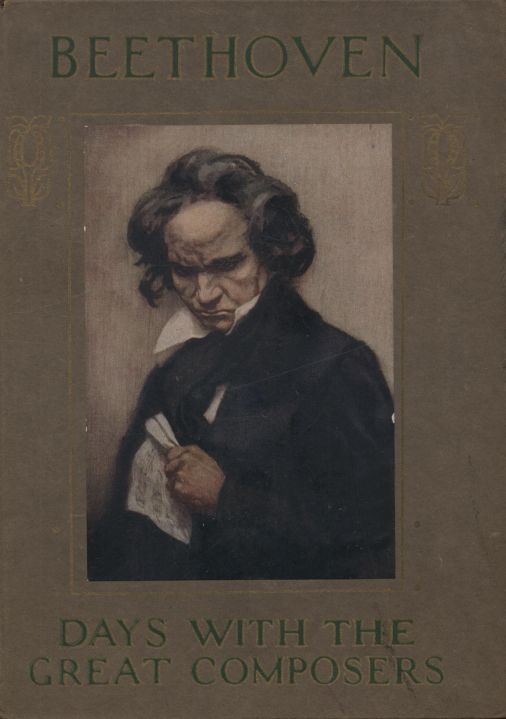 A Day with Ludwig Beethoven
by May Byron
A Day with Ludwig Beethoven
by May Byron