
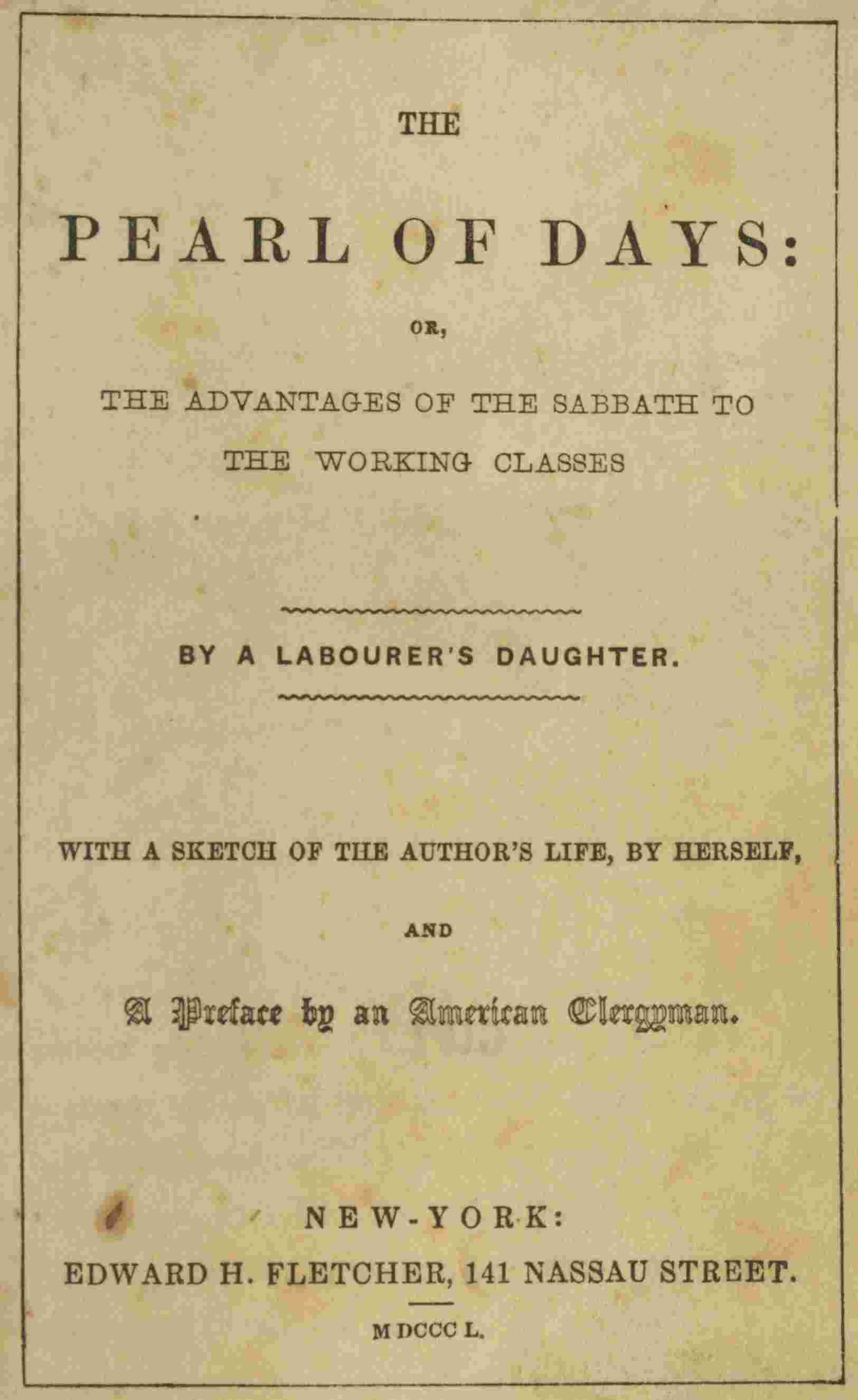
The Project Gutenberg eBook of The pearl of days
This ebook is for the use of anyone anywhere in the United States and
most other parts of the world at no cost and with almost no restrictions
whatsoever. You may copy it, give it away or re-use it under the terms
of the Project Gutenberg License included with this ebook or online
at www.gutenberg.org. If you are not located in the United States,
you will have to check the laws of the country where you are located
before using this eBook.
Title: The pearl of days
or, The advantages of the Sabbath to the working classes
Author: Barbara H. Farquhar
Engraver: active 1848-1863 Elijah Whymper
Release date: May 6, 2025 [eBook #76029]
Language: English
Original publication: New York: Edward H. Fletcher, 1850
Credits: Mairi and the Online Distributed Proofreading Team at https://www.pgdp.net (This file was produced from images generously made available by The Internet Archive)
*** START OF THE PROJECT GUTENBERG EBOOK THE PEARL OF DAYS ***
The Pearl of Days.
“The Sundays of man’s life,
Threaded together on Time’s string,
Make bracelets to adorn the wife
Of the eternal glorious King.
On Sundays heaven’s door stands ope,
Blessings are plentiful and rife,
More plentiful than hope.”
George Herbert.