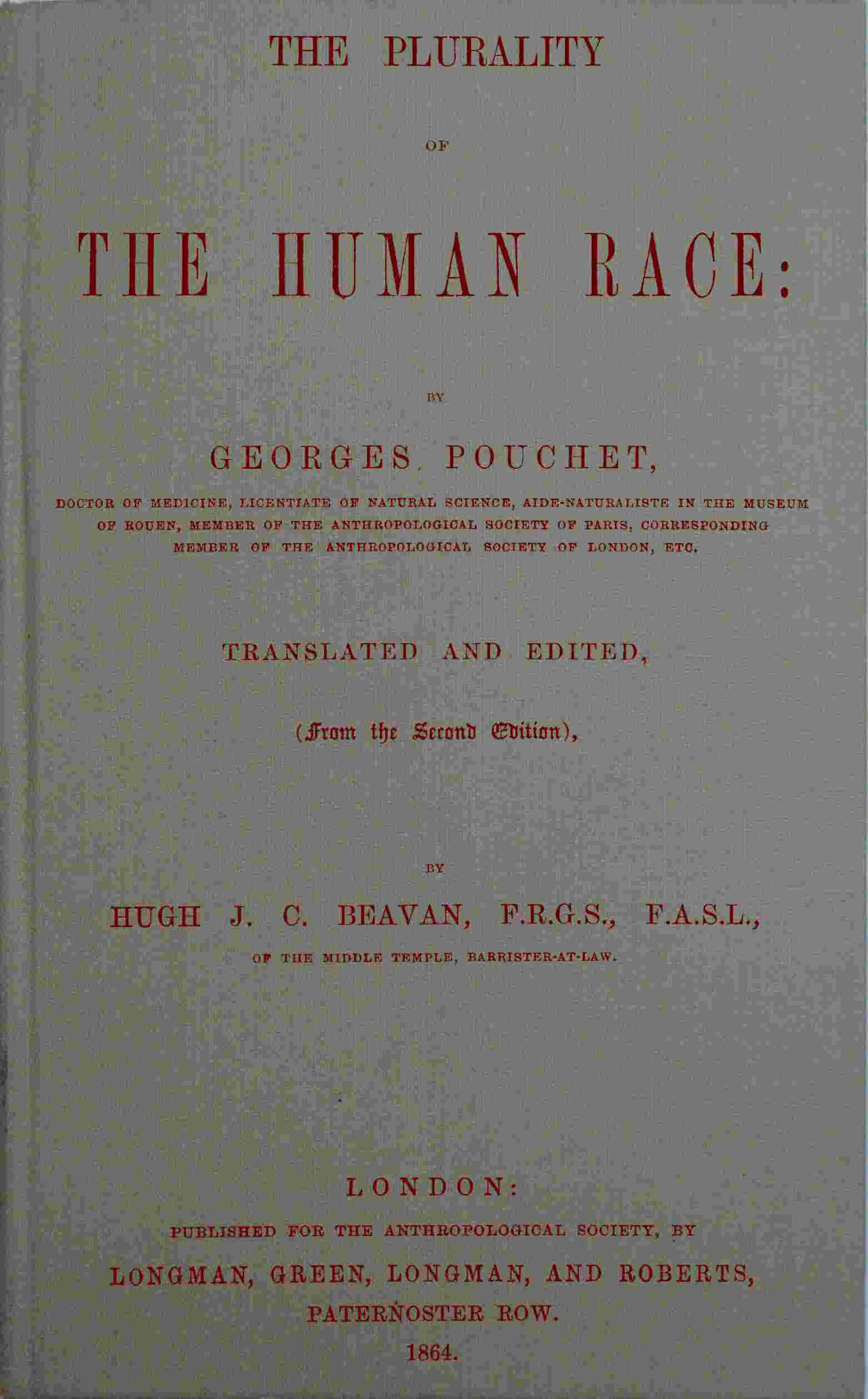
The work argues for the existence of distinct human groups and surveys evidence from anatomy, physiology, pathology, comparative psychology, language, and philology to map human variation. It assesses environmental factors such as climate and the effects of hybridization, examines species concepts and taxonomic systems, and weighs competing hypotheses about human origins, including contested ideas about spontaneous generation. The treatment combines empirical observations with theoretical discussion, aiming to classify human diversity and to debate how far biological and cultural traits support plurality rather than a single origin.