
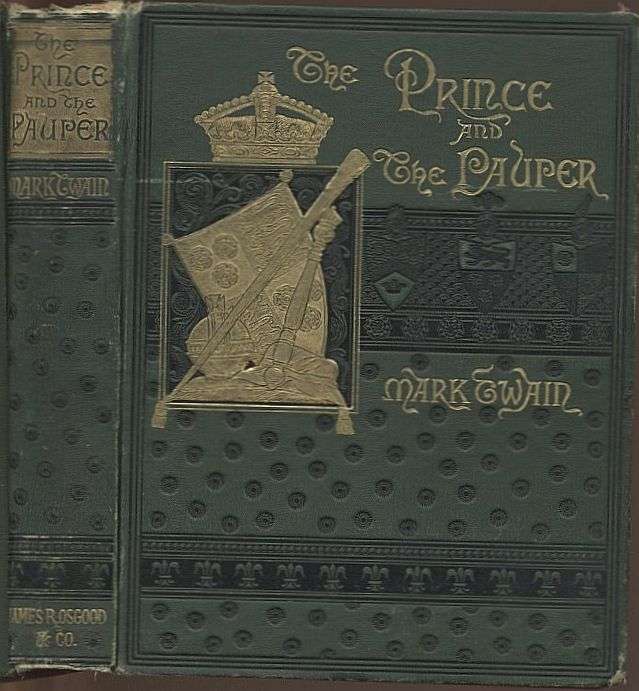
The Project Gutenberg eBook of The Prince and the Pauper
Title: The Prince and the Pauper
Author: Mark Twain
Release date: July 5, 2004 [eBook #1837]
Most recently updated: January 27, 2021
Language: English
Credits: Produced by David Widger. The earliest PG edition was prepared by
Les Bowler
THE PRINCE AND THE PAUPER
by Mark Twain
The Great Seal
I will set down a tale as it was told to me by one who had it of his father, which latter had it of HIS father, this last having in like manner had it of HIS father—and so on, back and still back, three hundred years and more, the fathers transmitting it to the sons and so preserving it. It may be history, it may be only a legend, a tradition. It may have happened, it may not have happened: but it COULD have happened. It may be that the wise and the learned believed it in the old days; it may be that only the unlearned and the simple loved it and credited it.
CONTENTS
| I. |
The birth of the Prince and the Pauper. |
| II. |
Tom’s early life. |
| III. |
Tom’s meeting with the Prince. |
| IV. |
The Prince’s troubles begin. |
| V. |
Tom as a patrician. |
| VI. |
Tom receives instructions. |
| VII. |
Tom’s first royal dinner. |
| VIII. |
The question of the Seal. |
| IX. |
The river pageant. |
| X. |
The Prince in the toils. |
| XI. |
At Guildhall. |
| XII. |
The Prince and his deliverer. |
| XIII. |
The disappearance of the Prince. |
| XIV. |
‘Le Roi est mort’—vive le Roi.‘ |
| XV. |
Tom as King. |
| XVI. |
The state dinner. |
| XVII. |
Foo-foo the First. |
| XVIII. |
The Prince with the tramps. |
| XIX. |
The Prince with the peasants. |
| XX. |
The Prince and the hermit. |
| XXI. |
Hendon to the rescue. |
| XXII. |
A victim of treachery. |
| XXIII. |
The Prince a prisoner. |
| XXIV. |
The escape. |
| XXV. |
Hendon Hall. |
| XXVI. |
Disowned. |
| XXVII. |
In prison. |
| XXVIII. |
The sacrifice. |
| XXIX. |
To London. |
| XXX. |
Tom’s progress. |
| XXXI. |
The Recognition procession. |
| XXXII. |
Coronation Day. |
| XXXIII. |
Edward as King. |
| CONCLUSION. |
Justice and Retribution. |
|
Notes. |
ILLUSTRATIONS
THE GREAT SEAL (frontispiece)
THE BIRTH OF THE PRINCE AND THE PAUPER
"SPLENDID PAGEANTS AND GREAT BONFIRES"
TOM’S EARLY LIFE
OFFAL COURT
"WITH
ANY MISERABLE CRUST"
"HE OFTEN READ
THE PRIEST’S BOOKS"
"SAW POOR
ANNE ASKEW BURNED"
"BROUGHT THEIR
PERPLEXITIES TO TOM"
"LONGING FOR THE
PORK-PIES”
TOM’S MEETING
WITH THE PRINCE
"AT TEMPLE BAR"
"LET HIM IN"
"HOW
OLD BE THESE
"DOFF THY RAGS, AND DON
THESE SPLENDORS"
"I SALUTE
YOUR GRACIOUS HIGHNESS!”
THE
PRINCE’S TROUBLES BEGIN
"SET
UPON BY DOGS"
"A DRUNKEN RUFFIAN
COLLARED HIM"
TOM AS A PATRICIAN
"NEXT HE DREW THE SWORD"
"RESOLVED TO FLY"
"THE
BOY WAS ON HIS KNEES"
"NOBLES WALKED
UPON EACH SIDE OF HIM"
"HE DROPPED
UPON HIS KNEES"
"HE TURNED WITH JOYFUL
FACE"
"THE PHYSICIAN BOWED LOW"
"THE KING FELL BACK UPON HIS COUCH"
"IS THIS MAN TO LIVE FOREVER?"
TOM RECEIVES INSTRUCTIONS
"PRITHEE, INSIST NOT"
"THE LORD ST. JOHN MADE REVERENCE"
HERTFORD AND THE PRINCESSES
"SHE MADE REVERENCE"
"OFFERED
IT TO HIM ON A GOLDEN SALVER"
"THEY
MUSED A WHILE"
"PEACE MY LORD, THOU
UTTEREST TREASON!”
"HE BEGAN TO
PACE THE FLOOR"
TOM’S FIRST
ROYAL DINNER
"FASTENED A NAPKIN ABOUT
HIS NECK"
"TOM ATE WITH HIS FINGERS"
"HE GRAVELY TOOK A DRAUGHT"
"TOM PUT ON THE GREAVES"
THE QUESTION OF THE SEAL
"EASED HIM BACK UPON HIS PILLOWS"
THE RIVER PAGEANT
"HALBERDIERS
APPEARED IN THE GATEWAY"
"TOM CANTY
STEPPED INTO VIEW"
THE PRINCE IN THE
TOILS
"A DIM FORM SANK TO THE GROUND"
"WHO ART THOU?"
"INTO
GOOD WIFE CANTY’S ARMS"
"BENT
HEEDFULLY AND WARILY OVER HIM"
"THE
PRINCE SPRANG UP"
"HURRIED HIM ALONG
THE DARK WAY"
"HE WASTE NO TIME"
AT GUILDHALL
"A
RICH CANOPY OF STATE"
"BEGAN TO LAY
ABOUT HIM"
"LONG LIVE THE KING!”
THE PRINCE AND HIS DELIVERER
"OUR FRIENDS THREADED THEIR WAY"
"OBJECT LESSONS” IN ENGLISH HISTORY
"JOHN CANTY MOVED OFF"
"SMOOTHING BACK THE TANGLED CURLS"
"PRITHEE, POUR THE WATER"
"GO ON—TELL ME THY STORY
"THOU HAST BEEN SHAMEFULLY ABUSED"
"HE DROPPED ON ONE KNEE"
"RISE, SIR MILES HENDON, BARONET"
THE DISAPPEARANCE OF THE PRINCE
"HE DROPPED ASLEEP"
"THESE
BE VERY GOOD AND SOUND"
"EXPLAIN, THOU
LIMB OF SATAN"
"HENDON FOLLOWED AFTER
HIM"
"LE ROI EST MORT-VIVE LE ROI"
"WILT DEIGN TO DELIVER THY COMMANDS?"
"LORD OF THE BEDCHAMBER"
"A SECRETARY OF STATE"
"STOOD AT GRACEFUL EASE"
”’TIS I THAT TAKE THEM"
"BUT TAX YOUR MEMORY"
TOM AS KING
"TOM
HAD WANDERED TO A WINDOW"
"TOM SCANNED
THE PRISONERS"
"LET THE PRISONER GO
FREE!”
"WHAT IS IT THAT THESE
HAVE DONE?"
"NODDED THEIR RECOGNITION"
THE STATE DINNER
"A
GENTLEMAN BEARING A ROD"
"THE
CHANCELLOR BETWEEN TWO"
"I THANK YOU
MY GOOD PEOPLE"
"IN THE MIDST OF HIS
PAGEANT"
FOO-FOO THE FIRST
"RUFFIAN FOLLOWED THEIR STEPS"
"HE SEIZED A BILLET OF WOOD"
"HE WAS SOON ABSORBED IN THINKING"
"A GRIM AND UNSIGHTLY PICTURE"
"THEY ROARED OUT A ROLLICKING DITTY"
"WHILST THE FLAMES LICKED UPWARDS"
"THEY WERE WHIPPED AT THE CART’S TAIL"
"THOU SHALT NOT"
"KNOCKING
HOBBS DOWN"
"THRONE HIM"
THE PRINCE WITH THE TRAMPS
"TROOP OF VAGABONDS SET FORWARD"
"THEY THREW BONES AND VEGETABLES
"WRITHE AND WALLOW IN THE DIRT"
"KING FLED IN THE OPPOSITE DIRECTION"
"HE STUMBLED ALONG"
"WHAT
SEEMED TO BE A WARM ROPE"
"CUDDLED UP
TO THE CALF"
THE PRINCE WITH THE
PEASANTS
"TOOK A GOOD SATISFYING
STARE"
"MOTHER RECEIVED THE KING
KINDLY"
"BROUGHT THE KING OUT OF HIS
DREAMS"
"GAVE HIM A BUTCHER KNIFE TO
GRIND"
THE PRINCE AND THE HERMIT
"HE TURNED AND DESCRIED TWO FIGURES"
"THE KING ENTERED AND PAUSED"
"I WILL TELL YOU A SECRET"
"CHATTING PLEASANTLY ALL THE TIME"
"DREW HIS THUMB ALONG THE EDGE"
"THE NEXT MOMENT THEY WERE BOUND"
HENDON TO THE RESCUE
"SUNK
UPON HIS KNEES"
"GOD MADE EVERY
CREATURE BUT YOU!”
"THE FETTERED
LITTLE KING"
A VICTIM OF TREACHERY
"HUGO STOOD NO CHANCE"
"BOUND THE POULTICE TIGHT AND FAST"
"TARRY HERE TILL I COME AGAIN
"KING SPRANG TO HIS DELIVERER’S SIDE"
THE PRINCE A PRISONER
"GENTLY, GOOD FRIEND"
"SHE SPRANG TO HER FEET"
THE ESCAPE
"THE PIG
MAY COST THY NECK, MAN"
"BEAR ME UP,
BEAR ME UP, SWEET SIR!”
HENDON
HALL
"JOGGING EASTWARD ON SORRY
STEEDS"
"THERE IS THE VILLAGE, MY
PRINCE!”
”’EMBRACE ME,
HUGH,’ HE CRIED"
"HUGH PUT UP
HIS HAND IN DISSENT"
"A BEAUTIFUL
LADY, RICHLY CLOTHED"
"HUGH WAS PINNED
TO THE WALL"
DISOWNED
"OBEY, AND HAVE NO FEAR"
"AM I MILES HENDON?"
IN
PRISON
"CHAINED IN A LARGE ROOM"
"THE OLD MAN LOOKED HENDON OVER"
"INFORMATION DELIVERED IN A LOW VOICE"
"THE KING!” HE CRIED. “WHAT KING?"
"TWO WOMEN CHAINED TO POSTS"
"TORN AWAY BY THE OFFICERS"
"THE KING WAS FURIOUS"
THE SACRIFICE
"HE
CONFRONTED THE OFFICER IN CHARGE"
"WHILE
THE LASH WAS APPLIED"
"SIR HUGH
SPURRED AWAY"
TO LONDON
"MOUNTED AND RODE OFF WITH THE KING"
"MIDST OF A JAM OF HOWLING PEOPLE"
TOM’S PROGRESS
"TO
KISS HIS HAND AT PARTING"
"COMMANDED
HER TO GO TO HER CLOSET"
THE
RECOGNITION PROCESSION
THE START FOR
THE TOWER
"WELCOME, O KING!”
"A LARGESS! A LARGESS!”
"SHE WAS AT HIS SIDE"
"IT IS AN ILL TIME FOR DREAMING"
"SHE WAS MY MOTHER"
CORONATION
DAY
"GATHERS UP THE LADY’S LONG
TRAIN"
"TOM CANTY APPEARED"
"AND FELL ON HIS KNEES BEFORE HIM"
"THE GREAT SEAL—FETCH IT HITHER"
"SIRE, THE SEAL IS NOT THERE"
"BETHINK THEE, MY KING"
"LONG LIVE THE TRUE KING!”
"TO CRACK NUTS WITH"
EDWARD
AS KING
"HE STRETCHED HIMSELF ON THE
GROUND"
"ARRESTED AS A SUSPICIOUS
CHARACTER"
"IT IS HIS RIGHT"
"STRIP THIS ROBBER"
"TOM ROSE AND KISSED THE KING’S HAND"
JUSTICE AND RETRIBUTION
NOTES
Chapter I. The birth of the Prince and the Pauper.
In the ancient city of London, on a certain autumn day in the second quarter of the sixteenth century, a boy was born to a poor family of the name of Canty, who did not want him. On the same day another English child was born to a rich family of the name of Tudor, who did want him. All England wanted him too. England had so longed for him, and hoped for him, and prayed God for him, that, now that he was really come, the people went nearly mad for joy. Mere acquaintances hugged and kissed each other and cried. Everybody took a holiday, and high and low, rich and poor, feasted and danced and sang, and got very mellow; and they kept this up for days and nights together. By day, London was a sight to see, with gay banners waving from every balcony and housetop, and splendid pageants marching along. By night, it was again a sight to see, with its great bonfires at every corner, and its troops of revellers making merry around them. There was no talk in all England but of the new baby, Edward Tudor, Prince of Wales, who lay lapped in silks and satins, unconscious of all this fuss, and not knowing that great lords and ladies were tending him and watching over him—and not caring, either. But there was no talk about the other baby, Tom Canty, lapped in his poor rags, except among the family of paupers whom he had just come to trouble with his presence.
Chapter II. Tom’s early life.
Let us skip a number of years.
London was fifteen hundred years old, and was a great town—for that day. It had a hundred thousand inhabitants—some think double as many. The streets were very narrow, and crooked, and dirty, especially in the part where Tom Canty lived, which was not far from London Bridge. The houses were of wood, with the second story projecting over the first, and the third sticking its elbows out beyond the second. The higher the houses grew, the broader they grew. They were skeletons of strong criss-cross beams, with solid material between, coated with plaster. The beams were painted red or blue or black, according to the owner’s taste, and this gave the houses a very picturesque look. The windows were small, glazed with little diamond-shaped panes, and they opened outward, on hinges, like doors.
The house which Tom’s father lived in was up a foul little pocket called Offal Court, out of Pudding Lane. It was small, decayed, and rickety, but it was packed full of wretchedly poor families. Canty’s tribe occupied a room on the third floor. The mother and father had a sort of bedstead in the corner; but Tom, his grandmother, and his two sisters, Bet and Nan, were not restricted—they had all the floor to themselves, and might sleep where they chose. There were the remains of a blanket or two, and some bundles of ancient and dirty straw, but these could not rightly be called beds, for they were not organised; they were kicked into a general pile, mornings, and selections made from the mass at night, for service.
Bet and Nan were fifteen years old—twins. They were good-hearted girls, unclean, clothed in rags, and profoundly ignorant. Their mother was like them. But the father and the grandmother were a couple of fiends. They got drunk whenever they could; then they fought each other or anybody else who came in the way; they cursed and swore always, drunk or sober; John Canty was a thief, and his mother a beggar. They made beggars of the children, but failed to make thieves of them. Among, but not of, the dreadful rabble that inhabited the house, was a good old priest whom the King had turned out of house and home with a pension of a few farthings, and he used to get the children aside and teach them right ways secretly. Father Andrew also taught Tom a little Latin, and how to read and write; and would have done the same with the girls, but they were afraid of the jeers of their friends, who could not have endured such a queer accomplishment in them.
All Offal Court was just such another hive as Canty’s house. Drunkenness, riot and brawling were the order, there, every night and nearly all night long. Broken heads were as common as hunger in that place. Yet little Tom was not unhappy. He had a hard time of it, but did not know it. It was the sort of time that all the Offal Court boys had, therefore he supposed it was the correct and comfortable thing. When he came home empty-handed at night, he knew his father would curse him and thrash him first, and that when he was done the awful grandmother would do it all over again and improve on it; and that away in the night his starving mother would slip to him stealthily with any miserable scrap or crust she had been able to save for him by going hungry herself, notwithstanding she was often caught in that sort of treason and soundly beaten for it by her husband.
No, Tom’s life went along well enough, especially in summer. He only begged just enough to save himself, for the laws against mendicancy were stringent, and the penalties heavy; so he put in a good deal of his time listening to good Father Andrew’s charming old tales and legends about giants and fairies, dwarfs and genii, and enchanted castles, and gorgeous kings and princes. His head grew to be full of these wonderful things, and many a night as he lay in the dark on his scant and offensive straw, tired, hungry, and smarting from a thrashing, he unleashed his imagination and soon forgot his aches and pains in delicious picturings to himself of the charmed life of a petted prince in a regal palace. One desire came in time to haunt him day and night: it was to see a real prince, with his own eyes. He spoke of it once to some of his Offal Court comrades; but they jeered him and scoffed him so unmercifully that he was glad to keep his dream to himself after that.
He often read the priest’s old books and got him to explain and enlarge upon them. His dreamings and readings worked certain changes in him, by- and-by. His dream-people were so fine that he grew to lament his shabby clothing and his dirt, and to wish to be clean and better clad. He went on playing in the mud just the same, and enjoying it, too; but, instead of splashing around in the Thames solely for the fun of it, he began to find an added value in it because of the washings and cleansings it afforded.
Tom could always find something going on around the Maypole in Cheapside, and at the fairs; and now and then he and the rest of London had a chance to see a military parade when some famous unfortunate was carried prisoner to the Tower, by land or boat. One summer’s day he saw poor Anne Askew and three men burned at the stake in Smithfield, and heard an ex-Bishop preach a sermon to them which did not interest him. Yes, Tom’s life was varied and pleasant enough, on the whole.
By-and-by Tom’s reading and dreaming about princely life wrought such a strong effect upon him that he began to act the prince, unconsciously. His speech and manners became curiously ceremonious and courtly, to the vast admiration and amusement of his intimates. But Tom’s influence among these young people began to grow now, day by day; and in time he came to be looked up to, by them, with a sort of wondering awe, as a superior being. He seemed to know so much! and he could do and say such marvellous things! and withal, he was so deep and wise! Tom’s remarks, and Tom’s performances, were reported by the boys to their elders; and these, also, presently began to discuss Tom Canty, and to regard him as a most gifted and extraordinary creature. Full-grown people brought their perplexities to Tom for solution, and were often astonished at the wit and wisdom of his decisions. In fact he was become a hero to all who knew him except his own family—these, only, saw nothing in him.