

The Profits of Religion: An Essay in Economic Interpretation
Explore more books like this:
About This Book
The author examines religion through an economic lens, arguing that supernatural belief and ecclesiastical institutions often function to concentrate wealth and shield privilege. A sequence of chapters surveys priesthoods, denominational hierarchies, revivalism, sects, and spiritualist movements, showing intersections with commerce, politics, and industry—from fundraising and tax exemption to moral rhetoric that legitimizes inequality. Investigative episodes explore clerical incomes, charitable practice, pseudo‑religious enterprises, and institutional graft, while later sections consider socially radical and reformist alternatives that would democratize religious life. The tone blends reportage, polemic, and theoretical critique to connect theological claims with material interests.
About the Author

More Books by This Author
 100%: the Story of a Patriot
by Upton Sinclair
100%: the Story of a Patriot
by Upton Sinclair
 A Cadet's Honor: Mark Mallory's Heroism
by Upton Sinclair
A Cadet's Honor: Mark Mallory's Heroism
by Upton Sinclair
 A Captain of Industry: Being the Story of a Civilized Man
by Upton Sinclair
A Captain of Industry: Being the Story of a Civilized Man
by Upton Sinclair
 A Prisoner of Morro; Or, In the Hands of the Enemy
by Upton Sinclair
A Prisoner of Morro; Or, In the Hands of the Enemy
by Upton Sinclair
 A West Point Treasure; Or, Mark Mallory's Strange Find
by Upton Sinclair
A West Point Treasure; Or, Mark Mallory's Strange Find
by Upton Sinclair
 Bill Porter
by Upton Sinclair
Bill Porter
by Upton Sinclair
You May Also Like
 A Brief History of Panics and Their Periodical Occurrence in the United States
by Clément Juglar
A Brief History of Panics and Their Periodical Occurrence in the United States
by Clément Juglar
 A Contribution to the Critique of Political Economy
by Karl Marx
A Contribution to the Critique of Political Economy
by Karl Marx
 A Critical Examination of Socialism
by W. H. Mallock
A Critical Examination of Socialism
by W. H. Mallock
 A Discourse on Trade, and Other Matters Relative to it
by John Cary
A Discourse on Trade, and Other Matters Relative to it
by John Cary
 A dissolução do regimen capitalista
by Teixeira Bastos
A dissolução do regimen capitalista
by Teixeira Bastos
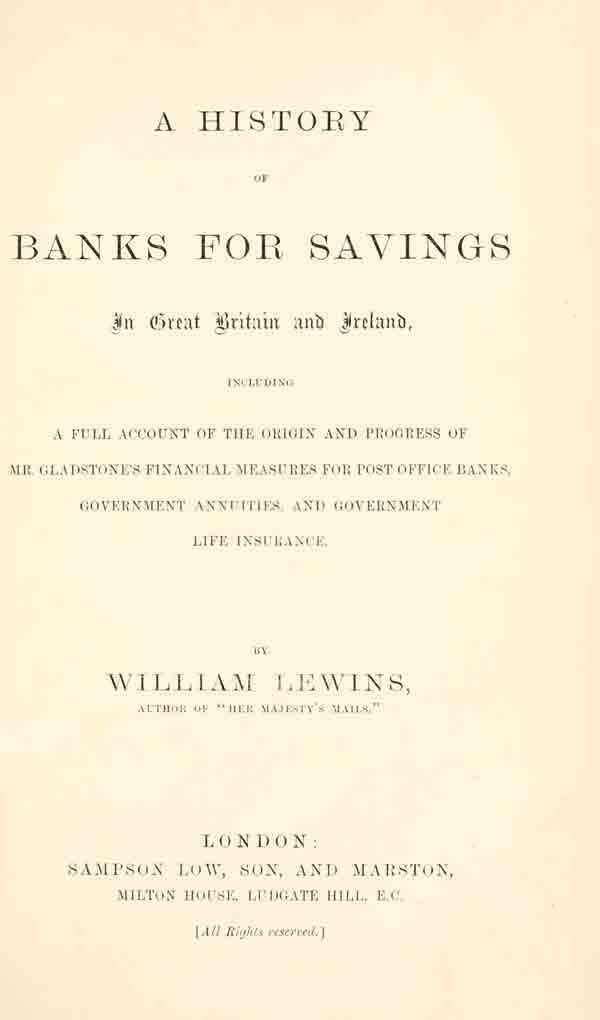 A History of Banks for Savings in Great Britain and Ireland
by William Lewins
A History of Banks for Savings in Great Britain and Ireland
by William Lewins