
CHAPTER XXIX
THREE CHEERS FOR THE RADIO BOYS
Mr. Hampton unlocked and opened the door, and greeted the big fellow as warmly as he had his own son.
"Where's Jack?" asked Bob. "Did they capture him?"
Jack, who was peeping from behind the four-poster, sprang into the room, and slapped his chum resoundingly on the back.
"Thought you were to stick by the airplane," he said, with mock severity.
Bob swung around, the worried look vanishing from his face.
"Hurray," he said. "So they didn't get you after all? When I saw you punch that fellow I thought your goose was cooked."
"Saw me punch him? Why, where were you?"
"Oh, I had followed you," said Bob. Then he explained.
"Then when the attack began," he added, "I flew around overhead until I saw my chance to return and land. I wasn't going to leave without you. Presently, the government troops were beaten at the north. That was only a feint on their part, anyhow, I believe, to engage the attention of the rebels. For at once, heavy shooting broke out farther down the valley. Sounded like the main body was attacking there. Then the rebels scooted down that way to repulse the new attack, and I took a chance and landed. Not a soul in sight. And here I am."
Jack was speechless. But the look in his eyes betrayed his emotion.
"Bob, I'm proud of you," said Mr. Hampton. "Well, let's hurry away before it is too late."
Rafaela stepped from her place of concealment.
"Aren't you going to say farewell?" she asked.
Bob looked at her in astonishment. Mr. Hampton, with a twinkle in his eye, viewed Jack ardently. The latter advanced with extended hand.
"Miss Calomares," he said, "I can't tell you how grateful I am. I hope we shall meet again."
"Miss Calomares?" muttered Bob, under his breath, his eyes on the beautiful girl. "Jack certainly has moved fast. I don't get this."
Mr. Hampton took pity on him.
"Miss Calomares," he said, leading Bob forward. "This is my son's chum. He came with him tonight in his airplane."
The girl held out her hand. Bob took it as in a daze.
"Pinch me," he said, in an aside to Jack.
All heard the remark, and laughed at Bob's mystification.
"Come," said Mr. Hampton, and once more moved toward the door. Once more, however, his steps were arrested by a noise outside. This time they heard the shouts of many men approaching the house and crying "Viva, Calomares."
"Too late," groaned Mr. Hampton. "They have driven off the attack, and are returning."
Rafaela uttered an exclamation.
"Oh, I must go to my room before papa discovers me here," she cried. She darted for the door, but paused to give them parting cheer. "Do not give up hope," she said. "They will drink a great deal, and then all will sleep very soundly. You may escape late tonight. Good-bye," and turning, she ran lightly down the steps.
Jack's eyes followed. At the turning, she paused, looked back, and waved to him, then disappeared.
"Now what will we do?" said Jack.
"You boys hide behind the bed," said Mr. Hampton. "I'll close the door, but I won't lock it this time, for on second thought I believe if it were locked and Calomares came up to see me—as he frequently does before retiring—it would make him suspicious. I shall leave it unlocked, and then he will believe he left it so himself in his haste."
"Dad," said Jack, "I have an idea."
"What is it? Out with it."
"Well, we are trapped here. Suppose we turn the tables."
"What do you mean?" asked Bob.
"Well, Dad," said Jack, turning to his father, "didn't you say Don Fernandez comes to call on you before retiring?"
"Yes, we have become good companions. He guards me carefully, keeps me a prisoner for his own ends, but he is a cultured man and we have much in common."
"Father says," asserted Bob, "that you are being held prisoner in order to make trouble between the United States and the Mexican government."
"He is correct," approved Mr. Hampton. "Don Fernandez has not attempted to conceal from me that that is his desire. He sent a demand for a preposterous ransom, merely in order to precipitate action at Washington, and he has been wondering why no action was taken."
"Well, that's what father thought," declared Bob. "So he has kept the matter of your being kidnapped a secret. Instead of appealing to our government, we set out to rescue you. Father says we must do our utmost to avert trouble between Mexico and the United States."
"So that accounts for many things," said Mr. Hampton. "I'm glad to have them cleared up. But we are forgetting your idea, Jack. What is it?"
"Simply that we capture Don Fernandez and make him release us all under a guarantee of safe conduct," said Jack.
"You see," he added, "Bob and I are both armed, and we can do it."
"Good for you, Jack," said Bob.
"I believe it can be done," said Mr. Hampton. "And here," he added, listening, "comes our opportunity, if I am not mistaken. You boys get behind the four-poster and wait until I give you your cue."
Noiselessly Mr. Hampton closed the door, as the boys went into hiding. Then the older man resumed his seat by the table, picked up his book, and appeared to be reading.
Quick, light footsteps sounded on the landing outside. There was a pause, while Don Fernandez searched his pockets for the key to the door. Unable to find it, he turned as if to depart. To three pairs of ears, straining to hear his every movement, the interpretation was clear. He believed he had locked the door and lost the key and was about to depart. Mr. Hampton saved the situation by raising his voice, and calling:
"Is that you, Don Fernandez? Will you not honor me by coming in? I am eager to learn what has occurred."
The Don decided to try the door. To his surprise, it opened to his touch. "I must have forgotten to lock it in my haste," he muttered, and stepped into the room.
"Government troops," he said, advancing, "They thought to surprise us but we have beaten them off decisively." He sat down heavily. "It has been strenuous work," he said. "But that is over. Now to find the assassin, if he has not already escaped."
"Assassin?" queried Mr. Hampton, in genuine surprise. He had not been told the Don's belief regarding Jack.
"Yes," said Don Fernandez, violently. "That miserable Obregon." And he proceeded to relate his version of Jack's arrival.
"Oh, but you are mistaken," said Mr. Hampton, coolly. "That was no assassin, but my son. He came to attempt to rescue me."
Don Fernandez leaped to his feet, as if shot upward by a spring.
"Your son?" he cried. "Came to rescue you? Preposterous. Then, why are you here?"
"Because," said Jack, stepping from hiding, with revolver leveled, "I wanted to meet you."
"Yes, and so did I," said Bob, not to be outdone, as he emerged, also with leveled weapon, from the other side of the four-poster.
Mr. Hampton quickly slipped the key into the lock of the door, turned it and drew back. Don Fernandez saw the action. He glared from one to the other of the three, and then sat down with a resigned shrug of the shoulders.
"You wanted to meet me?" he said. "I am honored. But, Mr. Hampton, there is not only one son but two!"
"Not exactly," said the American. "This lad"—laying a hand on Jack's shoulder—"is my son, the young man you pursued for a time tonight. This other"—placing his other hand on Bob's shoulder—"is my son's chum."
"Well," said Don Fernandez, the faintest suggestion of a twinkle in his eye, "now that you have met me, as you desired, what have you to say?"
"Just this," said Jack, boldly, "we want you to permit us to leave under safe conduct. We want to take father with us in Bob's airplane. Oh, yes, it was my chum's airplane which your men stole in Long Island. But we have gotten it back again."
"So?" said Don Fernandez. "Well, nothing surprises me tonight. And where, may I ask, are Morales and Von Arnheim? I see you are wearing their clothes."
"We have got them imprisoned," said Jack. "But we are in earnest, sir, about this. We are armed and have the upper hand, and we mean to have your protection. If you are armed, you had better give your weapon to father."
"As your father very well knows," said the Don, "I never carry weapons. And now"—with grave courtesy—"if you will permit me, young sir, I would like to speak privately with your father."
At a nod of agreement from his father, Jack withdrew to the door, followed by Bob, leaving the two older men in low-voiced conversation. They spoke animatedly, and to the anxious boys there came more than once a low chuckle of laughter from Don Fernandez while they could see Mr. Hampton beginning to smile. At length, Don Fernandez beckoned imperiously, and the boys approached.
He regarded them with twinkling eyes, but it was Mr. Hampton who acted as spokesman.
"Boys," said he, "Don Fernandez consents. But I do not believe he was influenced by fear for his life."
Don Fernandez stood up between the two chums, and put an arm over the shoulder of each—or, rather, tried to, as they towered above him.
"No, it was not fear," said he. "But Mr. Hampton has told me a little of what you have done, and I see it is useless to fight against Young America. You are fine fellows. If I had a son"—wistfully—"I would want him to be like you."
CHAPTER XXX
GOOD NEWS FOR ANXIOUS EARS
"Now to call Father," said big Bob.
He and Jack, escorted by several Mexicans of Don Fernandez' band who had been informed by the Don himself that the boys were friends who were to be treated with every respect, were approaching the radio station of the Calomares ranch.
Jack was exuberant. Plans for the rescue of his father from the stronghold of the rebel leader had not worked out just as proposed. Yet the wild adventure upon which he and Bob had embarked had come to a successful conclusion, after all. And he was correspondingly elated.
Jack and his father were close pals. And he knew that Bob and his father were the same. He threw an arm over the shoulder of his chum.
"Your father will certainly be relieved," he said. "I imagine he has been sitting up there at the radio station on our ranch in New Mexico for hours, waiting to hear from you. I can just see him in there, walking up and down impatiently, with that bow-legged old cowboy, Dave Morningstar, tilted back in a chair, with his hat down over; his eyes, smoking and never making a move."
"Won't he be delighted," said Bob. "Just won't he."
"And Frank, too," said Jack, thinking of the third chum, left behind at the cave.
"Good old Frank," said Bob, warmly. "We've got to tell him as soon as I've notified father."
"He certainly put up some fight, I'll bet," said Jack, thinking of the hurried radio reaching them from the cave as they neared the Calomares ranch in their airplane hours before. "And maybe he was hurt in that fight with Morales. He said he licked the Mexican, but that was all we heard. You remember? His voice was broken off after that."
"That's right," said Bob. "I hope nothing serious happened to him. What a shame it would be if he was hurt, while here we came through practically without a scratch."
All this time they had been walking across the starlit landing field, where could be seen Bob's airplane, and now they drew near the brightly-lighted radio station.
Entering the sending room they were confronted by Muller. That young German operator, whose perspicacity almost had caused their undoing and whom Jack earlier had floored with a blow on the chin, was sitting in a chair reading. He had returned to the station after the attack of the Mexican regulars had been beaten off.
Muller jumped to his feet, surprise giving way to anger, but before he could draw and level the revolver swinging at his hip, one of the Mexican guards accompanying the boys pushed them aside and thrust himself forward.
"None of that," he said in Spanish. "The General has commanded that these young Americanos be well treated. They are friends."
"Friends," muttered Muller, sullenly, nevertheless withdrawing his hand from the revolver butt. "That wasn't a very friendly way to treat me awhile ago."
He turned to Jack.
"And why, if you are friends," he demanded, "do you two appear in the clothing of Herr von Arnheim and Captain Morales?"
"A number of events have occurred," said Jack, quietly. "That is why. However, Don Fernandez has heard the tale, and that is sufficient. He has given orders personally to these soldiers that we shall be permitted to use the radio. That is why we are here."
"Is that so?" demanded Muller of the Mexican guards.
The spokesman of the pair nodded agreement.
"The General has so commanded," he said.
Grudgingly, Muller stepped aside. Here was a mystery, and he hated mysteries. Besides, these two youths were Americans. He was a German and although the war between their respective countries was at an end, he could not bring himself to entertain kindly feelings toward them. Like many Germans, he believed the United States responsible for the defeat of his fatherland in the World War. He was working in the ranks of Germans in Mexico to embroil the United States with that country. Such war, he believed, would strike a blow at the prestige of the hated Yankees.
"If the General has commanded," he said, stepping aside, "go ahead."
"Look here," said Jack, flushing at this grumpy attitude, but deciding to do the manly thing, nevertheless, and extending his hand, "let bygones be bygones."
After a moment's hesitation, Muller shook hands. To do him justice, it is only fair to point out that he was sincere in his attitude toward Americans, but misled.
"I haven't time to explain about that blow," said Jack, "but at the moment it was necessary. Matters have changed since then. It was nothing personal."
"Very well," said Muller, his grumpiness beginning to disappear beneath the charm of Jack's manner. "Say no more. Now what is it you want? Perhaps I can help you."
"We want to use the radio," said Jack, noting Bob's growing impatience at their delay.
"What station do you want to call?"
"The Hampton ranch," interrupted Bob, who decided it was time to bring this conversation to an end. He was in a hurry to talk with his father.
"Are you calling Rollins?"
This reminder of the erstwhile traitor at the Hampton ranch brought both boys to a realization that Muller was familiar with the manner of calling their station, as undoubtedly he had handled or conducted radio conversations with Rollins in the past.
"No, not Rollins," said Bob, shortly. It was all right for Jack to shake hands with Muller if he wanted to. Jack and Muller had been active opponents, and such an act was only sportsmanlike under the circumstances. But Bob disliked the young German on sight. "Just let me at the phone," he said, "and turn on the juice."
"Very well."
Muller turned stiffly and entered the power plant adjacent, while Bob in a fever adjusted the headpiece. As the hum of machinery sounded from the power plant, Jack laid a hand on Bob's arm.
"Look here, Bob. Wait a minute."
Bob regarded him inquiringly, his fingers reaching for the knobs on the instrument box before him, preparatory to sending out his signal call.
"What is it, now?"
"Well, you know old Frank will have his ear glued to the receiver at the cave. Suppose you call your father, but tell Frank to listen in and not interrupt."
"Right," said Bob. "Well, here goes." And he began calling the Hampton ranch.
CHAPTER XXXI
CALM AFTER THE STORM
Meanwhile, as Jack had foreseen, Mr. Temple waited at the radio plant at the Hampton ranch with ill-concealed impatience.
Dave Morningstar, hat pulled down over his eyes, sat in a chair tilted back against the wall, watching him from beneath the brim. The only signs of life about the ex-cowboy turned mechanic were the occasional movements of the eyes, and the occasional refilling of his pipe, from which lazy streamers of smoke now and again floated upward.
All the evening these two had held watch. And, as hour after hour passed, with no word from the boys, Mr. Temple's anxiety rose to a fever. He condemned himself for ever having given his consent to his son and Jack starting upon so foolhardy an expedition as that of attempting to rescue Jack's father from the rebel headquarters and fly to safety with him in Bob's airplane.
Surely, he thought, the boys long since would have reached the ranch and made their departure. They had promised to call him by radio from the airplane the moment they started on their return flight. From their failure to do so he argued the worst. Their expedition must have come to grief, probably even now they were prisoners, perhaps—
But he shuddered to think of the alternative. He would not let himself consider that possibility. In desperation he turned to Dave Morningstar.
"Isn't there something we can do?" he asked imploringly.
The old ex-cowboy took his pipe from his mouth, spat deliberately to one side, then brought the forelegs of his chair to the floor.
"Le's see," he said. "I been a'most asleep. Le's see. What say to calling the cave?"
Mr. Temple eagerly grasped at the proposal.
"Yes, certainly," he said. "Why haven't I thought of that before? Perhaps Frank has heard something."
He did not pause to consider that the party at the cave in all likelihood was little better prepared than he with information. The mere idea of doing something, of taking some action that would break up this horrible spell of waiting, appealed to him in his excited state.
But after hearing from Frank an account not only of the fight the latter had had to recover the cave, after once having been dispossessed, but also of the attempt to warn the Calomares ranch ahead of the boys' coming which Morales had made, he began to wish he never had called Frank.
"Think of it," he said to Dave Morningstar, after explaining the situation. "In all likelihood all that clash of conversation in the air put them on guard at the Calomares ranch. They were led to suspect all was not well. And then when the boys landed they were captured. That can be the only reason for our failure to hear from Bob and Jack."
Dave attempted sympathetic protest, but Mr. Temple shook his head and groaned.
"No, something has happened to them," he said. "Oh, I was a fool to let them go. I'll never forgive myself. If only they were not injured. If only they were merely made prisoner, I——"
"Hey," said Dave, "look at that signal bulb. Somebody's calling us."
"It's only Frank, calling back, I suppose," groaned Mr. Temple.
But Dave took up a headpiece and began adjusting the tuner knob. In a moment he tapped Mr. Temple on the bowed shoulder.
"Listen here," he said, and clapped the headpiece over Mr. Temple's ears.
Similar anxieties to those ruling at the Hampton radio station had been in control at the cave during the evening hours.
Frank had been frightfully anxious as the hours wore on with no word from the boys. The flight to the ranch was a short one of only fifty miles. Surely, if they had been successful, Jack and Bob long ere this would have called him by radio in accordance with their agreement.
The poor boy stamped up and down the cave in such a fret that Tom Bodine and Roy Stone made repeated efforts to calm him, but without success. They began seriously to fear the effect of this anxiety upon his system, already fevered by the several hard fights through which he had gone in the last thirty-six hours.
Mr. Temple's call had done nothing to assuage Frank's anxiety. If anything it had increased it. As he put aside the headpiece, he looked so woebegone that Tom Bodine went up to him and laid an arm over his shoulder.
"Now, look here, kid," he began.
But before he could proceed, Frank's glance caught the light flashing in the signal bulb, and he leaped to the headpiece and microphone with a glad cry.
"Father, we are all right. Mr. Hampton is freed."
At the cave in the mountains of Old Mexico and at the Hampton ranch across the border in American territory, these welcome words uttered in Bob's well-known voice were received with delight. Across mountain and desert sped the message by radio. Modern science making possible the utilization of the forces of the air brought this quick relief to an anxiety that otherwise would have continued for hours at the least, until Bob and Jack could have flown back to the ranch.
But neither Mr. Temple nor Frank took that thought into consideration. To them radio telephony was an accepted fact, part of their daily equipment for carrying on life.
What filled their minds to the exclusion of all else was, at first, a sense of gratitude and thankfulness for the lucky outcome of the adventurous mission of the two boys, and, in the second place, a desire to learn the details.
"Now don't interrupt, Frank," said Bob. "Just listen while I talk to father, and you can hear all about it."
Under this admonition Frank ceased the flood of eager questions he had loosed and confined himself to listening. As the story of the remarkable series of adventures undergone by Jack and Bob at the Calomares ranch poured through the air, however, Frank, at times, could not curb his quick tongue, and many an exclamation he let slip. His hand, placed across the mouth of the microphone, however, acted to prevent these exclamations from interrupting the flow of Bob's explanation.
When Bob had finished his account, Jack took a turn. And at the recital of his adventures, Frank began to laugh. Removing his hand from the microphone, he interrupted his chum with the question:
"Now, who's the lady-killer?"
Jack, who at the moment, was telling of the part played by Senorita Rafaela, blushed violently and grew indignant. Bob, standing near, looked at him speculatively. Was old Jack hard hit by that little Spanish beauty? Ordinarily, Jack would have answered Frank's joking in kind. But to grow indignant! Bob feared his chum was smitten.
For a long time the three-cornered conversation was carried on through the air, Mr. Temple and Frank both being eager to hear every detail and compelling Jack and Bob to repeat their stories several times.
Finally, drawn by the long absence of the boys, Mr. Hampton appeared at the radio station accompanied by Don Fernandez himself, and he and Mr. Temple held a brief conversation.
At length it was decided that the next day Mr. Hampton, with Bob and Jack, would fly back to the Hampton ranch in New Mexico. Frank, Tom and Roy Stone were to ride for the border at the same time, after another night's sleep at the cave. Morales and Von Arnheim, to whom Don Fernandez spoke personally, were apprised of the turn of affairs, and were told to stay at the cave, which was plentifully provisioned, until a relief party from headquarters could reach them with mounts.
Then "good nights" were said, and at their three different points our respective characters retired for the night, well pleased with the outcome of their adventures.
CHAPTER XXXII
MORE ADVENTURE AHEAD
"Farewell, Senor Jack Hampton."
Jack clasped the sprightly Spanish girl's hand, reluctant to release it. It was noon of the next day. Brilliant sunshine flooded the landing field of the Calomares ranch. Bob already had clambered into the pilot's seat of the airplane. Mr. Hampton stood to one side, exchanging farewells with Don Fernandez.
"Not farewell, Senorita," said Jack, ardently. "We must meet again."
The girl shrugged.
"But where?" said she. "Will you come back to capture our castle again?"
"No," said Jack, grinning. "But," he added, significantly, "I may come back—to capture one of its inhabitants."
Low though his tone was, the words reached the ears of Donna Ana, the ever-present duenna, and she glared at him. This was no way for a brash young Americano to be speaking to the daughter of the great Don Fernandez. Jack caught the glance and laughed. He turned to the duenna and extended his hand.
"Farewell, Donna Ana," he said. "It's been such a pleasure to meet you."
The wizened old duenna was nonplussed. She did not know whether to resent this pleasantry or be gratified by it. Mechanically she accepted Jack's extended hand.
At that moment, Bob called to him. Jack turned. Mr. Hampton already had entered the airplane. They were waiting for him. Once more he seized Rafaela's hand.
"Remember," he said, so low that only her ears could hear his words, "you haven't seen the last of me."
She cast him an arch glance.
"Senor Jack is improving," she whispered. "He will be a courtier yet."
Then Jack climbed into his seat. A mechanic started the propeller, the machine began to bump over the ground, and presently it was in the air and climbing.
Bob spiralled upward until they were high above the ranch, and the figures below seemed little manikins. Jack believed he could distinguish Rafaela waving a lacy handkerchief, and leaned far over the side to wave in reply.
Then they were off, zooming through the air, straight as an arrow for the international boundary and the Hampton ranch beyond. The flight was brief. Bob covered the distance of 150 miles in considerably less than two hours.
"Look here," he said to his father, after greetings had been exchanged, and the latter had thumped his big son so hard and often that Bob dodged when further "love taps" came his way. "I'm not going to stay here to be pounded into a jelly. Tell you what, father, that's a long ride up here from the cave. Frank started early this morning, but he cannot arrive for another day. Suppose I go back and pick up him and Roy Stone, and leave Tom to bring in the horses?"
Reluctant though he was to let his son depart so soon after regaining him, Mr. Temple was persuaded, and Bob set off. Far down in Old Mexico, back trailing over the route they had followed in entering the country, he saw three horsemen leading a fourth animal, and on approaching close, saw they were his friends.
Landing near them, Bob called an explanation of his mission. Roy Stone demurred at the proposal.
"Much obliged for the offer," he said, "but I'll ride along with Tom Bodine, if it's all the same to you. I'm in no hurry to get anywhere, and you fellows will be having your own reunion at your ranch. Take your chum with you, but leave Tom and me. We'll be in with the horses sooner or later. Each of us will have a spare mount now, and it'll be an easy trip. Anyhow, I never did like those airplanes."
"Same here," said Tom Bodine, staring with awe at the machine. "You couldn't get me in that thing on a bet."
Frank, accordingly, relinquished the reins of his horse to Tom Bodine, and with "good-byes" to his friends clambered into the airplane with Bob. Roy Stone obligingly spun the propeller, an accomplishment with which his association with Von Arnheim had made him familiar, and once more the plane soared upward and headed across the border.
At the ranch that night it was a jolly party that gathered around the board, with Mr. Hampton, Mr. Temple and the three boys. Gabby Pete, talkative as ever, was bursting with desire for information about all their adventures. He had prepared a surprisingly good dinner in honor of the occasion.
Rollins alone was not present. When told of Mr. Hampton's impending arrival, he had begged Mr. Temple to let him go to a distant oil well for several days until Mr. Hampton could be informed in detail of his treachery in the past and the reason for it. This Mr. Temple had agreed to.
Back and forth across the table flew the conversation and, when the meal was at an end, all continued to sit around the table until a late hour.
During the weeks that followed Bob and Frank spent many enjoyable hours rambling on horseback over the surrounding country and taking more extended trips by airplane. The love for the country of which Jack had spoken on arrival, seized them, too. The bright hot days succeeded by cool nights—for in New Mexico the air cools immediately upon the setting of the sun—appealed powerfully to boys reared on the seacoast. The absence of raw winds and fogs especially appealed to them. The weather was something which could be counted upon. Every day was fair.
So passed the weeks, with the boys under Jack's pilotage travelling far and wide, scouting through the mountains to discover new beauties of scenery, making visits to the ancient Spanish ruins at Santa Fe, attending a rodeo at Gallup, to which came cowboys and cowgirls from a vast stretch of territory to perform hair-raising feats of horsemanship and exhibit well-nigh miraculous skill with the lasso.
A month after their advent, and when their summer vacation was not yet half spent, Mr. Temple at dinner one night announced that before ending his prolonged vacation from business—the first he had taken in ten years—he planned to go to San Francisco to consult with the manager of his western exporting office.
"Why, father," said Bob. "I've always wanted to see the city by the Golden Gate, and I know the fellows feel the same way about it. What do you say to taking us with you? We won't get in your way. And you can drop us here on your way back East."
Smilingly, Mr. Temple gazed at the faces of the three eager boys. Jack and Frank enthusiastically echoed their chum's appeal.
"Yes, do, Mr. Temple," said Jack. "That is, if we wouldn't be in your way."
"Uncle, I'm crazy to see San Francisco," said Frank.
"Well, it's a good deal changed from the days of the Forty-Niners," said Mr. Temple, smiling. "You may have your hopes too high, and may be disappointed."
"Oh, come now, father," said Bob. "If you're going to be there only a week, it'll be worth while for us."
"Well, that's the length of time I planned to stay," said Mr. Temple, thoughtfully. "But I'll be pretty busy while I'm there. Do you boys feel you can keep out of mischief if left to yourselves?"
Mr. Hampton interrupted.
"I reckon they can, Temple," he said. "They saved the day for me. I'm beginning to think they are a pretty self-reliant lot. If you can see your way to doing so, take them along. The trip will be a fine experience."
"All right, boys," said Mr. Temple. "But you'll have to leave your airplane. If you are going to see San Francisco, you can't do it very well by airplane. And, anyhow, I wouldn't care to see you tackle the Rockies."
"All right, father," agreed Bob. "We'll be too busy seeing the sights to want the plane, anyhow. When do we start?"
"In two days," said his father.
With this we take leave of the three chums, whose adventures on the Mexican border have come to so successful a conclusion. But in the next story of "The Radio Boys on Secret Service Duty" we shall follow their further adventures after they reach the city by the Golden Gate—adventures fully as thrilling as those on the Mexican border, in which they become drawn into the plots of an international gang of smugglers engaged in bringing Chinese coolies into the United States in defiance of the Exclusion Laws.
THE END.
The
Radio Boys Series
BY GERALD BRECKENRIDGE
A new series of copyright titles for
boys of all ages.
Cloth Bound, with Attractive Cover Designs
PRICE, 65 CENTS EACH
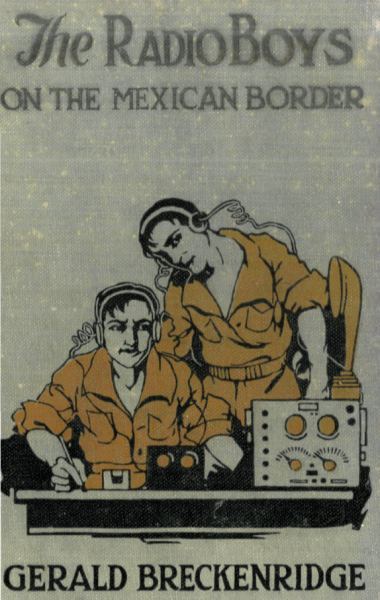
THE RADIO BOYS ON THE MEXICAN BORDER
THE RADIO BOYS ON SECRET SERVICE DUTY
THE RADIO BOYS WITH THE REVENUE GUARDS
THE RADIO BOYS' SEARCH FOR THE INCA'S TREASURE
THE RADIO BOYS RESCUE THE LOST ALASKA EXPEDITION
For sale by all booksellers, or sent postpaid on receipt of price by the Publishers
A.L. BURT COMPANY
114-120 East 23rd Street, New York
The
Ranger Boys
Series
BY CLAUDE H. LA BELLE
A new series of copyright titles telling of the adventures of three
boys with the Forest Rangers in the state of Maine.
Handsome Cloth Binding.
PRICE, 65 CENTS EACH.
THE RANGER BOYS TO THE RESCUE
THE RANGER BOYS FIND THE HERMIT
THE RANGER BOYS AND THE BORDER SMUGGLERS
THE RANGER BOYS OUTWIT THE TIMBER THIEVES
THE RANGER BOYS AND THEIR REWARD
For sale by all booksellers, or sent postpaid on receipt of price by the Publishers.
A.L. BURT COMPANY
114-120 East 23rd Street, New York
The
Boy Troopers
Series
BY CLAIR W. HAYES
Author of the Famous "Boy Allies" Series.
The adventures of two boys with the Pennsylvania State Police.
All Copyrighted Titles.
Cloth Bound, with Attractive Cover Designs.
PRICE, 65 CENTS EACH.
THE BOY TROOPERS ON THE TRAIL
THE BOY TROOPERS IN THE NORTHWEST
THE BOY TROOPERS ON STRIKE DUTY
THE BOY TROOPERS AMONG THE WILD MOUNTAINEERS
For sale by all booksellers, or sent postpaid on receipt of price by the Publishers.
A.L. BURT COMPANY
114-120 East 23rd Street, New York
The
Golden Boys
Series
BY L.P. WYMAN, PH.D.
Dean of Pennsylvania Military College.
A new series of instructive copyright stories for boys of High School Age.
Handsome Cloth Binding.
PRICE, 65 CENTS EACH.
THE GOLDEN BOYS AND THEIR NEW ELECTRIC CELL
THE GOLDEN BOYS AT THE FORTRESS
THE GOLDEN BOYS IN THE MAINE WOODS
THE GOLDEN BOYS WITH THE LUMBER JACKS
THE GOLDEN BOYS ON THE RIVER DRIVE
For sale by all booksellers, or sent postpaid on receipt of price by the Publishers.
A.L. BURT COMPANY
114-120 East 23rd Street, New York
The Boy Allies
(Registered in the United States Patent Office)
With the Navy
BY ENSIGN ROBERT L. DRAKE
----
For Boys 12 to 16 Years.
All Cloth Bound Copyright Titles
PRICE, 65 CENTS EACH
Frank Chadwick and Jack Templeton, young American lads, meet each other in an unusual way soon after the declaration of war. Circumstances place them on board the British cruiser, "The Sylph," and from there on, they share adventures with the sailors of the Allies. Ensign Robert L. Drake, the author, is an experienced naval officer, and he describes admirably the many exciting adventures of the two boys.
THE BOY ALLIES ON THE NORTH SEA PATROL; or, Striking the First Blow at the German Fleet.
THE BOY ALLIES UNDER TWO FLAGS; or, Sweeping the Enemy from the Sea.
THE BOY ALLIES WITH THE FLYING SQUADRON; or, The Naval Raiders of the Great War.
THE BOY ALLIES WITH THE TERROR OF THE SEA; or, The Last Shot of Submarine D-16.
THE BOY ALLIES UNDER THE SEA; or, The Vanishing Submarine.
THE BOY ALLIES IN THE BALTIC; or, Through Fields of Ice to Aid the Czar.
THE BOY ALLIES AT JUTLAND; or, The Greatest Naval Battle of History.
THE BOY ALLIES WITH UNCLE SAM'S CRUISERS; or, Convoying the American Army Across the Atlantic.
THE BOY ALLIES WITH THE SUBMARINE D-32; or, The Fall of the Russian Empire.
THE BOY ALLIES WITH THE VICTORIOUS FLEETS; or, The Fall of the German Navy.
For sale by all booksellers, or sent postpaid on receipt of price by the Publishers.
A.L. BURT COMPANY
114-120 East 23rd Street, New York
The Boy Allies
(Registered in the United States Patent Office)
With the Army
BY CLAIR W. HAYES
----
For Boys 12 to 16 Years.
All Cloth Bound Copyright Titles
PRICE, 65 CENTS EACH
In this series we follow the fortunes of two American lads unable to leave Europe after war is declared. They meet the soldiers of the Allies, and decide to cast their lot with them. Their experiences and escapes are many, and furnish plenty of good, healthy action that every boy loves.
THE BOY ALLIES AT LIEGE; or, Through Lines of Steel.
THE BOY ALLIES ON THE FIRING LINE; or, Twelve Days Battle Along the Marne.
THE BOY ALLIES WITH THE COSSACKS; or, A Wild Dash Over the Carpathians.
THE BOY ALLIES IN THE TRENCHES; or, Midst Shot and Shell Along the Aisne.
THE BOY ALLIES IN GREAT PERIL; or, With the Italian Army In the Alps.
THE BOY ALLIES IN THE BALKAN CAMPAIGN; or, The Struggle to Save a Nation.
THE BOY ALLIES ON THE SOMME; or, Courage and Bravery Rewarded.
THE BOY ALLIES AT VERDUN; or, Saving France from the Enemy.
THE BOY ALLIES UNDER THE STARS AND STRIPES; or, Leading the American Troops to the Firing Line.
THE BOY ALLIES WITH HAIG IN FLANDERS; or, The Fighting Canadians of Vimy Ridge.
THE BOY ALLIES WITH PERSHING IN FRANCE; or, Over the Top at Chateau Thierry.
THE BOY ALLIES WITH THE GREAT ADVANCE; or, Driving the Enemy Through France and Belgium.
THE BOY ALLIES WITH MARSHAL FOCH; or, The Closing Days of the Great World War.
For sale by all booksellers, or sent postpaid on receipt of price by the Publishers.
A.L. BURT COMPANY
114-120 East 23rd Street, New York