
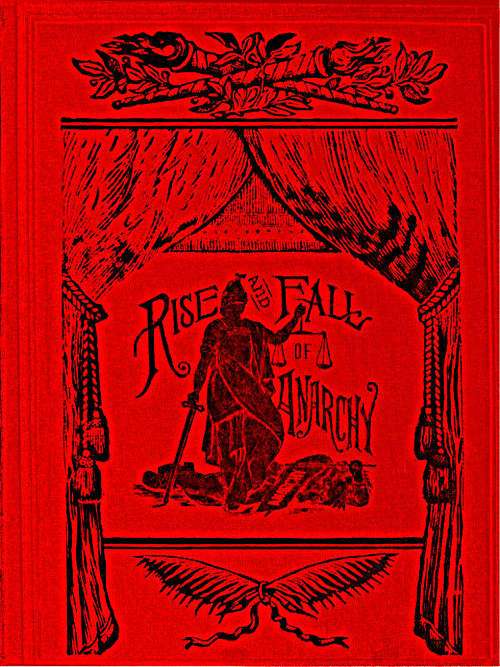
PREFACE.
In view of the many phases and complications involved in the labor question, along with the cosmopolitan element engaged in forcing, as it were, measures intended to revolutionize labor, trade and commerce, this subject becomes of extreme delicacy to treat, the intricacy of which affect all classes and conditions of men, and threatens to convulse society from the outer crust of uppertendom to the inner sub-strata of human interest, affecting largely the social, civil, and political interests of the ever-enlarging generations of mankind.
The dark cloud standing out in bold relief outlined against the political horizon of this great republic seems to be gathering in intensity. Just now the lull in matters pertaining to this great question of CAPITAL and LABOR, seem like the “calm that precedes the hurricane.” Animosities and antagonisms are widening the gulf between these conflicting interests of society, and anarchy and socialism, assuming a belligerent attitude, threaten a disruption of good and wholesome government.
We bid a hearty God-speed to any innovation upon the stereotyped and superannuated system, or dogmatic usage in the interests of absolute and overwhelming monopolies, which has for its object the general well-being of our common humanity, the elevation of the universal brotherhood of mankind, and the perpetuity of American institutions.
We do not believe in monopoly and oppression; but the final triumph of right over wrong by honest, earnest and persevering endeavor.
SOCIALISM.
A theory of society which advocates a more precise, orderly and harmonious arrangement of the social relations of mankind than that which has hitherto prevailed.—Webster.
COMMUNISM.
The reorganizing of society, or the doctrine that it should be reorganized, by regulating property, industry and the means of livelihood, and also the domestic relations and social morals of mankind; socialism; especially the doctrine of a community of property, or the negative of individual right in property.—J. H. Burton.
ANARCHY.
Want of government, the state of society where there is no law or supreme power, or where the laws are not efficient, and individuals do what they please with impunity.—Webster.