
EPILOGUE
The pilgrimage is over, and the “dreaming spires” disappear into the plain as we depart. It is time to say, as Queen Elizabeth said, pausing, as has been told, on Shotover: “Farewell, farewell, dear Oxford! God bless thee, and increase thy sons in number, holiness, and virtue!”
In numbers, truly, they have been increased, and are still increasing. New buildings, seldom as beautiful as the old ones, spring up continually as witnesses and consequence of the increase. As for holiness and virtue—well, these are not things which can be weighed or measured; and as the words mean different things to different preachers, positive asseveration would be out of place.
Those who associate virtue and holiness with the domination of the Church of England as by law established have some reason to view the prospect gloomily. The religious tests have gone—except from Keble; and Oxford Methodists are no longer liable to be pelted with mud in the High. Nonconformists of all grades, from Romanists to Unitarians, come to Oxford in battalions.
A few of them secede. There is a story of a Wesleyan undergraduate, the son of a Wesleyan minister, whose heart was so touched by the doctrine of the apostolical succession that whenever, from that time forward, he corresponded with his father, he refused him on principle the complimentary title of “Reverend.” But that is an exceptional case. The majority of the Oxford Dissenters maintain their own point of view, even when they come into contact with the point of view of the University; and the profit from the clash of opinions is mutual. Oxford learns something from the new-comers, even while it keeps up, with proper dignity, the pretence of having nothing to learn from any one; but Oxford also influences them, and so indirectly extends its own influence into corners of the world which previously it could not reach. Even the City Temple has lately become, by this means, a remarkable centre of illumination.
For, after all, in spite of all that we hear, and say, about Oxford Schools and Oxford Movements, the secret of Oxford is not wrapped up in any particular body of opinions; and the attitude of Oxford towards its Movements may fairly remind one of the French Revolution devouring its own children. The various Oxford Movements, though they have succeeded, have not resembled one another. On the contrary, they have clashed with, and have extinguished, one another. Oxford sent out Wiclif’s “poor preachers”; but Oxford also burnt more than its fair share of the Reformers. Oxford bred the Tractarians; but Oxford also confounded the Tractarians in “Essays and Reviews.” Oxford nurtured the Æsthetes; but Oxford also put the Æsthetes under the pump.
And so on to the end of the chapter. Action, in Oxford, has always been followed by reaction, and reformation by counter-reformation. The bane and the antidote have always grown side by side in the Oxford meadows; and the survey of Oxford history—the rapid evocation of typically illustrious Oxford names—gives an impression of a University as miscellaneously diversified as the Universe itself. And yet, in the face of all these divergencies, there is a something in the atmosphere of Oxford which never fails to affect the mentality of all the men who breathe it.
A part of the secret lies, no doubt, in the beauty of Oxford; a greater part, perhaps, in the leisure, and the comparative isolation and disinterestedness of the life. One is in touch with the world there, without being of it. One is not hustled or hurried. One can acquire knowledge for its own sake, without considering its immediate practical application. One can pursue and possess one’s own soul, and face, with help and sympathy, but undisturbed, all those perplexing problems of the painful earth which most of those busier men who are bundled from a school to an office can, as a rule, hardly so much as state. And all that in the most impressionable years of one’s life.
It is a great privilege—a privilege which it would be impossible to overvalue. Among those who have enjoyed it—even if they are conscious of not having made so much of it as they might—a kind of freemasonry exists, even when they are engaged in confuting each other’s doctrines. They are, or think they are, the initiated. Hence the reserve, the aloofness, the air of calm composure, and the refusal to be startled into emotion or surprise which go to the making of what is commonly called the “Oxford manner”; and if those characteristics are sometimes too prominently displayed to give unmixed pleasure in a mixed society, no one is more ready than the Oxford man to admit in the abstract the truth of Aristotle’s saying that an excess of virtue is a vice.
And so once more: “Farewell, farewell, dear Oxford! God bless thee, and increase thy sons in number, holiness, and virtue!”
UNWIN BROTHERS, LIMITED, THE GRESHAM PRESS, WOKING AND LONDON.
A SELECTION FROM
MILLS & BOON’S
LIST OF GENERAL LITERATURE
THE COURT OF WILLIAM III. By Edwin and Marion Sharpe Grew. With many Illustrations. Demy 8vo. 15s. net.
YVETTE GUILBERT: Struggles and Victories. By Yvette Guilbert and Harold Simpson. Profusely Illustrated with Caricatures, Portraits, Facsimiles of Letters, &c. Demy 8vo. 10s. 6d. net.
WAGNER AT HOME. Fully translated by Effie Dunreith Massie from the French of Judith Gautier. Fully Illustrated. Demy 8vo. 10s. 6d. net.
RAMBLES WITH AN AMERICAN. By Christian Tearle, author of “Holborn Hill.” Fully Illustrated. 10s. 6d. net.
AN ART STUDENT’S REMINISCENCES OF PARIS IN THE EIGHTIES. By Shirley Fox, R.B.A. With Illustrations by John Cameron. Demy 8vo. 10s. 6d. net.
SPORTING STORIES. By Thormanby. Fully Illustrated. Demy 8vo. 10s. 6d. net.
MY THIRTY YEARS IN INDIA. By Sir Edmund C. Cox, Bart., Deputy-Inspector-General of Police, Bombay Presidency. With 6 Illustrations. Demy 8vo. 8s. net.
HOME LIFE IN IRELAND. By Robert Lynd. Illustrated from Photographs. Second Edition. Demy 8vo. 8s. net.
BRITISH MOUNTAIN CLIMBS. By George D. Abraham, author of “The Complete Mountaineer,” Member of the Climbers’ Club, &c., &c. Illustrated with Photographs and Diagrams. Pocket size. Waterproof Cloth. 7s. 6d. net.
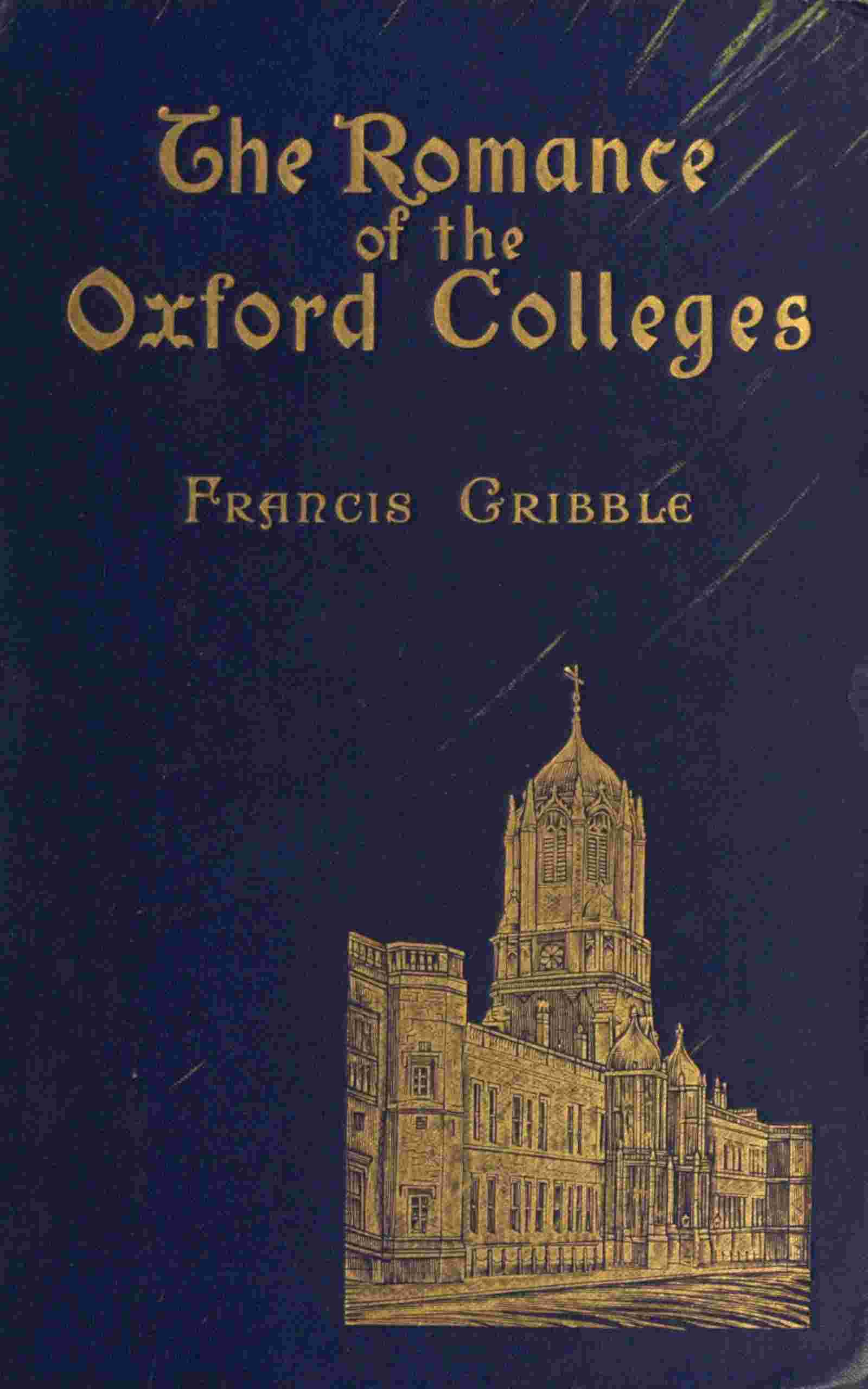
THE ROMANCE OF THE OXFORD COLLEGES. By Francis Gribble. With a Frontispiece in Photogravure, and 16 Illustrations from Photographs. Crown 8vo. 6s.
THE BOLSTER BOOK. A Book for the Bedside. By Harry Graham, author of “Deportmental Ditties.” With an Illustrated Cover by Lewis Baumer. Crown 8vo. 6s.
A HANDBOOK FOR NURSES. By S. G. Welham, M.R.C.S. (Resident Medical Officer, Charing Cross Hospital). Illustrated with Diagrams. Crown 8vo. 3s. 6d. net.
KINGS AND QUEENS OF FRANCE: A Concise History of France. By Mildred Carnegy. Crown 8vo. 3s. 6d.
IN PREPARATION.
THE ROMANCE OF THE CAMBRIDGE COLLEGES. With 17 Illustrations. Crown 8vo. Uniform with “The Romance of the Oxford Colleges.”
“Jacqueline is a darling.”—Observer.
THE EDUCATION
OF JACQUELINE
BY
CLAIRE DE PRATZ
(Author of “Elisabeth Davenay.”)
With Frontispiece in Photogravure. 6s.
Mr. James Douglas.—“It is not a vapid and insipid love story, but a vividly imaginative study of the real growth of a real soul. Jacqueline is a fascinating girl, and Mlle. de Pratz makes her live, with her impetuous independence, her joyous freedom, and her incorrigible coquetry.... The dramatic power of the episode in Jerome’s studio is undeniable. It is the great culminating point of the story, and Mlle. de Pratz handles the whole tragedy with absolute mastery. A false touch would have ruined it, but the pathos of the situation redeems it from any tinge or taint of coarseness. Altogether ‘The Education of Jacqueline’ is a novel that will delight everybody, so fresh is its theme, so light is its style, and so charming is its sentiment.”
Daily Chronicle.—“The book is extraordinarily well written and full of wisdom.”
Times.—“A third novel by the author of ‘Eve Norris’ and ‘Elisabeth Davenay.’ We like ‘Jacqueline’ a good deal the best of the three—both the heroine and the book. It is a well-written story with thought in it, the scene mostly in Paris.”
Morning Leader.—“It is a real triumph for Mlle. Claire de Pratz that she has presented a full-length portrait of a modern Frenchwoman which English readers cannot but understand and admire.”
Pall Mall Gazette.—“Jacqueline learns her mother’s secret in a scene which is a masterpiece of emotional analysis.... The scene at the opening of the book is a chef d’œuvre of dramatic intensity and dramatic reticence.”
The 5 notices, of which only extracts can be given above, appeared within 24 hours of the publication of the book.
MILLS & BOON, Ltd., 49 WHITCOMB STREET, W.C.
A GOLDEN STRAW
BY
J. E. BUCKROSE
6/-
SECOND EDITION
With a Frontispiece in Photogravure.
Times.—“The story of the present book is only a little less well written than the atmosphere. It is a story of a girl and her two lovers, one of whom has robbed the other of a fortune and something more; and of the secret reason why the girl was unable to marry either of them. Miss Buckrose is so clever at keeping the secret that it would be unfair to tell it here; but more important to the book than its secret is the actuality of the handful of people concerned in the story, who are all real and alive.”
T. P.’s Weekly.—“Walgate’s old uncle dies in the first chapter, a piece of powerful writing that sets for the rest of this remarkable novel a standard from which Miss Buckrose never descends.”
Standard.—“Miss Buckrose has great virtues. She writes excellently. She has an acute feeling for scenery, and she never exceeds a proper limit in her word-painting. She sees life for herself; she goes on no personally conducted tours through the lands of romance, and her observation is fresh and vivid.”
Daily Graphic.—“In some novels there is a mysterious bloom and promise, such as belongs to youth. That sincere compliment we can pay to Miss J. E. Buckrose’s ‘A Golden Straw’ (Mills & Boon, 6s.), which is a story of invincible freshness and charm. Averild, the heroine, is an enchanting creature, the real young girl, drawn with sympathy, but without sentimentality; and the springs of her caprice are hidden so ingeniously that only when they are at last revealed is the complete naturalness of the character justified. Old Miss Walgate is a vigorously limned personality; and the speech and atmosphere of Holderness are indicated with facility and truth.”
Manchester Courier.—“Her story is as natural, as pretty, and as exciting as a novel from her pen should be.”
N. Y. Herald (Paris).—“Will strike the most jaded novel reader with its freshness and simplicity.”
MILLS & BOON, Ltd., 49 WHITCOMB STREET, W.C.
THE BEST ABUSED BOOK OF THE YEAR
CALICO JACK
By HORACE W. C. NEWTE
Third Edition. Crown 8vo, 6s.
Globe.—“Calico Jack, the music-hall sketch actor, is a host in himself, something of a modern Crummles, with an added viciousness. His endless stories concerning himself and the adoring ‘ladies,’ his posturing, and his habit of coolly annexing the ‘fat’ from any of the parts of his military sketches, make the most entertaining reading. And one feels, too, that Calico Jack is no mere creature of invention, but the real thing.”
Times.—“Given with that unflinching realism which does enable Mr. Newte to make uninteresting people interesting.”
Manchester Guardian.—“We recommend it to the youth of either sex who may, unwarranted by actual genius, be indulging a dream of glory in the halls, and for whom plain and certain bread and butter is more palatable than occasional fried ‘middle-bits’ in the fingers, even to the accompaniment of Calico Jack’s thousand-and-one ‘love’ affairs.”
Sheffield Telegraph.—“Cellini’s surroundings, active and scenic, are made to sustain a good programme, and the entertainment works up to a capital curtain.”
Athenæum.—“A story of music-hall life told with much lively humour. The author seems to know the world of which he writes, and the book is full of quaint characters and interesting details.”
Dundee Advertiser.—“The glare and glitter of the music-hall stage obscure much that is shoddy, unreliable, and tragic. So at least this very readable novel makes out. And Horace W. C. Newte seems to know. The characters and incidents are such that some of them may have been sketched from life. The tawdry hero, John Cellini, is the most likely of the Company. His grandiose bearing, his very eloquence, his belief in his irresistible attractions, and the pathetic intensity of his convictions regarding the immense drawing power of his ‘turns’—all belong to a real type.”
MILLS & BOON, Ltd., 49 Whitcomb St., London, W.C.
THROUGH THE
LOOPHOLES OF RETREAT
BEING A CHOICE OF PASSAGES
FROM THE LETTERS & POEMS OF
WILLIAM COWPER
SELECTED BY
HANSARD WATT
Fcap. 8vo. 3s. 6d. net
British Weekly (“A Man of Kent”).—“I have read ‘Through the Loopholes of Retreat’ with the greatest delight. This Cowper book is a new thing in literature, and it is executed with such loving care and such literary perception that it ought to take its place among the very best of anthologies. Most of the anthologies published nowadays are very bad indeed. They are chosen loosely and carelessly from well-known books, and depend almost entirely for circulation on the taste with which their publishers print and bind them. But we have a few anthologists whose work stands on a level with original work of the best kind, and of such is Mr Hansard Watt.... I cannot imagine the work being better done, and it was well worth doing.”
Daily Chronicle.—“A pleasant and surpriseful storehouse of good things ... a pleasure and a privilege to possess it.”
Westminster Gazette.—“In preparing parallel passages from the letters and poems of Cowper for every day in the year, Mr Hansard Watt has paid a handsome tribute to one of the most delightful of English letter-writers, and earned the gratitude of many lovers of the poet for adding a fresh interest to his work.... ‘Through the Loopholes of Retreat’ is a curious and fascinating little book.”
Daily News.—“There is wit, wise seriousness, and a whimsical charm in these pages. Mr Watt has prepared a very pleasant gift-book.”
Morning Post.—“One can be certain as one reads Cowper that taste will return to him. It requires but some knowledge of life and some experience of emotion to see what high lyrical power shines through his work, and Mr Watt has done very well to present it in so novel and so striking a form to the modern reader.”
Queen.—“This truly delightful book well illustrates the poet’s beautiful ideas of domestic peace and happiness, and the volume should be on the bookshelves of all those who have a love for natural, unaffected poetry.”
Sphere (C. K. S.).—“Mr Hansard Watt has won the gratitude of all who love the work of the poet Cowper.”
Daily Graphic.—“A pleasant and companionable little volume, and one that will receive a hearty welcome.”
Dundee Courier.—“A permanent calendar of wise and beautiful sayings from one of the most lovable of English poets.”
Newcastle Journal.—“Cowper, in a busy and restless age, comes as a solace indeed, and his admirers, not less than those who know at present little of the high thought and literary beauty of the poet of Olney, will be grateful to Mr Hansard Watt for his work.”
Manchester Courier.—“Admirably reflects the many-sidedness of a great and too little read poet.”
Eastern Daily Press.—“As a feat of industry Mr Watt’s performance is tremendous.”
MILLS & BOON, LTD., 49 WHITCOMB ST., W.C.
A NOVEL OF RARE MERIT
THE
RAJAH’S PEOPLE
By I. A. R. WYLIE
Crown 8vo. 6s.
MILLS & BOON published on June 15, 1909, the novel of the year in E. S. Stevens’ Story of Tunisia, “THE VEIL,” which quickly ran through seven editions, and scored a remarkable success from every point of view. Fiction lovers who read “THE VEIL” will remember that it was a first novel, and a tale of wonderful story-telling qualities.
MILLS & BOON will issue on June 15, 1910, “THE RAJAH’S PEOPLE,” by I. A. R. Wylie, another first novel, and one which in their opinion is certain to repeat the phenomenal success of E. S. Stevens’ “THE VEIL.” “THE RAJAH’S PEOPLE” is an intensely interesting novel of Indian life, written with striking originality and fascination.
MILLS & BOON will be glad if the date of publication is noted, and they hope that “THE RAJAH’S PEOPLE” will be received with as much enthusiasm and interest as “THE VEIL.”
A souvenir chapter will be sent post free to any address.
MILLS & BOON, Ltd., 49 WHITCOMB STREET, W.C.
MILLS & BOON’S NET
SHILLING NOVELS
CUMNER’S SON (Entirely New Stories)
By Sir GILBERT PARKER
BEWARE OF THE DOG (Entirely New Long Novel).
By Mrs. BAILLIE REYNOLDS
THE DOLLAR PRINCESS (The Novel of the Play).
By HAROLD SIMPSON
ARSÈNE LUPIN (The Novel of the Play)
By EDGAR JEPSON & MAURICE LEBLANC
MARY
By WINIFRED GRAHAM
D’ARCY OF THE GUARDS (The Novel of the Play).
By L. E. SHIPMAN
FOR CHURCH AND CHIEFTAIN
By MAY WYNNE
THE LADY CALPHURNIA ROYAL
By ALBERT DORRINGTON and A. G. STEPHENS
THE VEIL
By E. S. STEVENS
[June 15
THE ADVENTURES OF CAPTAIN JACK
By MAX PEMBERTON
[July
THE END AND THE BEGINNING
By COSMO HAMILTON
[July
SPARROWS: THE STORY OF AN UNPROTECTED GIRL
By HORACE W. C. NEWTE
[July
THE PRODIGAL FATHER
By J. STORER CLOUSTON
[August
MILLS & BOON, Ltd., 49 Whitcomb St., London, W.C.
MILLS & BOON WILL PUBLISH VERY SHORTLY A REMARKABLE GOLFING BOOK ENTITLED
LETTERS OF A
MODERN GOLFER TO
HIS GRANDFATHER
Being the Correspondence of
RICHARD ALLINGHAM, Esq.
Arranged by
HENRY LEACH
WITH A PHOTOGRAVURE PORTRAIT
Crown 8vo, 6s.
Six Reasons Why You Should Purchase This Book—
1. If you are a keen Golfer, then it is invaluable to you.
2. If you like worldly wisdom and common sense, then you can safely buy it.
3. If you admire a charming love story, then be certain to get it.
4. If you want to improve your game, then you cannot do without it.
5. If you have a Golfing friend, make him a present of it.
6. Both sexes will find this Golfing Book a great treat.
A Special Prospectus containing Gems from the Modern Golfer’s Letters will be sent post-free to any address.
MILLS & BOON, Ltd., 49 Whitcomb Street, London, W.C.
A Fine Romance of Love and Adventure
THE
SWORD MAKER
BY
ROBERT BARR
Author of “Cardillac,” “The Countess Tekla,” etc., etc.
Crown 8vo. 6s.
Reader’s Report on The Sword Maker.
“A rousing and dramatic tale. A book like this in which swords flash, great surprises are undertaken, and daring deeds done, is a joy inexpressible in these days of everyday fiction. The book has the supreme merit of holding the reader’s attention from start to finish.”
MILLS & BOON, Ltd., 49 WHITCOMB STREET, LONDON, W.C.
MILLS & BOON’S
COMPANION SERIES
The Chauffeur’s Companion.
By “A Four-Inch Driver.” With 4 Plates and 5 Diagrams. Waterproof cloth. Crown 8vo, 2s. net.
The Lady Motorist’s Companion.
By “A Four-Inch Driver.” With 12 Plates and Diagrams. Crown 8vo, 2s. 6d. net.
The Gardener’s Companion.
By Selina Randolph. With an Introduction by Lady Alwyne Compton. Crown 8vo, 2s. net.
The Six Handicap Golfer’s Companion.
By “Two of His Kind.” With Chapters by H. S. Colt, “On Handicapping and Other Points,” and Harold H. Hilton (ex open and amateur champion), on “Scientific Wooden Club Play.” Fully Illustrated from Photographs of Jack White (ex open champion). Crown 8vo, 2s. 6d. net.
The Mother’s Companion.
By Mrs. M. A. Cloudesley Brereton (Officier d’Académie). With an Introduction by Sir Lauder Brunton, M.D., F.R.C.P., F.R.S. Crown 8vo, 2s. 6d. net.
The Rifleman’s Companion.
By L. R. Tippins. With 6 Illustrations. Crown 8vo, 2s. 6d. net.
The Poultry-Keeper’s Companion.
By Arthur Tysilio Johnson. With 60 Illustrations. Crown 8vo, 2s. 6d. net.
The Nursery Nurse’s Companion.
By Honnor Morten. Crown 8vo, 1s. net.
The Aviator’s Companion.
By D. and Henry Farman and others. Crown 8vo, 2s. 6d. net.
IN PREPARATION.
The Bee-Keeper’s Companion.
By Stephen Abbott. Crown 8vo, 2s. 6d. net.
The Householder’s Companion.
By F. Minton.
The Food Reformer’s Companion.
By Eustace Miles, M.A. Crown 8vo, 2s. 6d. net.
MILLS & BOON, Ltd., 49 WHITCOMB STREET, W.C.
A Thrilling Adventure Library Volume
The Bristol Mercury says: “Messrs. Mills & Boon are to be congratulated on the high standard attained in their Thrilling Adventure Library.”
THE KINGDOM
OF EARTH
BY
ANTHONY PARTRIDGE
Crown 8vo. 6s.
Evening Standard.—“Here is another thundering good story. Here are Ruritania in a new setting and Socialism in a new light. Here is adventure piled on adventure, and a story told with a dash and high spirit which carry the reader along. Mr. Partridge makes a most exciting business of it. He gives us hair-breadth escapes, heroic fights, ingenious complications, a sufficient love interest, and a little high diplomacy. It is a breathless and attractive adventure—admirably carried through—the very thing for the holiday mood.”
MILLS & BOON, Ltd., 49 WHITCOMB STREET, W.C.
“A WONDERFUL SHILLINGSWORTH” say the ‘World’ and the ‘Observer.’
CUMNER’S SON
BY
SIR GILBERT PARKER
Cloth 1s. net.
Daily Telegraph.—“Sir Gilbert Parker has been very generous in presenting this book to the reading public at so cheap a price, for it contains some of his best work. How good that is we all know. Better examples of his rare skill have never been given us than here. Of the tales there is not one that does not hold us, not one which has not real point and importance. They interest us as vividly as do the pictures of the biograph, we sit entranced as the action passes swiftly and clearly before our eyes. The author has not given us anything so good for a long time.”
Punch.—“One does not recall any writer who possesses in larger degree the gift of being able to reproduce glowing scenery by a few strokes of the pen. This quality is supplemented by a greater one, the power of creating and describing human character. Sir Gilbert is indeed the Bret Harte of the South Seas, telling in a few pages moving stories of the rough and ready folk who people the islands. It is a charming volume, full of light and life and colour.”
Morning Post.—“Vivid pictures.”
Daily News.—“Workmanlike.”
Westminster.—“Heroic.”
Standard.—“Remarkable.”
Globe.—“Capital.”
Scotsman.—“Vivid realism.”
Daily Express.—“Admirable.”
Daily Mail.—“Imperial.”
Birmingham Post.—“Full of incident.”
Ladies’ Field.—“Fresh.”
MILLS & BOON, Ltd., 49 WHITCOMB STREET, W.C.
FIRST LOVE
BY
MARIE VAN VORST
Price 6s.
Observer.—“Miss Marie van Vorst’s new novel deals with no boy and girl idyll; it gives a vivid emotional picture of another very common phase of first love, that of a young man for a woman many years his senior. John Bennett is a fine example of a young lover, tongue-tied and ardent, strong-willed, reckless, and very attractive. He goes to stay with two college friends, and the swift growth of his passion for their step-mother, Mrs. Bathurst, wife of the usual brute in a fast New York sporting set, is painted in with firm and telling strokes. He stakes all to win her, but, when at last she is free, she ‘turns him down.’ The character of Virginia Bathurst is so subordinated to the masculine element which dominates the story that it is only at the end that one realises her lovely selflessness, for it is indicated by touches as subtle and delicate as her own personality. And it is only at the end, when Bennett has married a girl as fresh and youthful as himself, that one sees where the real cruelty of the situation lies. Miss van Vorst is an artist, and she knows exactly how to give full value to the point she wishes to make.”
Daily Mail.—“‘First Love’ is in every way a good novel.”
Dundee Advertiser.—“Several stories by Marie van Vorst have pleased me greatly by their living interest and literary excellence, and this one most of all. The incidents are instinct with fine and even exquisite sentiment, and lead on to a finish that would make the fortunes of a play.”
Morning Post.—“It will appeal largely to the novel reading public.”
MILLS & BOON, Ltd., 49 WHITCOMB STREET, W.C.