
WeRead Powered by ReaderPub
The Shetland Pony cover

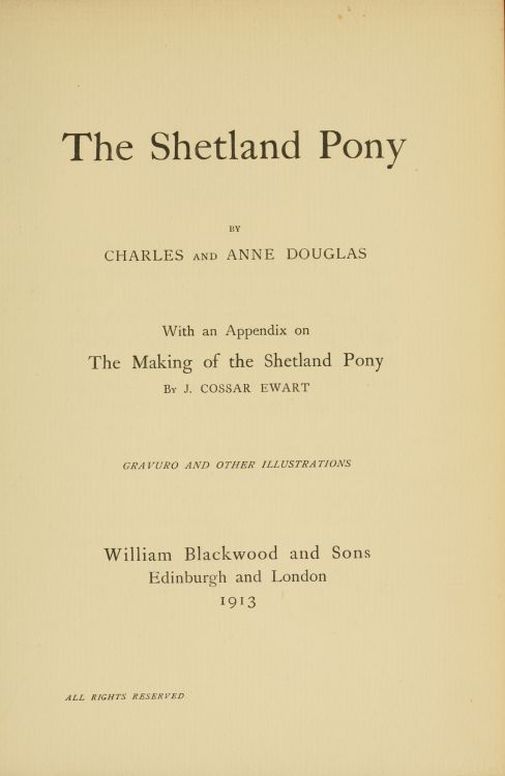
The Shetland Pony

Chapter 1: THE SHETLAND PONY
Open in WeRead

About This Book

A concise study traces the breed's origins from archaeological and pictorial evidence and compares island types with related northern pony traditions. It describes local varieties and the practical roles these small horses have filled, including their use in farms, transport, and markets, and explains herd management, feeding, and breeding practices. A section examines the modern standard and how environment and selective breeding influenced size, conformation, and temperament. A scientific appendix discusses ancestry and morphology with skeletal plates and measurements, while illustrations and notes provide historical and practical context.

The Project Gutenberg eBook of The Shetland Pony

This ebook is for the use of anyone anywhere in the United States and most other parts of the world at no cost and with almost no restrictions whatsoever. You may copy it, give it away or re-use it under the terms of the Project Gutenberg License included with this ebook or online at www.gutenberg.org. If you are not located in the United States, you will have to check the laws of the country where you are located before using this eBook.

Title: The Shetland Pony

Author: Charles Douglas

A. I. Douglas

Contributor: J. C. Ewart

Release date: July 21, 2019 [eBook #59957]

Language: English

Credits: Produced by F E H, MWS and the Online Distributed
Proofreading Team at http://www.pgdp.net (This file was
produced from images generously made available by The
Internet Archive/American Libraries.)

*** START OF THE PROJECT GUTENBERG EBOOK THE SHETLAND PONY ***

THE SHETLAND PONY

Transcriber’s Notes

Footnote anchors have been changed from numeric to an alpha plus numeric sequence such as: [F1] [F2], to create a point of difference between footnotes and endnotes which are also numeric.

Page 43—both spellings of ‘maiseys’ and ‘klibbar’ from the writings of Hibbert of 1820’s and ‘maysies’ and ‘clibber’ from Cowies writings of 1874 have been retained.

Other changes made are noted at the end of the book.


CHANGING QUARTERS.