
“Abolished is the round of birth: Completed the ascetic life;
Done what was to do.
This world of form is no more. This we know.”
And sometimes proud and learned Brahmans would come to dispute haughtily with the Perfect One, and they, full of pride and anger, would rage and trip in their discourse thinking to show their much learning rather than to seek the truth. But like the waves of a muddy river lashing rock so were they, and the Lord sat there always, answering duly, teaching duly, clothed in serenity, his skin the colour of bright gold, his eyes bright and calm, for he said:
“That in disputation with anyone whatsoever I could be thrown into any confusion or embarrassment,—there is no possibility of such a thing, and because I know of no such possibility I remain quiet and confident. And even when I am carried here upon a bed shall my intellectual strength remain unabated.”
And his monks said:
“Truly from the Exalted One comes all our wisdom.”
And because he was so near the Blessed One many monks would come to the venerable Ananda and say:
“It is long, brother, since we heard a discourse from the Exalted One. It were very good if we might hear one now.”
“Well, venerable ones, betake yourselves to the hermitage of the Brahman Rammako. Perhaps you will get to hear a discourse from the lips of the Exalted One.” For Ananda was wise in the ways of the Master.
Now after the Perfected One had returned from his begging-round, he turned and said:
“Come, Ananda, let us go to the East Grove, to the terrace of the Mother of Migara, and stay there until the evening.”
So they went, and when he had finished his meditation he turned to the venerable Ananda:
“Come, Ananda, let us to the Old Bath and refresh our limbs.”
So they went. Then the beloved Ananda addressed the Perfected One thus:
“The hermitage of the Brahman Rammako, Master, is not far from here. It is pleasantly situated in peaceful solitude. Good were it if the Master should betake himself there.”
And the Blessed One signified by silence his assent. And there they found many monks in edifying discourse. And he waited till they were done, and cleared his throat and rapped at the knocker, and they opened the door, and the World-Honoured entered in and seated himself and incited and gladdened them all with great and high discourse.
So they got what they needed, for very wise was the beloved Ananda in dealing with the Master.
Amazing indeed were the experiences of those who followed the Lord, and not to be understood of those who have not stood face to face with Truth and Love unveiled and terrible in beauty, and terrible also in the loves they inspire. What can words avail?
And where he went the Awakened One strewed little precepts like flowers, easy for a child to remember yet each an upward spiral on the Way.
“If all knew the fruits of alms-giving as I, monks, know them, most surely they would not eat the last least mouthful without dividing it with another.”
And they answered, “Even so, Lord,” and gave of their food, living in peace amidst the Transient, until even its semblance should pass for ever away. And nothing else than food had they to give, being monks.
And one asked of the learned nun Dhammadhina:
“And how, venerable Lady,—how and what has the Blessed One taught about the arising of the false ego in the beginning of things? How came it to be? What does he teach of this?”
“It is the lust of life that sows repeated being in successive lives.”
“And how is the annihilation of the false ego to be attained, Venerable Lady? How has the Exalted One taught?”
“Even by the complete annihilation, rejection, and driving forth of the lust of life—this is what was taught by the Exalted One.” So answered the nun Dhammadhina. “Even through the breaking of any attachment to the Transient.”
But of how Attachment began to be in the beginning of things the Lord would not answer. The Way out, he taught; the way in concerns not at all the man who is fleeing for his life to peace and safety from attachment to the Transient and its illusion.
And again:
“But what follows after death? What follows after the extinction of illusion?” the seeker asked of the learned nun Dhammadhina. And she replied:
“Abandon the question, brother. I cannot grasp the meaning of the question. If you will, go to the Enlightened One and ask him.”
And he went, and the Lord answered:
“Wise is Dhammadhina and mighty in understanding. My answer is hers.”
For the Unknown cannot be known until the way is built to it. Build then the way, and knowledge will come in time. But, without words, to the few, the very few, this knowledge has come, as has been told.
And when the nun Gotami asked him:
“Will the Exalted One teach me the very quintessence of the Law,” he answered thus:
“Whatever teaching leads to passion and not to peace, to pride and not to humility, to desire of much in place of little, to love of society and not of solitude, to idleness and not to striving, to a mind of unrest and not to a mind at peace—that, O Gotami,—note well!—that is not the way,—that is not the teaching of the Master.”
And as they sat in the calm of the sunset and discoursed, Sariputta the Great said this:
“I desire not life. I desire not death. I wait until my hour shall come like a servant that waits for his wage. I await the coming of the hour, conscious and of thoughtful mind.”
Thus steadfast in the way they continued, not cruelly mortifying the body but in the true asceticism of the heart that cannot be tempted. For the Awakened One said this:
“I teach asceticism inasmuch as I teach the burning away of all evil conditions of the heart. And the true ascetic who thus lives may fitly and rightly eat of the food that is given him in alms, of rice pleasantly prepared and such-like, and it will do him no ill.”
So quietly and in radiance life went on as a summer day which from dewy dawn passes through every gradation of light until the night comes, taking the world in her net of stars and laying all to rest.
And still the Exalted One journeyed and taught, now being very aged, and the seeds of his doctrine were carried as if by far-flying birds into the outer lands which had never felt in this life the tread of his blessed feet nor seen the calm of his face nor the majesty that attended him. And taking root these seeds shot up later into mighty trees of glorious growth.
And still he journeyed to and fro, and the people said to the monks:
“Let not the World-Honoured overweary himself, for in what are we worthy that our well-being should cost the world its Light?”
And they answered:
“All he does is well. This also is well and could not be otherwise.”
But the beloved Ananda saw with fear that the World-Honoured moved more slowly and with more painful effort on each journey he made. And awe and grief possessed Ananda, seeing this, for he had not as yet attained to perfect enlightenment,—and with many cares he compassed the Blessed and followed him wherever he went.
CHAPTER XX
THE LAST JOURNEY
And the Blessed One passed through Pataligama and went on to the river and at that time Ganges was swollen and brimming, and some with him began to seek for boats and some for basket-rafts that they might pass over. But the Exalted One, swiftly as a powerful man could stretch out his arm and withdraw it, vanished from the hither side of the river and stood on the other bank with the brethren. And he uttered this verse:
“Those who cross the stormy sea
Making a firm way for their feet,
While the blinded tie their basket-rafts,
These are the wise, these are the safe and glad.”
And they passed on to the villages of Nadika and at the last the Happy One rested at the Brick Hall, and the beloved Ananda (who tended him always) came and sat down respectfully beside him, and having passed through the village and heard of the deaths of several devout followers, men and women, who had followed them formerly, he asked the Lord of their destiny and of what had befallen them.
And naming them each and all by name, replied the Exalted One:
“Of those men and women there are some who in their first return to this world will make an end of sorrow and illusion and return no more. And some there are for whom having attained the highest knowledge, it is no longer possible that they should return to mortal birth, for they are now assured of final salvation.”
And in the Brick Hall at Nadika he taught the people, saying:
“Great is the fruit, great the advantage of earnest contemplation when adorned with right doing. And great the fruit of high intellect adorned with earnest contemplation. For the mind set round with intelligence is thus delivered from sensuality, from the false ego, from delusion and ignorance.”
And they went on to Vaisali, and from thence to Beluva, and there the Blessed One rested in the village. And he said to the brethren:
“Mendicants, do you take up your abode round about Vaisali for the rains, each according to his friends. For I shall enter upon the rainy season here at Beluva.”
“So be it, Lord,” said the brethren in assent, and so it was done.
Now when the Blessed One had thus entered on the rains at Beluva there fell upon him a sickness, and sharp pains came upon him even to death. But mindful and self-possessed he bore them without complaint. And this thought came into his mind:
“It would not be right for me to pass away without addressing the disciples, without taking leave of the Order. Let me now by a strong effort of the will bend down this sickness and keep my hold on life until the allotted time be come.”
And he bent that sickness down and it abated.
And when he began to recover he went out of the little vihara—the monastery, and sat down behind it on a seat spread out for him. And the venerable Ananda went where the Blessed One was, and sat respectfully beside him, and said this:
“I have seen, Lord, how the Blessed One suffered, and though at that sight my body became weak as a creeper, yet I had some little comfort in thinking that the Blessed One would not pass from existence until at least he had left some instructions touching the Order.”
“What then, Ananda? Does the Order expect that of me? Now, He who has thus Attained thinks not that it is he who shall lead the Order or that it is dependent upon him. I too, Ananda, am now grown old and full of years. My journey is drawing to its close. I have reached my sum of days, I am turning eighty years of age. And just as a worn-out cart can only with much additional care be made to move, so, I think, the body of the Tathagata can only be kept going with much additional care. It is only when ceasing to attend to any outward thing he becomes plunged in devout meditation concerned with no material object,—it is only then that the body of the Tathagata is at ease.”
And there was a long pause, and the venerable Ananda remained steadfastly gazing at the Perfect One, absorbed in his words as foreseeing the end. And the Lord resumed:
“Therefore, Ananda, be lamps unto yourselves. Betake yourselves to no external Refuge. Hold fast to the truth as a lamp. Look not for refuge to anyone beside yourselves. And whoever after I am dead shall be a lamp unto themselves and holding fast to the truth look for refuge to no one outside themselves, it is they, among my mendicants, who shall reach the Height.”
And again the Blessed One robed himself early in the morning and taking his bowl went into Vaisali for alms and when he returned he sat down upon the seat prepared for him and when he had finished eating the rice he said:
“Take up the mat, Ananda,—I will go to spend the day at the Kapila Ketiya.”
“So be it, Lord,” said the venerable Ananda, and he followed step for step behind the Blessed One.
And when he had come there the Blessed One sat down upon the mat spread out for him, and the venerable Ananda took his seat respectfully beside him. And the Blessed One said:
“Whoever, Ananda, has developed himself and ascended to the very heights of the four paths to Power, thus transcending bodily conditions and using these Powers for good may if he desires it, remain in the same birth for an age, or that portion of the age which is yet to run. Now He who has thus Attained has developed these Powers and could therefore live on yet for an age or that portion of the age which has yet to run.”
But even though this suggestion was given by the Blessed One, the venerable Ananda did not comprehend it, nor did he say, “Vouchsafe, Lord, to remain! Live on for the good and happiness of the peoples, out of pity for the world and the weal of Divine Beings and men.”
And a second time did the Blessed One say this, and yet did not the beloved Ananda speak.
Now the Blessed One addressed him thus:
“You may leave me, Ananda, for awhile.”
And rising from his seat, Ananda saluted the Lord, and sat down at the foot of a tree not far off, and when he was gone, the Evil One, the Tempter, approached the Lord and stood beside him, and he said:
“Pass away now, Lord, from existence. Let the Blessed One die. For did he not say that when the Order was established, and the lay-people, and the truth made known, that then the time would be come? And all this is now done, and the time is here. Pass away now, therefore, Lord. Let the Blessed One die.”
And when he had spoken, the Blessed One said to the Evil One:
“Be happy. At the end of three months from this time the Blessed One will die.”
Thus did the Lord deliberately and consciously reject the rest of his possible sum of life. And there followed an earthquake and tremblings and thunders.
And Ananda returned in haste and said:
“Wonderful and marvellous is this earthquake, Lord, and what is its cause?”
And the Lord said:
“Of the eight causes of earthquake and tremblings, this is one—when an Awakened One,—He who has thus Attained, consciously and deliberately rejects the remainder of his life, then is the earth shaken.”
And, still speaking of the mastery of the Powers, the Lord continued:
“Now I call to mind, Ananda, how when I used to enter into an assembly of many hundred nobles with discourse of religion I would instruct and gladden them, and they would say,—‘Who may this be who thus speaks? A man or a God?’ And having taught and gladdened them, suddenly I would vanish away. But they knew me not even when I vanished away, and they would say in bewilderment, ‘Who may this be who has thus vanished away? A man, or a God?’ ”
And he spoke also of the eight stages of deliverance from errors of perception, passing beyond the apprehension of form through infinite space and infinite reason and finally beyond sensation and ideas, even into the eighth stage of deliverance.
And having given this instruction the Lord related to the venerable Ananda how that in three months’ time he should hear his voice no more, and the venerable Ananda cried out vehemently:
“Vouchsafe, O Blessed One, to live. Stay with us for the weal of Divine Beings and men.”
But the Lord answered:
“The time for making such a request is past.”
And a second and a third time Ananda entreated and the Lord replied, saying:
“Verily, the word has gone forth from Him who has thus Attained. That the Tathagata for the sake of living should repent of that saying can in no wise be. Come, Ananda, let us rise and go to the Mahavana.”
And they went to the Mahavana, to the Service Hall, and he commanded Ananda to assemble there such of the brethren as dwelt in the neighbourhood of Vaisali. And when they were assembled the Blessed One sat down upon his mat and addressed them. And he said:
“The truths, monks, which I have made known to you and you have mastered, these practise, meditate, and spread abroad, that it may continue to be for the good and happiness of great multitudes.
“Behold, monks, now I exhort you. All component things must grow old and pass away. Work out your salvation with diligence. At the end of three months from this time He who has thus Attained will die. My age is now full ripe: my life draws to its close. I leave you, I depart, relying on myself alone. Be earnest, holy, full of thought. Be steadfast in resolve. Keep watch over your own hearts. Who wearies not, but holds fast to the Law, shall cross this sea of life, shall make an end of grief.”
So he spoke, and they dispersed silently.
And the Blessed One robed himself early in the morning and took his bowl and went into Vaisali for alms and when he had eaten his meal and was returning, he gazed steadfastly at Vaisali and he said this:
“This is the last time, Ananda, that He who has thus Attained will behold Vaisali. Let us now go to Bhandagama.”
And they went, and the Lord rested in the village itself, and there he addressed the brethren, saying:
“It is through ignorance of the Truths that we have had to run so long, to wander so far in this weary road of rebirth—you and I. But when the noble conduct of life, noble meditation, noble wisdom and noble freedom are realized and known, then is the craving for existence rooted out, the chain broken and we return to earth no more.”
And it was there also that he delivered the high discourse on the nature of the Four Truths; and having done this he pressed on with the venerable Ananda and a great company of his own to Pava. And there he stayed in the Mango Grove of Chunda, and Chunda was a smith by family.
And when Chunda heard that the Perfect One had come to Pava and rested in his Mango Grove, he went to him and saluted him joyfully, and with reverence took his seat beside him, and the Blessed One gladdened him with talk of high things. And, so gladdened, he addressed the Lord, and said:
“May the Blessed One do me the honour of taking his meal, together with the brethren, at my house to-morrow?”
And the Lord signified by silence his consent, and seeing he had consented, Chunda the worker in metals, bowed before him and keeping him on his right hand, departed.
And at the end of the night Chunda made ready in his house excellent food, hard and soft, sweet rice and cakes and the food, found in the earth and loved by boars, truffles, and when all was ready he announced it to the Lord saying:
“Exalted One, the meal is ready.”
And the Blessed One robed himself and took his bowl and he and his followers went to the dwelling-place of Chunda. And when the meal was over, he gladdened the smith with discourse of high matters, and so rose and departed.
But after the Blessed One had eaten of his food then fell upon him a grievous disease, and sharp pain came upon him even to death, but he bore it without complaint mindful and self-possessed. And to the venerable Ananda he said:
“Come, let us go to Kusinara.”
“Even so, Lord,” said the venerable Ananda.
And they went, but as they went the Blessed One grew very weary and he rested beneath a tree and said:
“Fold the robe and spread it for me, I pray you. I am weary, Ananda, and I must rest awhile.”
And the robe was spread, folded fourfold, and when the World-Honoured was seated he asked for fresh water to drink and Ananda answered:
“But, Lord, five hundred carts have just gone by across the stream and stirred up by the wheels it has become fouled and turbid. Let us wait for the river, cool and transparent, easy to get into. There the Blessed One may drink and cool his limbs.”
But his thirst would not wait, and taking a bowl Ananda went down to the stream, and when he came to it it flowed clear as light. And he thought:
“How wonderful, how marvellous is the power of Him who has thus Attained. For this turbid stream is flowing brightly now.”
And when he returned he said:
“Great is the power of the Lord. Let the Happy One drink!”
Now at that time a young man named Pukkusa, a disciple of the Brahman Alara, passed along the highway, and seeing the Blessed One very weary beneath the tree he came and saluted him taking his seat respectfully beside him, and the Holy One discoursed with him on the depths of calm in pure contemplation and abstraction of mind from the vain shows about us, and with every power of his mind and heart did the young man listen, and when the great teaching was ended, he said:
“Most excellent, Lord, are the words of your mouth—most excellent. As it were to bring a lamp into the darkness so are your words. And I, even I, betake myself to the Blessed One as my refuge, to the Truth and the Brotherhood. May I be accepted as a disciple!”
And the young Pukkusa presented two robes of burnished cloth of gold to the World-Honoured, saying:
“May favour be shown and these accepted at my hand!”
“In that case, Pukkusa, offer the one to me and the other to Ananda.”
And so it was done and the young man gladdened and strengthened, rose and bowed down and went his way.
CHAPTER XXI
Now not long after the young man was gone the venerable Ananda placed that glorious robe upon the Blessed One, and so placed it appeared to dim and lose its splendour, and Ananda said:
“Lord, it is marvellous that the colour of the skin of the Blessed One should now be so clear, so bright, beyond measure, for this robe of burnished gold has lost its splendour in the radiance.”
“It is even so, Ananda. For on the night that He who has thus Attained achieves supreme Enlightenment and also on the night in which he passes away for ever leaving no residue behind, the colour of his person becomes exceedingly bright and clear. And now this day at the third watch of the night at Kusinara, between the twin sala trees the utter passing away of Him who has thus Attained will take place. Come, let us go forward.”
And when he was come to the Mango Grove by the river, he said:
“Fold a robe for me, Kundaka, for I am forespent and would lie down.” And it was done and the Blessed One laid himself down on his right side, and meditated, calm and self-possessed, and finally, calling to Ananda the beloved, he said:
“Now it may happen that someone may grieve Chunda the smith, saying, ‘it is evil to you, Chunda, and loss, that the Blessed One died after he had eaten his last meal from your provision.’ But check this remorse, Ananda, by saying—‘It is good and gain to you, Chunda, that this should have been. For the very mouth of the Blessed One has told me this—There is laid up for Chunda the smith a good Karma of long life and good fortune and good fame and the inheritance of Heaven and sovereign power.’ In this manner check any remorse in Chunda the smith.”
Then once more rising, the World-Honoured began again his pilgrimage of pain, and he said:
“Come, let us go to the Sala Grove of the Malla people at Kusinara.”
And they went on.
So with the monks the Exalted One reached at last the Sala Grove of the Mallas, and he desired that Ananda the beloved would lay a couch for him with its head to the north between the twin sala trees that they knew. And this was done, and the sala trees shed their dropping blossoms on the body of the Blessed One, for so it must be with a departing Buddha.
And here, Ananda seeing that the time drew on, reverently besought the commands of the Lord as to the disposal of his mortal body. And he replied:
“Hinder not yourselves by honouring what remains of Him who has thus Attained. Be zealous, I beseech you, in your own behalf: be intent on good. There are wise men among the nobles who will do due honour to the body of the Tathagata.”
And when he heard this Ananda could no longer endure his grief, and that the Lord might not see his tears, he went into the monastery and stood leaning against the door and wept, for he thought:
“Alas! I still remain but a learner, one who has not yet attained perfection, and the Master is about to pass away from me—he who is so kind.”
But the Blessed One called the brethren and asked:
“Where then, monks, is Ananda?”
And they told him, and he said to a certain brother:
“Go, brother, and say ‘Brother Ananda, the Master calls you.’ ”
And it was done and the beloved Ananda returned, and the Blessed One said to him.
“Enough, Ananda. Do not let yourself be troubled. Do not weep. Have I not often told you that it is in the very nature of things most near and dear to us that we must divide ourselves from them and leave them? How then could it be possible that anything containing within itself the necessity of dissolution should not be dissolved? For a long time, Ananda, have you been very near to me by acts of love, kind and good, that never varies and is beyond all measure. And not only by acts but by words and thoughts of love. You have done well, Ananda. Be earnest in effort and you too shall soon be delivered and attain the perfect percipience.”
Then the Blessed One said to the others:
“He is a wise man, monks, is Ananda. Knowing what is right he has four marvellous qualities, for those who see him, who hear him speak or teach are filled with joy on beholding and hearing him, and the company of the Assembly are ill at ease when Ananda is silent.”
And later he said:
“Go now, Ananda, to the town of Kusinara and inform the people of the Mallas that in the last watch of the night He who has thus Attained will pass away. And say this—‘Be favourable herein, Mallas, and leave no occasion to reproach yourselves that you did not visit the World-Honoured in his last hours.’ ”
And Ananda the beloved went, robed and carrying his bowl and attended by a member of the Order.
And, as it chanced, the Mallas were assembled in the Council Hall and when they heard his words, they wept, they and their wives and children saying:
“Too soon will the Blessed One die!
Too soon will the Happy One pass away.
Too soon will the Light of the World be darkened!”
And trooping out with their wives and children, these Mallas came to the Grove of the sala trees, and Ananda considering their great number thought:
“There is not time that they should speak singly with the Lord. But I will present them by families.”
And this he did, causing the Mallas to stand in groups and so presented them, saying:
“Lord, a Malla of such and such a name, with his wives, his children his retinue and his friends, humbly bows down at the feet of the Blessed One.” And that family with its retinue then advanced, weeping.
And after this manner were all presented during the first watch of the night, and when it was done they retired in heavy grief.
But there was yet one work of mercy left unto the Lord. For at this time a mendicant named Subaddha was dwelling at Kusinara, and he heard the news that the Blessed One was about to pass away and his religious doubts rushed into his mind and he thought:
“Seldom indeed in this world do the authentic Buddhas appear. I have faith in the monk Gotama that he may be able to remove my uncertainty. I will go to him.”
And he went and told his case to Ananda and he replied:
“Enough, friend Subaddha. Do not trouble Him who has thus Attained. The Lord is weary.”
And three times he refused. But the Lord heard and he said:
“Let him come to me. He will ask from a true desire of knowledge and will quickly understand my replies.”
So Ananda said:
“Enter in, friend Subaddha. The Blessed One gives you leave.”
And speaking respectfully that mendicant put his questions, awaiting the answer with anxiety. And it was this: “Is the Way of the Law the only path possible for a saint? Can that way alone produce sainthood of the first order?”
And the Lord replied:
“Perfect saints from the first to the fourth degree are found only in the Noble Eightfold Path.”
And when he had given the reason why only under such discipline is perception perfected, Subaddha, hailing his words with gladness, every doubt lost in light, besought admission as a disciple and it was granted and the probation of four months remitted, though Subaddha himself willingly undertook that probation. But the Lord said:
“In this case I acknowledge the difference in persons.”
And this was the last man the Lord himself received. And because it could not be otherwise Subaddha attained light and percipience, and became conscious that for him birth was at an end, and he became a great Arhat. And he sat beside the Blessed One until the end.
And now the time drew on swiftly and knowing this, the Blessed One said, while they all stood in great grief surrounding him:
“It may be, Ananda, that in some of you the thought may arise—‘Now that the word of the Master is ended we have no Teacher.’ But this is not so. The truths and the rules of the Order—let them be your Teacher when I am gone. And when I am gone, Ananda, let the Order if it will, abolish the Lesser Precepts.”
And after awhile the Blessed One spoke again, and he said:
“It may be, brethren, that there is doubt or misgiving in the mind of some brother as to the Buddha, the Truth, the Way. Enquire freely, monks! Do not reproach yourself afterwards with the thought,—‘We were face to face with the Blessed One, and yet could not bring ourselves to enquire.’ ”
But the brethren were silent. And again and a third time the Lord repeated this. And in his care for them he said:
“It may be that the brethren will not question out of reverence for the Teacher. Let one friend then communicate with another.”
And still they were silent, and the venerable Ananda said:
“It is wonderful, Lord. I have faith to believe that in this whole Assembly of the brethren there is not one who has any doubt or misgiving as to the Buddha, the Truth, or the Way.”
And the Blessed One, sinking yet lower into weakness, answered:
“From the fulness of faith do you speak, Ananda. But He who has thus Attained knows of certain knowledge that in this whole Assembly there is not one brother who has any doubt or misgiving. For even the most backward of all these brethren knows and has seen and will be born no more in a state of suffering and is assured of final peace.”
And by these words did the World-Honoured reassure Ananda the beloved in whom as yet the tenderness of love crippled its wings, restraining it from the eagle-flight of the perfected Arhat.
And Ananda knelt, hiding his face beside the sala trees where lay the Blessed One, for he knew that the parting drew very near. And there was a deep silence, and it was as though all the spirits of earth and air, and the Divine Beings and the Three Worlds, the earth, the heavens, and hells waited with them nor would lose a breath that remained. And He who has thus Attained lay with closed eyes, submerged in calm as in a great ocean.
And after awhile his eyelids opened and for the last time he looked upon them and for the last time his disciples heard his voice, strong in death.
“Behold now, brethren, I exhort you, saying—‘Decay is inherent in all component things. Work out your own salvation with diligence.’ ”
And they trembled, kneeling about him.
Then the Blessed One entered into the first state of ecstasy, and, rising from this, into the second, and so passed into the third and into the fourth and rising from that realm of ecstasy he entered the realm of the infinity of space, and from this he entered the realm of the infinity of consciousness and rising from this he entered the realm of nothingness, and beyond this the realm of neither perception nor non-perception, and from this he arrived at the cessation of sensation and idea.
And Ananda cried out to the great Anuruddha in an agony:
“O my Lord—O Anuruddha, the Blessed One is dead!”
And he, leaning above that Peace, said with calm:
“Nay, brother Ananda. He has entered that state where sensation and ideas have ceased to be.”
And all veiled their faces.
And the mind of Him who has thus Attained retraced its way downward again and passing through all the stages entered into the fourth stage of deep meditation and passing out of this he immediately entered the Great Peace.
And at the moment of his expiring the thunders of Heaven broke forth roaring about them and there was a loud and terrible trembling of the earth and the voice of Him who is the First uttered this:
“All beings in the world must lose their compound selves and individuality, and even such a Master as this, he, unrivalled and endued with all the powers, even he has passed into the Nirvana.”
And the voice of Indra, King of Gods, took up the tale.
“Transient are all component things.
They being born must die, and being
dead are glad to be at rest.”
And Anuruddha the Great said these words:
“When he, the Desireless, lay in peace, so ending his span of life, resolute and with unshaken mind did he endure the pains of death, attaining his final deliverance from the Fetters.”
But Ananda cried aloud:
“Then there was terror, then the hair rose on the head, when he who possessed all grace—the supreme Buddha died.”
Thus spoke the Four Loves, from the highest to the lowest,—and these of the brethren who were not yet enfranchised from the passions wept and wailed in anguish, crying aloud:
“Too soon has the Blessed One died. Too soon has the Happy One departed. Too soon is the World’s Light darkened.”
But the great Arhats bore their sorrow calm and self-possessed, saying:
“Transient are all earth’s things. How is it possible they should not be dissolved?”
And all that night did the great Sariputta and Anuruddha spend in high discourse but Ananda wept nor could be comforted.
And in the morning the great Anuruddha addressed the sorrowing Assembly.
“Enough, my brethren. Weep not nor lament. Has not the Blessed One declared to us that it is in the very nature of things near and dear to us that we and they must part? How then can it be possible that anything born and thus containing within itself the necessity of dissolution should not dissolve? Weep no more. Even the spirits would reproach us. For they who have attained wisdom say ‘Transient indeed are all component things. How is it possible they should not be dispersed? This cannot be.’ ”
And calling to Ananda he sent him into the town of Kusinara that he might tell the faithful Mallas that their Lord was departed and that in their true hands should be the burning.
And they came out lamenting, having made great and costly preparation, and they encased the body of the Lord in new cloth and folded sheets of wool and lastly in a vessel of iron for the burning, and having clad themselves in new garments eight chieftains of the Mallas lifted the body, and they bore it through their little town to their own shrine, and there in the presence of the Order with devotion and spices and flowers and perfumes they did what was needful, and the body of the Lord passed into grey ash, fulfilling all even to the uttermost.
“Bow down with clasped hands.
“Hard, hard is it to meet with a Buddha through hundreds of ages.”
But they knew in whose presence they had stood.
This also have I heard.
The great Ananda, casting aside the fetters of love and retaining only its radiance, became a mighty Arhat and laid aside all sorrow.
After these things, one day it so chanced that one of the brothers sat with Pingiya the aged Brahman, the disciple of the Lord, and Pingiya from the fulness of his heart spoke of the Blessed One, saying:
“As he saw the Way, so he taught it, he, the very wise, the passionless, the desireless Lord, and how should he do otherwise, for in him was no shadow nor turning of untruth. I will praise the voice of him who was without folly, who had left arrogance far behind. It is he only, the Dispeller of darkness, the high Deliverer, who giveth light.”
And seeing his love, the other said:
“How then can you stay away from him even one instant, O Pingiya?”
And the old man replied:
“Not even for one instant do I stay away from him, my brother. Vigilant day and night I see him in my mind. In reverencing him do I spend the night, and verily I think I am not far from him.”
And he mused awhile and added this:
“I am worn out and feeble, but my heart, venerable brother, is joined to him for ever.”
And lo, as Pingiya sat and said this word, there shone about them a great light and Pingiya beheld the Blessed One stand there in majesty that cannot be uttered. And he said these words:
“Strong is thy faith, O Pingiya, and it shall be made glad. Fear not. You too shall reach that further shore, the haven of the realm of death.”
CHAPTER XXII
And when the burning was done, the faithful Mallas gathered the bones and they took them to their Council Hall and surrounded them with a lattice-work of spears and a rampart of bows, and there for seven days they did them reverence and homage with solemn dance and music and garlands and perfumes.
And the King of Maghada sent to beg a portion of the relics, for he said: “The Blessed One was of the soldier caste and so too am I; I am worthy to receive a portion and I will set over it a sacred monument and hold a solemn feast.”
And other peoples, and among them the Sakyas of Kapila,—the Lord’s own people—sent demanding each a portion. And the Sakyas said:
“He who has thus Attained was the pride of our race. We are worthy to receive a portion, and we will put up a sacred monument and celebrate a solemn feast.”
And so it was with six more peoples all demanding their portion, and the true Mallas grew angry, for they loved the Lord, and they replied:
“The Blessed One died in our land and he is ours. We will not give away any of the relics.”
But the wise Brahman Dona rose amongst them and said this:
“Hear, sirs, one word from me. Our Lord taught forbearance, and gentleness was the law of his lips. Would it not be unseemly that strife should arise over the relics of him who was in all things highest? Sirs, let us all with one accord unite in friendly harmony to divide these precious relics into eight portions.”
And they asked him, this being so, to undertake the division, and he answered “Be it so,” and with scrupulous care he divided the relics, asking for himself the vessel that he might set a monument over it.
And to the Moriya people (who too late asked their share of the precious relics), seeing their grief they gave the embers of the pyre, and these with all reverence they took away.
Thus is the story told of Him who cast aside earthly love and riches and power that he might open the way to the myriads of mankind who have trodden it after him and who will tread it until all things merge in the unity and reconcilement of the Peace. For like a bright shining went forth the words of the Lord unto the ends of the earth, and those countries that have not heard shall yet hear and rejoice, for in Him were all wisdom and all love. And Kings and Emperors have heard and adored, and peasants looked up in gladness to see the night of sorrow dawn into the sunrise of joy.
And for that man who desires no longer the illusions of earth, ended—ended is the passing from death to death, the illusion of that false self and ego being slain over whom alone death has dominion! For the All in whom we are One is life and not death.
Yet do not think that all the appearances of this world are wholly illusion for that was not the Teaching of the Lord. No; but he taught that the five senses cannot see nor hear nor touch nor the dissolving brain apprehend Absolute Truth, and that this being so there is only relative truth for those unenlightened who see but as in a glass darkly, while those who have attained enlightenment, as did He who has thus Attained, behold the Truth face to face.
Therefore here we see things but as they can appear to us and not in their true Being, and are most mistaken and deceived.
Furthermore it is a strange thing and not to be uttered in words how by following the narrow way of right thinking and right doing is the cleansed perception attained. But the Lord said: “Do thus and thus, and you shall know.” And so it is.
And to the weak and poor in spirit as to the great of mind he did not say:
“Believe this, for so it is told you” but “Do this, and little by little, as when a man climbs a mountain the earth unfolds beneath him, for yourselves you shall see and know, needing no testimony from another—No, not even from the ancient scriptures, the Vedas, the Vedanta or any Brahman nor another. For the Kingdom of Heaven is within you. Look inward and see it and be glad.” Thus the Lord taught and so it was.
And because this is so I who have seen many teachings of the old writings and of the Brahmans pass away in later knowledge have never seen one jot or one tittle of the Law pass rebuked into oblivion, neither shall I, nor any other. Knowledge is a good thing and a great, but all knowledge that comes through the brain and the five senses shall be rebuked later or sooner by the majesty of the Truth and shall crumble and pass. Only he who perceives beyond knowledge and sees beyond sight can apprehend these matters and so sit above error, being one with the One, and beyond that is the Nirvana, and even beyond the Nirvana it may well be there are states inconceivable in glory.
As for the ignorant, nothing is as they think it and they move through a world of distorted forms most alien to the Truth, just as in the lower consciousness of insect, reptile, and beast the forms perceived by them are still more alien from the Truth, for consciousness evolves from lowly beginnings. And this must be so since the thing seen is shaped by him who sees it through his own fettered consciousness, the limits of which he can in no way escape until he reaches that perception to which the perception of the ignorant is as the snail’s or worm’s to the man’s.
Yet let us not think that Reality is far from us. It lies about and in us and we walk in it and see it not, and in the higher perception bright things move about us and we of the lower perception see them no more than the blind man the sunshine in which he sits, and they touch us with strange instincts and visitings through the dark and we do not know, and our heart calls them to come nearer and there is silence.
So, for those who have eyes to see and ears to hear, the Blessed One summed up all teachings of the wise men of old and those who are yet to come, and no more can be added to it though it shall be more clearly understood as time and knowledge join hands. Therefore walk in the Way.
And whereas there are wise men of the West who teach that there is but one life in this world of form and illusion, one hope of development and knowledge,—I say this: Very wise and near the Truth must be those men of the West if one life of twenty, thirty, ninety years suffices to free them from the fetters of ignorance and render them perfect as their Father in Heaven (for so they phrase it) is perfect. With us this is not so, nor yet do we hold that any of the Buddhas can pay the debt of another nor lift his sins from his shoulders, holding that the debt incurred must be paid by the debtor, and this for the sake of immortal Justice and for his own sake also. For the Law is evolution in the innermost as in the mortal body. First the lowly beginning, the seed in black earth. Then the tender shoot, the waxing strength of trunk and bough till they can bear the glory of expanding blossom, and last, the perfect fruit. And in one life this cannot be. And so have all the Buddhas taught.
Yet another thing. It was said by our Wisest that the man who truly perceives sits above good and evil and may do what he will. Is this a hard saying? How can it be?
It is because the Truth is now his will. It is his being; he sits in it and it in him, and the Truth and he are one. How should such a man think; “This is right. I will do it. This is evil; I will not do it,” any more than he will think; “I must breathe or I shall die,” considering each breath or heart-beat? How can sin draw him any more than the writhing of the snake tempts to imitation the man who walks erect? These things are the necessary laws of the beginner in the Way. They are stages of the Noble Eightfold Path, but for the Enlightened, they who see things as they are, laws have no meaning, for they themselves are Law.
And this is the faith that must triumph, for Wisdom is its sceptre and Knowledge its footstool, and the science of the schools its slave to follow where it has led the way.
Did not the Blessed One say—“We know. He who has thus Attained has nothing to do with theories.”
And great is the patience of the Law, for Eternity is its own and of time it knows nothing.
And now in ending I write down a few maxims which the wise have made for those who did not see the Face nor hear the Voice of Him who has thus Attained, that they also may consider and attain. For these are steps on the Way. “Let a man learn to comprehend the True Nature of the World of Law. Then will he perceive that all things are but the production of Mind.”
“In all living creatures there exists and has existed from the beginning the nature of the Law. All, by this nature, contain the original essence of Enlightenment. Wherefore birth and death and even the Nirvana itself are transcended and become for us a dream of the night that is gone, being lost in a greater Light.”
“To the eye of flesh, plants and trees appear to be gross matter. But to the eye of the Buddha they are composed of minute spiritual particles.”
“Grass, trees, countries, the earth itself, all these shall wholly enter into Enlightenment.”
“Hail to the Buddhas of the Three Worlds, who are all but One in the One Mind.”
So I end.
With lips of clay have I told that which cannot be uttered and with mortal thought have I set forth the Highest. And well I knew this could not be, for it is above the flesh and the tongue cannot speak it.
Glory to the Blessed One, the Holy, the Perfect in Enlightenment!
THE END
TRANSCRIBER NOTES
Misspelled words and printer errors have been corrected. Where multiple spellings occur, majority use has been employed.
Punctuation has been maintained except where obvious printer errors occur.
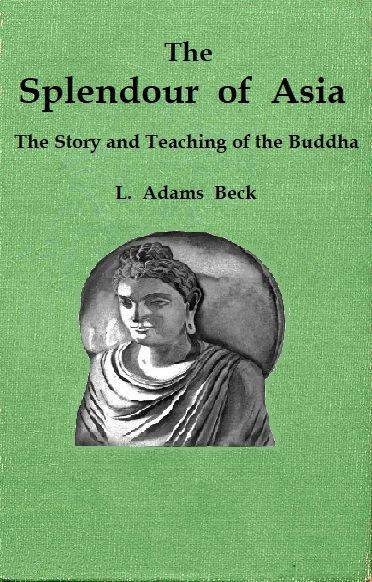
A cover was created for this eBook and is placed in the public domain.