
WeRead Powered by ReaderPub
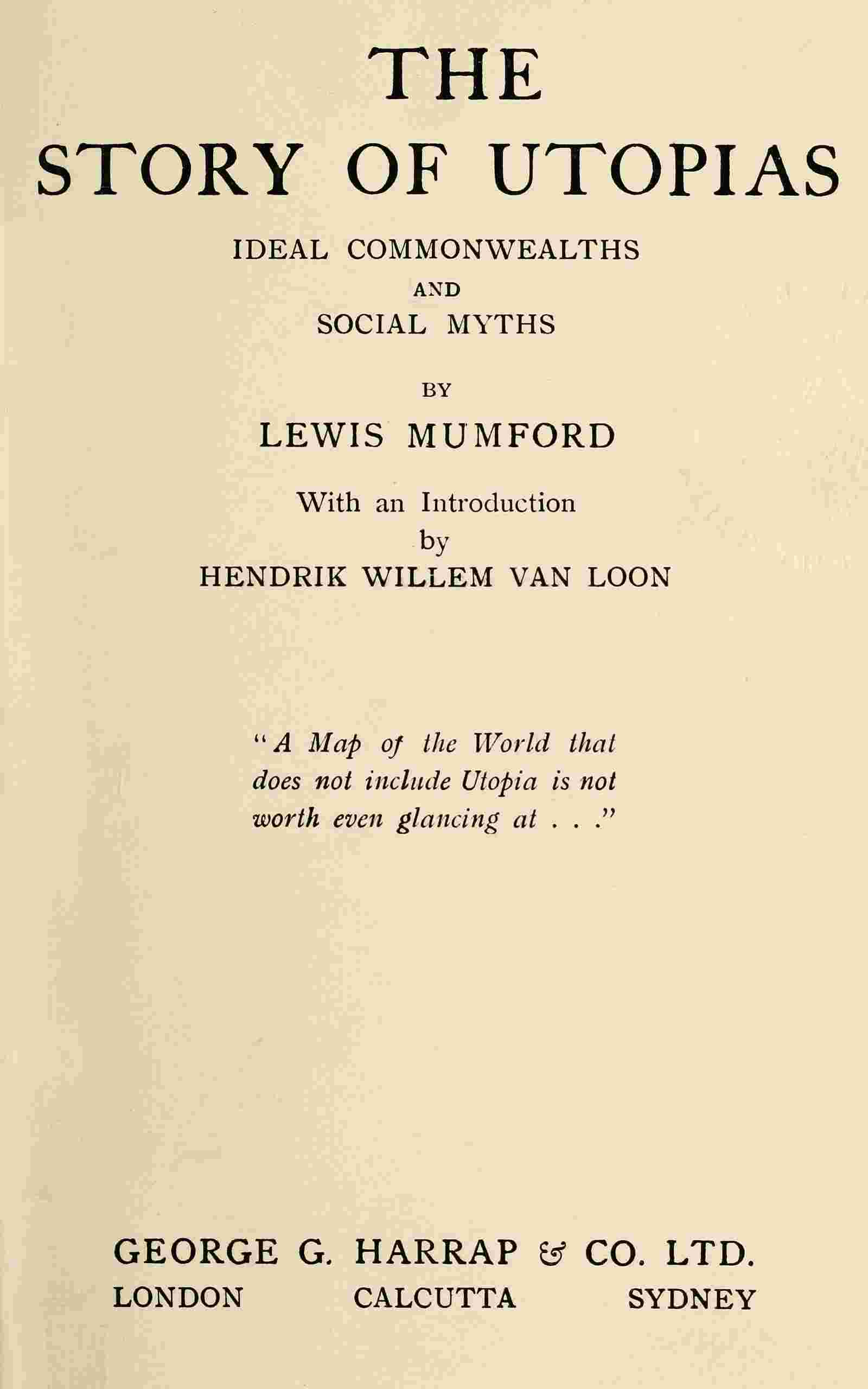
The story of utopias cover

The story of utopias

Chapter 125: Transcriber’s Notes
Open in WeRead

Explore more books like this:

About This Book

The work traces the history of utopian thinking from classical antiquity through the Renaissance and the modern era, surveying how successive thinkers imagined ideal commonwealths. It examines philosophical blueprints for social order, land-based and industrial schemes, mechanistic and pastoral visions, and the ways technological change reshaped hopes for cooperative communities. Case studies of influential proposals illustrate recurring themes: the tension between individual freedom and collective design, the role of property and industry, and the pitfalls of one-sided reforms. The concluding chapters assess failures of past models and outline principles for a more balanced, practicable eutopia.

Transcriber’s Notes

Punctuation, hyphenation, and spelling were made consistent when a predominant preference was found in the original book; otherwise they were not changed.

Simple typographical errors were corrected; unbalanced quotation marks were remedied when the change was obvious, and otherwise left unbalanced.

Chapter One did not indicate the beginning of section “5”. Transcriber added it by referencing an earlier edition of the book.

Text mostly uses “utopia” but sometimes uses “eutopia”. Both retained here.

Page 104: “the tale end” was printed that way.

Page 224: “perfunctory seal upon” was printed as “perfunctory real upon”; changed here.

Page 231: “advertized” was printed that way.

Page 294: “A. E.” was the pseudonym of George William Russell.