
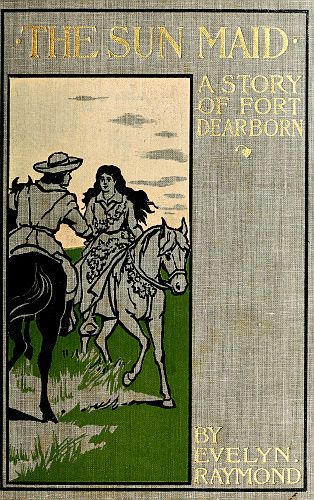
“But, child alive! You ain’t going alone, single-handed, to face five hundred bloody Indians! You must be crazy!”
“Oh, no, I’m not. It is all right. I am not afraid. There isn’t an Indian living who would harm a hair of my head, if he knew me; and almost all in Illinois do know me, either by sight or reputation. I am very happy with them and shall have a pleasant visit; that is, after I have dissuaded them from this proposed attack.”
“Kit, you couldn’t do it. ’Tain’t in nature. A young girl, alone, pretty as you are—You sha’n’t do it,—not with my consent; not while I’m alive and can set a horse or handle a gun. No, sirree. If you go, I go, and that’s the long and short of it.”
“No, dear Father Abel; you must not go; indeed you must not. It would ruin everything. It makes me very sad to have these constant broils and ill-feelings coming up between my white-faced and red-faced friends; yet the Lord permits it, and I try to be patient. But I tell you again, and you must believe it, that I am as safe out yonder in that camp of savages as I am here, this minute, with you. I am the Sun Maid, the Unafraid, the Daughter of Peace, the Snowflake. They have as many names for me as I am years old, I fancy. Each name means some noble thing they think they see in my character, and so I try to live up to it. It’s hard work, though, because I’m—well, I’m so quick-tempered and full of faults. But I suppose if God didn’t mean me to do this work, be a sort of peacemaker, He wouldn’t have made me just as I am or put me in just this place. That’s what the Doctor says, and so I do the best I can. After all, it’s a great honor, I think, to be let to serve people in this way, and so—Good-by, good-by!”
The Snowbird sprang forward at a word and, by experience trained to shun the sloughs and mud-holes, skimmed lightly across the prairie and out of sight. The Smiths stood and watched its disappearance, and the erect white figure upon its back, till both became a speck in the distance. Then, completely dumfounded by the incident, Abel sat down near the door-step to reflect upon it, while the more energetic Mercy departed for the Fort, declaring:
“I’ll see what that all means, or I’ll never say another word’s long as I live! The idee! Men—folks calling themselves men—and wearing government breeches, as I suppose they do, letting a girl like that go to destruction without a soul to stop her! But, my land! she was a sight to see, and no mistake!”
Meanwhile that was happening down at the little wharf which set all tongues a-chatter and fascinated all eyes.
“A fleet is coming in! A regular fleet of schooners, from the north and the upper lakes!”
Those who had not gone hunting crowded to the shore, and even the women caught their babies up and followed the men, Abel among the others, roused from his anxious brooding over the Sun Maid’s daring and catching the excitement.
“Shucks! Something must be up down that direction. Beats all. Here I’ve been only part of a day, and more things have gone on than would at our clearing in a month of Sundays. I—I’m all of a fluster to kind of keep my head level an’ my judgment cool. ’Twouldn’t never do to let on to ma how stirred up I be. Dear me! Seems as if I wouldn’t never get there. I do hope they’ll wait till I do.”
After all, it was the quietest and drowsiest of little hamlets, dropped down in the mud beside a great waterway; and the “fleet,” which had roused so much interest, was but a modest one of a half-dozen small schooners, laden with furs and peltries and manned by the smallest of crews.
However, to Abel, and to many another, it was a memorable event; and he made a pause at the Fort, which in itself was an object of great interest to him, to inform Mercy of the spectacle she was losing.
“Come on, ma! It’s a regular show down there. Real sailors and ships—we hain’t seen the like since we left the East and the coast of old Massachusetts.”
“Ships? My heart! I never expected to look upon another. Just to think it!”
The foremost vessel came to shore and was made fast; and there upon its deck stood a tall, dark-bearded man, who appeared what he was—the commander of the fleet; and he gave his orders in a clear, ringing voice that was instantly obeyed. His manner was grave, even melancholy; and his interest in the safe landing seemed greater than in any person among the expectant groups. He had tossed his hat aside and waited bareheaded in the sunshine till all was ready, when he stepped quietly ashore.
Then, indeed, he cast an inquiring glance around, in the possibility, though not probability, of meeting a familiar face. All at once, his dark eyes brightened and his bearing lost its indifference. Pushing his way rapidly through the crowd, he approached Abel and Mercy and extended his hands in greeting.
“Hail, old friends! Well met!”
“Hey? What? Ruther think you’ve got the better of me, stranger,” said the pioneer, awkwardly extending his own hardened palm.
“Probably the years since we met have made a greater change in me than in you. You both look exactly as you did that last day I saw you at the harvesting.”
“Hey? Which? When? I can’t place you, no how. I ain’t acquainted with ary sailor, so far forth as I remember.”
“But Gaspar, Father Abel? Surely, you and Mercy remember Gaspar Keith, whom you sheltered for so many years, and who treated you so badly at the end?”
“Glory! It ain’t! My soul, my soul! Why, Gaspar—Gaspar! If it’s you, I’m an old man. Why, you was only a stripling, and now——”
“Now, I’m a man, too. That’s all. We all have to grow up and mature. I feel older than you look. And Mercy, the years have certainly used you well. It is good, indeed, to see your faces here, where I looked for strangers only.”
“Them’s us, lad. Them’s us. We’re the strangers in these parts. Just struck Chicago this very day. Got stuck in the mud, and had to be fished out like a couple of clams. And who do you think done the fishing? Though, if you hadn’t spoke that odd way just now, I’d have thought you would have known first off. Who do you suppose?”
“Oh, he’ll never guess. A man is always so slow,” interrupted Mercy, eagerly. “Well, ’twas nobody but our own little Kit! The Sun Maid, and looking more like a child of the sunshine even than when you run off with her so long ago.”
“The—Sun—Maid! Kit-ty, my Kitty?”
Gaspar’s face had paled at the mention of the Sun Maid to such a grayness beneath its brown that Mercy reached her hand to stay him from falling; but at his second question her womanly intuition told her something of the truth.
“Yes, Gaspar, boy. Your Kitty, and ours. We hadn’t seen her till to-day, neither; not since that harvestin’. But the longing got too strong and, when we was burnt out, we came straight for her. Didn’t you know she was here yet? Or didn’t you know she was still alive?”
“No. No, I didn’t. That very next winter after I went away—and that was the next day after we came here together—an Indian passed where I was hunting with my master and told me she had died. He was one we had known at Muck-otey-pokee—the White Pelican. He said a scourge of smallpox had swept the Fort and this settlement and that my little maid had passed out of the world forever. But you tell me—she is alive? After all these years of sorrow for her, she is still alive? I—it is hard to believe it.”
Mercy laid her hand upon the strong shoulder that now trembled in excitement.
“There, there, son; take it quiet. Yes, she’s alive, and the most beautiful woman the good Lord ever made. Never, even in the East, where girls had time to grow good-looking, was there ever anybody like her. I ain’t used to it myself, yet. I can’t realize it. She’s that well growed, and eddicated, and masterful. Why, child, the whole community looks up to her as if she were a sort of queen. I’ve found that out in just the few hours I’ve been here, and from just the few I’ve met. Even Wahneeny—she’s here, too; has been most all the time. The Black Partridge, Indian chief, he that was her brother, that took care of you two children when the massacre was, he didn’t expect she’d ever come again; but still, it appears, just on the chance of it, he rode off up country somewhere, and he happened to strike her trail, and that Osceolo’s—the scamp—that had run off with Kitty’s white horse, and fetched ’em all back. The women in the Fort was tellin’ me the whole story just now. I hain’t got a word out of Wahneeny, yet. She’s as close-mouthed as she ever was; but there’s more to hear than you could hark to in a day’s ride, and—Where you going, Gaspar?”
“To find my Kitty.”
“Well, you needn’t. And I don’t know as she’s any more yours than she is ours, seein’ we really had the credit of raisin’ her. For she’s took her life in her hand, and has gone alone, without ary man to protect her, out across the prairie to face five hunderd Indians on the war-path, and—Hold on! What you up to?”
The sailor, or hunter, whichever he might be, had started along the footpath to the Fort, and halted, half angrily, at this interruption.
“Well? What? I’ll see you by and by. I must find Kitty!”
“Right you are, lad. Find her, and fetch her back. And, say! Mercy says your own old Tempest horse is in the stable at the Fort; that it now belongs to the Sun Maid, and she’s the only one who ever rides it. The Captain gave it to her because she grieved so about you. I wouldn’t wonder if he’d travel nigh as fast as he used—when he run away before. I never saw the beat of you two young ones! As fast as a body catches up to you, off you run!”
Even amid the anxiety now renewed in Abel’s mind regarding Kitty, the humorous side of the situation appealed to him; but there was no answering smile on Gaspar’s face; only an anxiety and yearning beyond the comprehension of either of these honest, simple souls.
“Well, go on, then. Run your beatingest, in a bee line, due west. That’s the way she took, and that’s the trail you’ll find her on, if so be you find her at all.”
Those at the Fort looked, wondered, but did not object, as this dark voyageur strode straight into the stables and to a box stall where Tempest enjoyed a life of pampered indolence. They realized that this was no stranger, but one to whom all things were familiar—even the animal which answered so promptly to the cry:
“Tempest, old fellow!”
It was a voice he had never forgotten. The black gelding’s handsome head tossed in a thrill of delight, and the answering neigh to that love call was good to hear. In a moment Gaspar had found a saddle, slipped it into place, and, scarcely waiting to tighten its girth, had leaped upon the animal’s back.
“Forward, Tempest! Be true to your name!”
Those who saw the rush of the gallant creature through the open gates of the stockade acknowledged that he would be.
CHAPTER XVIII.
WESTWARD AND EASTWARD OVER THE PRAIRIE.
“
Fast, Tempest, fast!”
The sunshine was in his eyes, and a warmer sunshine in his heart, as Gaspar urged the gelding forward.
Fast it was. The faithful creature recognized the burden he carried, and his clean, small feet reeled off the distance like magic, till the village by the lake was left far behind, and only the limitless prairie stretched beyond. Yet still there was no sign of the Snowbird along the horizon, nor any point discernible where an Indian encampment might be.
At length the rider paused to consider the matter.
“It’s strange I don’t see her. If she were crossing the level, anywhere, I should, for my eyes are trained to long distances. It must be that Abel gave me the wrong direction. I’ll turn north, and try.”
But, keen-sighted though he was, for once the woodsman blundered. Between him and the lowering sun the prairie dipped and rose again, the two borders of the hidden valley seeming to meet in one unbroken plain. It was in this little depression that the wigwams were pitched, and among them the Sun Maid was already moving and pleading with her friends for patience and peace.
Meanwhile, Gaspar continued on his chosen route, at a direct right angle from that he should have followed, till the twilight came down and the whole landscape was swathed in mist. For there had been heavy rains of late, and the vapor rose from the soaked and sun-warmed earth like a great white pall, filling the hunter’s nostrils and blinding his sight.
“Well, this is hopeless. I might ride over her and not find her in this fog. But I can’t stay here. It’s choking. Heaven grant my Kitty’s safe under shelter somewhere. My own safety is to keep moving. Good boy, Tempest! Take it easy, but don’t stop.”
After that, there was nothing to do but trust the horse’s instinct to find a path through the mist and to be grateful that the ground was so level.
“It’s a long lane that has no turning. It must be that we’ll strike something different after a while; if not a settler’s house, at least a clump of trees. Any shelter would be better than none, in this creeping moisture. It would be easy to get lost; and what a situation! Oh! if I knew that she was out of it. A messenger to the Indians, eh? My little Kit, my dainty foster-sister!”
The gelding’s nose was to the ground and, as a dog would have done, he picked his way, cautiously, yet surely, straight north where lay, though Gaspar did not know it, a settler’s clearing and comfortable cabin. The rider’s thoughts passed from his present surroundings back to the past and forward to the future; and when there sounded, almost at his feet, a cry of distress he did not hear it in his absorption.
But Tempest did. At the second wail he stopped short, and it was this that roused Gaspar from his reverie.
“Tired, old Tempest, boy? It won’t do to rest here. Take a breath, if you like, and get on again. Keeping at it is salvation.”
“Mamma! I want—my—mamma!”
“Whew! What’s that? Hello!”
The sound was not repeated, and yet Tempest would not advance.
“Hello!” shouted Gaspar; and after a moment of strained listening, again he caught the echo of a child’s sob.
“My God! A baby—here! Lost in this fog!”
He was off his horse and down upon his knees, reaching, feeling, creeping—calling gently, and finally touching the cold, drenched garment of the child he could not see.
In its terror at this fresh danger the little one shrieked and rolled away; but the man lifted it tenderly, and soothed it with kind words till its shrieks ceased and it clung close to its rescuer.
“There, there, poor baby! How came you here? Don’t be afraid. I’ll take you home. Tempest will find the way. Feel—the good horse knows. It was he that found you; we’ll get on his back and ride straight to mamma, for whom you called.”
Climbing slowly back into his saddle, because of the little one he held so carefully, Gaspar laid its cold hand upon the gelding’s neck, but it slid listlessly aside and he realized that he had come not a moment too soon.
All night they wandered, the child lying on Gaspar’s breast wrapped in his coat, while the mist penetrated his own clothing and seemed to creep into his very thoughts, numbing them to a sort of despair that no effort could cast off. The wail of the child lost in that dreariness had brought back, like a lightning’s flash, the earliest memories of his life and revived his never-dying hatred of his parent’s slayers.
“An Indian’s hand was in this work!” he mused. “Doubtless, the mother for whom it grieved has met the fate which befell my own. And Abel said that it was among such as these my Sun Maid had gone!”
Then justice called to mind his knowledge of Wahneenah, of the Black Partridge, old Winnemeg, and others, and his mood softened somewhat; but still memory tormented him and the white fog seemed a background for ghastly scenes too awful for words. Above all and through all, one consciousness was keener and fiercer than the others:
“My Kitty is among them at this moment! O, God, keep her!”
It was the strongest cry of his yearning heart; yet underneath lay an impotent rage at his own powerlessness to help in this preservation.
“For what is my manhood or my courage worth to her now? And even the Deity seems veiled by this deadening, suffocating mist!”
But Tempest moved steadily on once more, and the little child warmed to life on his breast; and by degrees the man’s self-torment ceased. Then he lifted his eyes afresh and struggled to pierce the gloom.
What was that? A light! A little yellow spot in the gray whiteness, which the horse was first to see and toward which he now hastened with a firmer speed.
“It’s a fire. No, a lamp in a house window. There, it’s gone. A will-o’-the-wisp by some hidden pool. It shines again. Well, Tempest sees it and believes in it.”
The man lacked the animal’s faith, and even when they had come to within a short distance of the glow, the clouds of vapor swept between it and them and Gaspar checked Tempest’s advance. But at last a slight wind rose, and the mist which rolled toward them was tinged with the odor of smoke, so the rider knew that his first surmise had been correct.
“It is a fire. A settler’s cabin, probably once this lost child’s home. The red man’s work!”
When he reached the very spot there were, indeed, the remnants of a great burning, yet in the circle of the light Gaspar saw a house still standing. He was at its threshold promptly, and entered through its open door upon a scene of desolation. A woman crouched by the hearth that was strewn with ashes, and her moans echoed through the gloom with so much of agony in them that the stranger’s worst fears were confirmed. Then he caught her murmured words, and they were all of one tenor:
“My baby! my baby! my baby! My one lost little child! The wolves—my little one—my all!”
Gaspar strode into the room, lighted only by the fitful glare from the ruins without, and gently spoke:
“Don’t grieve like that! The child is safe. It is here in my arms.”
“What? Safe! safe!”
The mother was up, and had caught the little one from him before the words had left her lips, and the passion of her rejoicing brought the tears to the man’s eyes as her sorrow had not done.
After a moment, she was able to speak clearly and to demand his story. Then she gave hers.
“I was here alone. My husband had gone hunting, and I went into the barn to seek for eggs. The loft was dark——”
“Spare yourself. I can guess. The Indians.”
“The Indians? No, indeed. Myself. My own carelessness. I carried a candle, and dropped it. The hay caught. I barely escaped from having my clothing burned on me; but I did. Then I forgot everything except my terrible loss and my husband’s anger when he returns. I began to fight the fire. I remember my little one crying with fright, but I paid no attention, and when at length I realized that it was too late for me to save our stock I stopped to look for him. Fortunately, the cabin was too far from the barn to catch easily, and there was a wind blowing the other way. That’s all that saved the home; yet, when I missed my baby, I wished that it would burn, too, and me with it. Life without him would be a living death. And he would have died, any way. The wolves are awful troublesome this spring. We’ve lost more than twenty of our hogs and the only pair of sheep we had. So husband joined a party and went out to hunt them. What will he say, what will he say, when he comes back!”
In Gaspar’s heart there sprang up a great happiness. The ill which had happened here was so much less than he had anticipated that he took courage for himself. After all, the Sun Maid might be safe, as Abel had declared she said she should be. He remembered, at last, that not all men are evil, even red ones; and in the reaction of his own feelings, he exclaimed:
“What can he say, but give thanks that no worse befell him!”
However, now that her child was safe within her arms, the woman began to suffer in advance the torment she would have to undergo when she faced her indignant husband; and she retorted sharply:
“Worse! Well, I suppose so. But I don’t see why in the name of common sense I was let to be such a fool in the first place. He won’t, neither. It’s all very well when you’ve lost half your property to give thanks for not losing your life, too; but I don’t see any cause for losing ary one.”
This sounded so like Mercy and her philosophy that Gaspar threw back his head and laughed; which angered his new friend first, and then affected her, also, with something of his mirth.
“I can’t see a thing to laugh at, I, for one,” she remarked, trying to be stern.
“Oh! but I can. And I’m not a laughing man, in ordinary. But there’s one thing I know—I’m powerful hungry. Can’t we make another fire, one that we can control, and get a bit of supper? If there’s anything in the house to cook, I can cook it while you tend baby. Then we’ll talk over your affairs.”
“There’s plenty to cook, but you’ll not cook it, sir. I owe you my child’s life, and now things are getting straighter in my muddled mind. I lost the barn for Jacob, and I must help replace it. I’ve been a hard worker always, but I can stretch another point, I guess. Pshaw! I believe it’s getting daylight. It’ll be breakfast instead of supper, this time.”
It was daylight, indeed; and in a half-hour the simple meal was smoking on the table, and Gaspar sitting to eat it with the hearty appetite of a man who has lived always out-of-doors. But he could talk as fast as eat, when he was anxious as on that morning; and before he had drained his last cup of the “rye coffee” he had learned from his hostess that the Indian encampment he sought lay well to the southwestward of her cabin, and that by a way she could direct him he could reach it easily in a two-hours’ ride. This to Tempest, who had rested and fed, would be nothing, if he was anything the horse he used to be, and Gaspar believed, from the past night’s experience, that sometimes even a horse can improve with age.
“Well, I’ll be off, then. I’m anxious to get there. If all goes well I’ll get around this way again before long. Thank you for my entertainment, and here’s a trifle for the baby.”
He tossed a gold piece on the table and was leaving the cabin. But she restrained him.
“No, sir, I can’t take that, nor let the little one. And as for thanking me, I shall never cease to thank you, and the Lord for you, that you lost your way last night. But let me beg you, sir, to take a second thought. Jacob says the Indians are getting ready for an outbreak. It is like running your neck into a halter to go among them just now. I—I wish you wouldn’t. I couldn’t bear to have harm come to you after what you’ve done for me.”
“Thank you, but I must go. I am not much afraid for myself at any time, for I’ve known the red-skins always and—trusted them never! But a girl—did you ever hear of the Sun Maid?”
“Hear of her? Her? Well, I guess so! Who hasn’t, in these parts? Why?”
“It was to find her and protect her that I started last night from the Fort.”
“To protect her? Well, you could have saved your trouble. I wish that I was as safe in this wild country as she is. There is an old saying that her life is charmed; that nothing evil can ever happen to her; and so far it has proved true. As for the Indians, even the wickedest in the whole race would die to save her life. I hope you’ll find her, sir, all right; but if there’s any protecting to be done, she’ll protect you, not you her. Well, good-by, and good luck!”
Gaspar bared his head and rode away, on a straight trail this time, and with the exhilaration of the morning tingling through his healthful veins. On every side the great clouds of white mist rose and rolled apart. Blue violets and white windflowers began to peep upward at him from his path, and he remembered Kitty’s love for them. Then the sun broke through, and only those who have thus ridden across a dew-drenched prairie, at such an hour in such a season, can picture what that ride was like.
The spirit of life and love and that glorious morning thrilled both horse and master as they leaped forward and still forward till, on the top of a grassy rise, a sudden halt was made.
For what was this coming out of the west?—this fair white creature on her snowy mount, with the golden sunlight on her yellow hair, her glowing face, her modest maiden breast. Flowers wreathed her all about and a White Bow gleamed at her saddle horn. Behind her, and one on either side, rode dusky warriors, brave in their finest trappings and turning a reverent, attentive ear to the Maid’s words. Their horses’ footfalls deadened by the sodden grass, slowly they came into fuller view, as a picture grows under the painter’s brush.
Still the man on the black horse facing them sat still, spellbound. Could this be Kitty, his Kitty; to whom his thoughts had turned as to a half-grown, playful child, and over whom he had domineered with the masterful pride of boyhood? He was a man now, boyhood was past; but he had quite forgotten that girlhood also passes and the child becomes a woman.
He had grown rich and strong. After her supposed death he had devoted himself wholly to money-getting with the singleness of purpose that never fails of its object. He had come back to his old home to spend the fortune he had gained, feeling himself a master among men and his strength that of wisdom as well as wealth.
Now all his pride and arrogance passed from him before the nobility of this woman approaching. For on her youthful face sat the dignity which is higher than pride and from her beautiful eyes gleamed the beneficent love more far-reaching than wealth.
After a moment Gaspar rode slowly forward again, and soon espying, but not recognizing, him, the Sun Maid advanced. Then all at once the black horse and the white galloped to a meet.
“Kitty! My Kitty!”
“Gaspar!”
Their hands closed in a clasp that banished years of separation, and the black eyes searched the blue, questioning for the one sweet answer that rules all the world. There was a swift self-revelation in both hearts; a consciousness that this was what the God who made them had meant from the beginning. With a grave exaltation too deep and too high for words, the pure man and the pure woman came to their destiny and accepted it. Then their hands fell apart, the black Tempest wheeled into place beside the white Snowbird, and, as on a day long in the past, the pair passed swiftly and lightly eastward toward the lakeside village and their home.
“Ugh! The Sun Maid has found her mate!” muttered the foremost warrior grimly, and followed with his company at a soberer pace.
CHAPTER XIX.
THE CROOKED LOG.
“
I tell you what, Chicago’s a-growing. First we come; then Gaspar; then Kitty and him get married; and I go to keeping tavern in the parson’s house; and his son, One, goes up north to take a place in Gaspar’s business; and Gaspar sends Two and Three east to study law and medicine; and Four and his pa come to board in our tavern; and Osceolo——”
“For the land’s sake, Abel Smith, do hold your tongue. Here you’ve got to be as big a talker as old Deacon Slim, that I used to hear about, who begun the minute he woke up and never stopped till his wife tied his mouth shut at night. Even then——”
“Mercy, Mercy! Take care. Set me a good example, if you can; but don’t go to denying that this is a growin’ village.”
“I’ve no call to deny it. Why should I? But, say, Abel, just step round to the store, won’t you, an’ buy me some of that turkey red calico was brought in on the last team from the East. I’d admire to make Kitty a rising sun quilt for her bedroom. ’Twould be so ’propriate, too.”
“Fiddlesticks! Not a yard of stuff will I ever buy for you to set an’ snip, snip, like you used to in the woods. We’ve got something else to do now. As for Kit, between the Fort folks and the Indians, she’s had so many things give her a’ready, she won’t have room to put ’em. The idee! Them two children gettin’ married. Seems just like play make believe.”
“Well, there ain’t no make believe. It’s the best thing ’t ever happened to Chicago. Wonderful how they both ’pear to love the old hole in the mud,” answered Mercy.
“Yes, ain’t it? To hear Gaspar talk, you’d think he’d been to Congress, let alone bein’ President. All about the ‘possibilities of the location,’ the ‘fertility of the soil,’ the ‘big canawl,’ and the whole endurin’ business; why, I tell you, it badgers my wits to foller him.”
“Wouldn’t try, then, if I was you. Poor old wits ’most wore out, any how, and better save what’s left for this tavern business. Between you and your fiddle, thinkin’ you’ve got to amuse your guests, I’m about beat out. All the drudgery comes on me, same’s it always did.”
“Drudgery, Mercy? Now, come. Take it easy. Hain’t Kitty fetched you a couple of squaws to do your steps and dish washin’? All you have to do is to cook and——”
“Oh! go along, Abel, and get me that calico. Don’t set there till you take root. I ain’t a-complainin’, an’ I ’low I’m as much looked up to here in Chicago without my bedstead as I was in the woods with it.”
“Looked up to? I should say so. There ain’t a woman in the settlement holds her head as top-lofty as you do. And with good reason, I ’low. I don’t praise you often, ma, but when I do, I mean it. If you hadn’t been smarter ’n the average, and had more gumption to boot, you’d never been asked in to help them army women cook Kitty’s weddin’ supper. By the way, where are the youngsters now? I hain’t seen ’em to-day.”
“Off over the prairie on their horses, just as they used to be when they were little tackers. I never saw bridal folks like them; from the very first not hangin’ round by themselves, but mixing with everybody, same’s usual, and beginning right away to do all the good they can with Gaspar’s money. Off now to see some folks burned their own barn up——”
“W-h-a-t?” demanded Abel, with paling face.
“What ails you? A fool of a woman took a lighted candle into her hay loft and ruined herself. That happened the night Gaspar found Kitty; and they call it part of their weddin’ tower to go there and lend the farmer the money to replace it. Gaspar was for giving it outright, though he’s a shrewd feller too, but Kit wouldn’t. ‘They aren’t paupers, and it would hurt their pride,’ she said. ‘Lend it to them on very easy terms, and they’ll respect themselves and you.’”
“Well, of course he done it.”
“Sure. When a man gets a wife as wise as Kitty he’d ought to hark to her.”
“I’ll go and get the calico now, Mercy,” said Abel, and left rather suddenly.
At nightfall the young couple rode homeward once more, facing the moonlight that whitened the great lake and touched the homely hamlet beside it with an idealizing beauty; and looking upon it, the Sun Maid recalled her vision concerning it and repeated it to her husband.
“Ever since then, my Gaspar, the dream comes back to me in some form or shape. But it is always here, right here, that the crowds gather and the great roar of life sounds in my ears. In some strange way we are to be part of it; part of it all. In the dream I see the tall spires of churches, thick and shouldering one another like the trees in the forest behind us.”
“But, my darling, you have never seen a church of any sort. How, then, can you dream of them?”
“That I don’t know, unless it is from the pictures in the good Doctor’s books. I have learned so much from the pictures always. But, oh! I wish I could make you know some of the delight I felt when first I could read!”
“I do know it, sweetheart. I, too, craved knowledge and dug it out for myself, up there in the northern forests, from the few books that came my way and the rare visit of a man who could teach. The first dollar I had that was all my own I put aside for you. That was the beginning of our fortune. The second I invested in a spelling-book. The study, dear, was all that helped me bear the pain of your death. But you are not dead! Rather the most alive of any human being whom I ever saw.”
“That is true, Gaspar. I am alive. I just quiver with the force that drives me on from one task to another, from one point reached to one beyond. And now, with you beside me, there is no limit, it seems, to the help we can be to every single person who will come within our reach. Wasn’t the woman glad and grateful; and don’t you see, laddie, that it is better as I planned? You say you have been penurious, saving every cent not expended for your books and necessaries: and yet, now that you are happy again, you are ready to rush to the other extreme and throw your money away in thoughtless charity.”
She looked so young, so childlike, in the glimmering moonlight that the tall woodsman laughed.
“To hear my little Kit teaching her elders!”
“The elders must listen. It is for our home. You must spend every dollar you have, but you must do it in such a way that somebody will be helped. We don’t want money, just money, for itself. To hold it that way would make us ignoble. It’s the wealth we spend that will make us rich.”
“Kit, there’s some dark scheme afloat in that fair head of yours. Out with it!”
“Just for a beginning of things—this: There was a family came to the Fort to-day. The father is a skilled wood-carver. He is not over strong and his wife is frailer than he. They have a lot of little children and he must earn money. It has cost them more than they expected to get as far as this, even, and they should not go farther. Yet he is a man, a master workman. It would be an insult to offer him money. But give him work and you feed his soul as well as his body.”
“How, my love? Who that dwells in a log cabin needs fine carvings or would appreciate them if they had them?”
“Educate them to want and appreciate them. Open a school for just that branch. I myself will be his pupil. I remember with what delight I used to mould Mercy’s butter. Well, I’ve been moulding something ever since.”
“Your husband, for instance.”
“He’s a little difficult material; but time will improve him! Then there are the Doctor’s botanical treatises and specimens. Open a school. If you have to begin with a few only, still begin. Lay the seed. From our little workroom and classroom may grow one of those mighty colleges that have made Englishmen great and are making Americans their equals.”
“Hello there, child! Hold on a bit. Their equals? And you a soldier’s daughter!”
“Since I am a soldier’s daughter, I can afford to be just, and even generous. It is all nonsense, because we have gained our independence, to say we are better than our fathers were. For they were our fathers, surely; and they had had time in their rich country, with their ages of instruction, to grow learned and great. But we Americans are their children, and, just as is already proving, each generation is wiser than the one which went before. So presently we shall be able to do even better than they——”
“Give them another dose of Yankee Doodle?”
“If they require it, yes. But come back to just right here in this little town. Besides the schools for white children, can’t we have those for the Indians?”
“No, dear; not here. Not anywhere, I fear, that will ever result in permanent good. At least, the time is not yet ripe for that part of your dreaming to come true.”
“But think of Wahneenah. She is teachable and there is none more noble. Yet she is an Indian.”
“She is one, herself. In all her race I have seen none other like her. There is Black Partridge, too, and Gomo, and old Winnemeg. They are exceptions. But, my love, there are, also, the Black Hawk and the Prophet.”
He did not add his opinion, which agreed with that of the wisest men he knew, that Illinois would know no real prosperity till the savages, which disturbed its peace, were removed from its borders. For she loved them, hoped for them, believed in them; even though her own common sense forced her to agree with him that the time was not ripe then, if it ever would be, for their civilization. So he held his peace and soon they were at home.
“Heigho! There are lights in our cabin. Hear me prophesy: Mother Mercy has come over with a roast for our supper and Mother Wahneenah has quietly set it aside to wait until her own is eaten. Ho there within!” he called merrily. “Who breaches our castle when its lord is absent?”
Mercy promptly appeared in the doorway. She was greatly excited and hastily led them to the rear of the house, pointing with both hands to an animal fastened behind it.
“There’s your fine Indian for you! See that?”
“Indeed I do!” laughed Kitty. “An ox, Jim, isn’t it? with the Doctor’s saddle on his back and his botanizing box, and—What does it mean? I knew he was absent-minded, but not like this.”
“Absent-minded. Absent shucks! That’s Osceolo—that is!” in a tone of fiercest indignation. “He’s such a crooked log he can’t lie still.”
“Is that his work? He dared not play his tricks on the dear Doctor!”
“Yes, it’s his’n. The idee! There was Abel went and gave old Dobbin to the parson, to save his long legs some of their trampin’ after weeds and stuff and ’cause he was afraid to ride ary other horse in the settlement. And there was Osceolo, that for a feller’s hired out to a regular tavern-keeper like us, to be a hostler and such, he don’t earn his salt. All the time prankin’ round on some tomfoolery. And Abel’s just as bad. A man with only two or three little weeny tufts o’ hair left on his head and mighty little sense on the inside, at his time of life, a-fiddlin’ and cuttin’ up jokes, I declare—I declare, I’m beat, and I wish——”
“But what is it?” demanded Kitty, bringing her old friend back to facts.
“Why, nothing. Only when the dominie came home and stopped here, as he always does after he’s been a-prairieing, to show you his truck and dicker, Osceolo happens along and is took smart! The simpleton! Just set old Dobbin scamperin’ off back into the grass again and clapped the saddle and tin box and what not on to the ox’s back. Spected he’d see the parson come out and mount and never notice. ’Stead of that, along comes Abel—strange how constant he has to visit to your house!—and sees the whole business. Well, he’d caught some sort of a wild animal, and—say, Kitty Briscoe, I mean Keith!—that Indian’d drink whiskey, if he got a chance, just as quick as one raised in the woods, instead of one privileged to set under such a saint as the Doctor all his days. I tell you—Well, what you laughing at, Gaspar Keith? Ain’t I tellin’ the truth?”
“Yes, Mother Mercy, doubtless you are. But it isn’t so long back, as Abel says, that you objected to ‘setting under’ the Doctor yourself.”
“Suppose it wasn’t? I didn’t know him then, not as I do now. He’s orthodox, I found out, and that’s all I wanted. But I know what I’m talkin’ about. Osceolo, he’s always beggin’ for Abel to keep liquor: an’ we teetotallers! An’ he’s teased so much that the other day Abel thought he’d satisfy him. So he got an old bottle, looked as if some tipsy Indian had thrown it away, and filled it with a dose of boneset tea. He made a terrible mystery of the whole matter, pretendin’ to be sly of me, and took it out from under his coat and gave it to Ossy out behind in the stable, like it was a wonderful secret. Do you know, that Indian hain’t never let on a single word about that business yet? Oh! he’s a master hand for bein’ close-mouthed. They all be. They just do—but don’t talk.”
“Mercy, if you were only a little more talkative, you’d be better company!” teased Gaspar, who was eager for the finish of the story and his supper.
“Now—you! Well, laugh away. I don’t mind. All is, when Abel saw the trick Ossy had played on the Doctor, he plays one on Ossy. He’d caught a queer sort of animal, as I said, and he was fetchin’ it to Kit. Everybody brings her everything, from rattlesnakes up. But when he saw that ox, he just opens the tin box and claps the creature inside and then hunts up Ossy. He says: ‘There’s something in that box pretty suspicious, boy. You might look an’ see what ’tis but don’t let on.’ He’s that curiosity, Osceolo has, that he forgot everything else and stuck his hand in sly. I expect he thought it was something to eat, or likely to drink, and he got bit. Hand’s all tore and sore, and now Abel’s scared and gone off with him to the surgeon at the Fort, and there’ll be trouble. Ossy was muttering something about the ‘Black Hawk coming and that he’d had enough of the white folks. He was born an Indian, and an Indian he’d die’; and to the land! I hope he will! He makes more mischief in this settlement than you can shake a stick at!”
“‘It’s hard for a bird to get away from its tail,’” quoted Gaspar, lightly. “Osceolo began life wrong and his reputation clings to him. I’ll take the saddle off Jim, and let’s go in to supper. None of my Sun Maid’s tribe is to be feared, I think, no matter how direly they may threaten.”
Yet the young husband glanced toward his wife with an anxiety that he would not have liked her to see. During the weeks since his return to the village he had learned much more than he had told her of a movement far beyond the Indian encampments she was accustomed to visit, which would bring serious trouble, if not complete disaster, upon their beloved home. Osceolo was the Sun Maid’s devoted follower; yet the prank he had played upon the old Doctor, whom she so reverenced, showed that he was already throwing aside the restraints of his enforced civilization; and the sign was ominous.
CHAPTER XX.
ENEMIES, SEEN AND UNSEEN.
But the time passed on and the rumors died away, or ended in nothing more serious than had always disturbed the dwellers in that lonely land. Now and again a friendly, peace-loving chief would ride up to the door of the Sun Maid’s home, and, after a brief consultation she would put on her Indian attire and ride back with him across the prairies. As of old, she went with a heart full of love for her Indian friends, but it was not the undivided love that she had once been able to give them.
Over her beautiful features had settled the brooding look which wifehood and motherhood gives; and though she listened as attentively as of old and counselled as wisely, she could not for one moment forget the little children waiting for her by her own hearthside or the brave husband who was so often away on his long journeys to the north; and the keen intelligence of the red men perceived this.
“She is ours no longer,” said a venerable warrior, after one such visit. “She has taken to herself a pale-face, he who met her on the prairie in the morning light, and her heart has gone from her. It is the way of life. The old passes, the new comes to reign. We are her past. Her Dark-Eye is her present. Her papooses are her future. The parting draws near. She is still the Sun Maid, the White Spirit, the Unafraid. As far as the Great Spirit wills, she will be faithful to us; but now when she rides homeward from a visit to our lodge it is no longer at the easy pace of one whose life is all her own, but wildly, swiftly, following her heart which has leaped before.”
Each morning, nearly, as the Sun Maid ministered to her little ones or busied herself among the domestic duties of her simple home she would joyfully exclaim to Wahneenah:
“I don’t believe there was ever a woman in the world so happy as I am!” And the Indian foster-mother would gravely reply:
“Ask the Great Spirit that the peace may long continue.”
Till, on one especial day, the younger woman demanded:
“Well, why should it not, my Mother? It is now many weeks since I have been called to settle any little quarrel among our people. Surely they are learning wisdom fast. Do you know something? I intend that some of the squaws who are idle shall make my baby, Gaspar the Second, a little costume of our own tribe. It shall be all complete; as if he were a tiny chief himself, with his leggings and head-dress, and—yes, even a little bow and quiver. I’ll have it finished, maybe, before his father comes down from this last trip into the far-away woods. Oh! I shall be glad when my ‘brave’ can trust all his business of mining and fur-buying and lumbering to somebody else. I miss him so. But won’t he be pleased with our little lad in feathers and buckskin?”
Wahneenah’s dark eyes looked keenly at her daughter’s face.
“No, beloved; he will not be pleased. In his heart of hearts, the white chief was ever the red man’s enemy. Me he loves and a few more. But let the White Papoose” (Wahneenah still called her foster-child by the old love names of her childhood) “let the White Papoose hear and remember: the day is near when the Dark-Eye will choose between his friends and the friends of his wife. It is time to prepare. There is a distress coming which shall make of this Chicago a burying-ground. Our Dark-Eye has bought much land. He is always, always buying. Some day he will sell and the gold in his purse will be too heavy for one man’s carrying. But first the darkness, the blood, the death. Let him choose now a house of refuge for you and the little children; choose it where there are trees to shelter and water to refresh. Let him build there a tepee large enough for all your needs,—a wigwam, remember, not a house. Let him stock it well with food and clothing and the guns which protect.”
“Why, Other Mother! What has come over you? Such a dismal prophecy as that is worse than any which old Katasha ever breathed. Are you ill, Wahneenah, dearest?”
“There is no sickness in my flesh; yet in my heart is a misery that bows it to the earth. But I warn you. If you would find favor in the eyes of your brave, clothe not his son in the costume of the red man.”
Kitty was unaccountably depressed. Hitherto she had been able to laugh aside the sometimes sombre auguries of the chief’s sister; but now something in the woman’s manner made her believe that she knew more than she disclosed of some impending disaster. However, it was not in her nature, nor did she believe it right, that she should worry over vague suggestions. So she answered once more before quite dismissing the subject:
“Well, we were already discussing the comfort of having another home out in the forest, and Abel has suggested that we build it on the land which was his farm and which Gaspar has bought. We both liked that; to have our own children play where we played as children. I want my little ones to learn about the wild things of the woods, and the dear old Doctor is still alive to teach them. You will like it, too, Other Mother. When the days grow hot and long we will ride to the ‘Refuge’; and I think the wigwam idea is better, after all, than the house; though I do not know what my husband will decide.”
“Before the days grow long, the ‘Refuge’ must be finished, and the earlier the better. It is rightly named, my daughter, and the time is ripe.”
Ere many hours had passed, and most unexpectedly to his wife, Gaspar returned. In the first happiness of welcoming him she did not observe that his face was stern and troubled; but she did notice, when bedtime came, that he did what had never before been done in their home: he locked or bolted the doors and stoutly barred the heavy wooden shutters. He had also brought Osceolo with him, from Abel’s tavern, and had peremptorily bidden the Indian to “Lie there!” pointing to a heap of skins on the floor beside the fire.
Toward morning Kitty woke. To her utter amazement, she saw in her living room her Gaspar and Osceolo engaged in what seemed a battle to the death. Then she sprang up and ran toward them, but her husband motioned her back.