
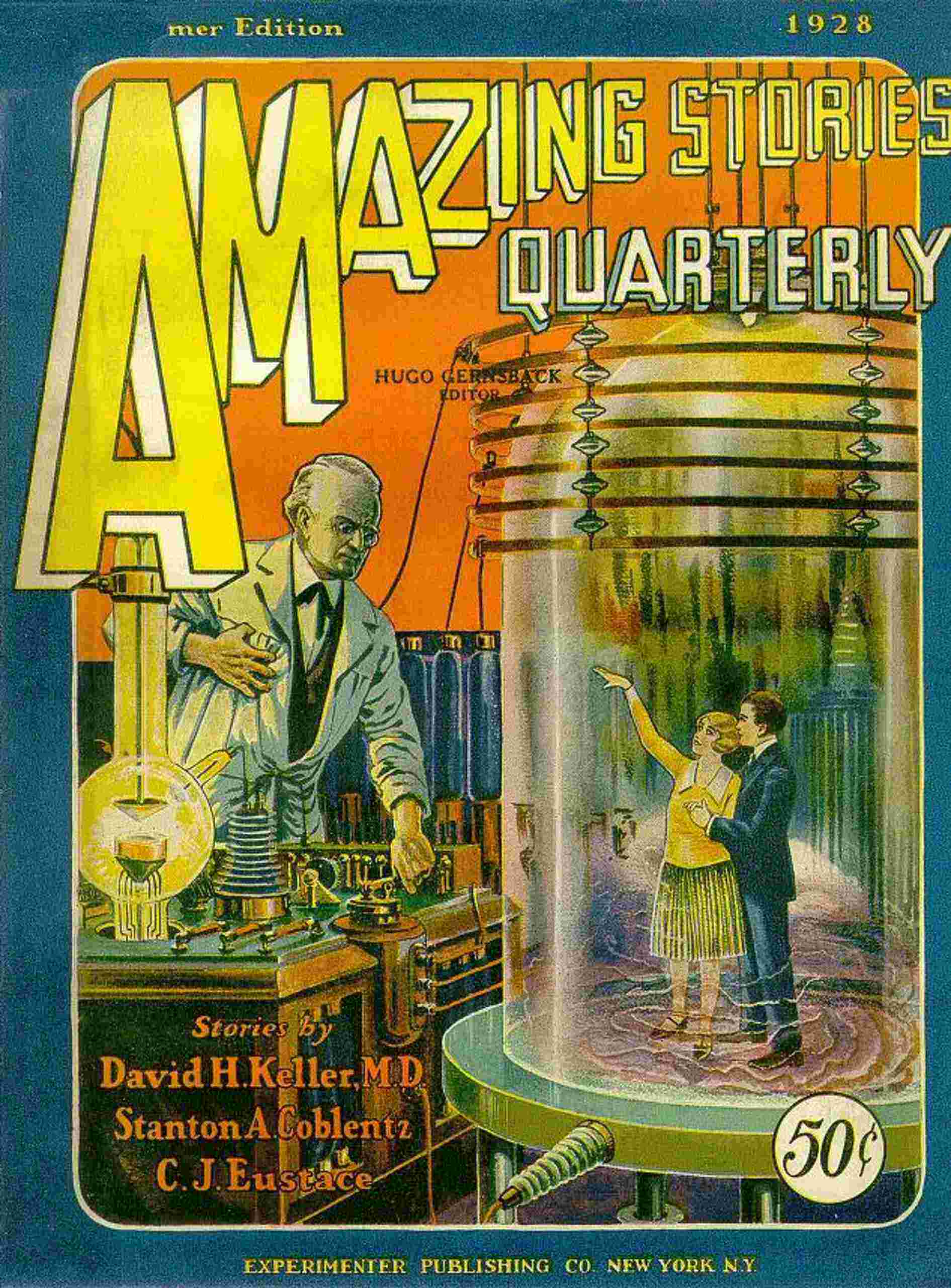
FOREWORD
The world of literature is full of Atlantis stories, but we are certain, that there has never been a story written with the daring and with such originality as to approach “The Sunken World.”
Science is pretty well convinced today, that there was an Atlantis many thousands of years ago. Just exactly what became of it, no one knows. The author, in this story, which no doubt will become a classic some day, has approached the subject at a totally different angle than has ever been attempted before; and let no one think that the idea, daring and impossible as it would seem at first, is impossible. Nor is it at all impossible that progress and science goes and comes in waves. It may be possible that millions of years ago, the world had reached a much higher culture than we have today. Electricity and radio, and all that goes with it, may have been well known eons ago, only to be swept away and rediscovered. Every scientist knows, that practically every invention is periodically rediscovered independently. It seems there is nothing new under the sun.
But the big idea behind the author’s theme is the holding of present-day science and progress up to a certain amount of ridicule, and showing up our civilization in a sometimes grotesque mirror, which may not be always pleasing to our vanity and to our appraisal of our so-called present day achievements.
The point the author brings out is that it is one thing to have power in science and inventions, but that it is another thing to use that power correctly. He shows dramatically and vividly how it can be used and how it should be used.
From the technical standpoint, this story is tremendous, and while some of our critics, will, as usual, find fault with the hydraulics contained in this story, the fact remains they are not at all impossible.