
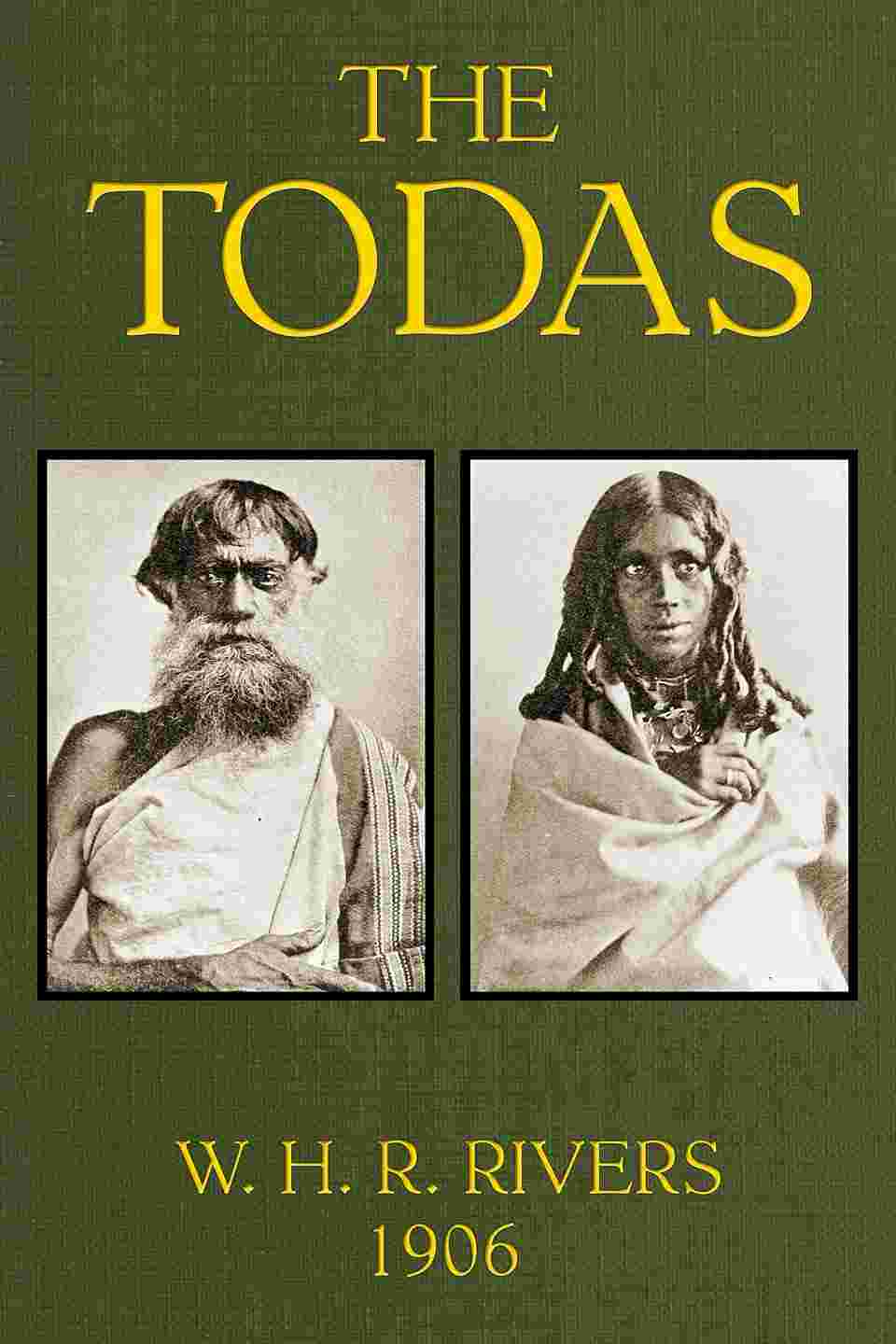
THE TODAS
CHAPTER I
INTRODUCTION
The people whose manners and customs I am about to describe live on the undulating plateau of the Nilgiri Hills in Southern India. The hills were visited by a Portuguese missionary in 1602, and have been invaded by Indian tribes on various occasions, but, at the beginning of the last century, the plateau and its inhabitants were absolutely unknown to Europeans. The earliest definite information about the hills at this time is given in a letter from William Keys, an assistant revenue surveyor, written in 1812, but it was not till several years later that further information about the people began to be published.
Of the various tribes inhabiting the hills, the Todas excited the greatest interest, and this interest has continued, partly because the people are so different from any other of the races by which they are surrounded, but still more because both they and their customs are so picturesque and, in many ways, so unique.
A very large literature1 has accumulated about the Todas and their customs. This literature is so extensive that when I determined to go to the Nilgiri Hills, I was reproached by more than one anthropologist for going to people about whom we already knew so much; and one even said that, so far as his department of knowledge was concerned, he was sure that we had all the information we could expect to get. [2]
A review of the literature, however, showed me that there were certain subjects about which our information was of the scantiest. This was especially the case in matters connected with the social organisation. Little was known of the system of kinship, and it was not known whether there was any definite system of exogamy. The Todas furnish one of the best existing examples of the custom of polyandry, but scarcely anything was known about the various social regulations which must be associated with such a practice.
I had not worked long among the Todas before I discovered the existence of many customs and ceremonies previously undescribed, and I was able to obtain much more detailed accounts of others which had already been repeatedly recorded. I found that there was so much to be done that I gave up an intention of working with several different tribes, and devoted the whole of my time to the Todas.
This book is not intended to be a complete account of all that is known about the Toda people. Their physical anthropology has been so ably dealt with by Mr. Edgar Thurston that I leave this subject almost untouched, and I omit all but a brief mention of my own psychological observations which I have published in detail elsewhere.2 The book deals almost exclusively with the religion and sociology of the people. Even here, however, the account will be far from complete. After several months’ work among a people about whom “we knew all there was to be known,” I came away knowing that there were subjects of which I had barely touched the fringe, and many others on which my information could have been made far more complete with greater opportunity. About certain subjects the Todas are extremely reticent, and my information is in consequence very defective. There are many points on which I know my information to be far from complete, and doubtless there are far more numerous examples of deficiency of which I am not aware.
Some deficiencies of the record are due to certain untoward events which occurred during my visit. After I had been working among the Todas for about four months, various misfortunes befell some of those who had [3]been my chief guides to Toda lore. One man who had pointed out to me certain sacred places fell ill and made up his mind that he was going to die. Another man lost his wife a few days after he had shown me the method of performing one of the most sacred of Toda ceremonies. A third man who had revealed to me the details of the ceremonial of the most sacred Toda dairy, suffered the loss of his own village dairy by fire.
The Todas consulted their diviners, who ascribed these events to the anger of the gods because their secrets had been revealed to the stranger. In consequence my sources of information ran dry to a large extent, and the difficulties in the way of the investigation of the more sacred topics were greatly increased. By the time it was settled that I was to blame I was nearly at the end of my visit, but it was in the last two or three weeks that I had hoped to overcome the scruples of the people and to obtain information on many doubtful points about which I had to come away unsatisfied.
One of the subjects on which my material is defective is the folk-lore. I have a number of tales, but they are only a small part of the store of Toda legend. I regret especially the incompleteness of my work in this respect because I believe that the Todas are rapidly forgetting their folk-tales and the legends of their gods, while their ceremonial remains to a large extent intact, and seems likely to continue so for some time.
I was especially struck by this because, in previous anthropological experience in the islands of Torres Straits with Dr. Haddon, we had found the exact opposite to be the case. In these islands, the ceremonial had disappeared, and the only record of it to be obtained was that derived from the memories of the oldest inhabitants. Nevertheless in Torres Straits the store of legend was still ample, and the agreement of the stories obtained from different individuals was so great that it was evident that the people had preserved their folklore with fidelity.
The difference between the two communities is easily explained. In Torres Straits missionary influence is strong, and missionary effort is always directed to break down the practices [4]associated with belief. The ceremonial in Torres Straits had been swept away, while the stories of the legendary heroes were almost all that remained to the people of the old life and were in consequence still cherished.
Among the Todas missionary influence, whether of Christian or Hindu, has had little effect, and the ritual of the Todas in some parts of the hills is almost, if not quite, untouched by outside influences.3 The effect of intercourse with other peoples seems to be showing itself largely in the form of loss of interest in the stories of the past.
One of the most striking aspects of the customs and ceremonies of the Todas is that these have in many cases no exact parallels in other places. Perhaps the most definite result which modern research in anthropology has brought out is the extraordinary similarity of custom throughout the world. Customs apparently identical are found in races so widely separated geographically and so diverse ethnologically that it seems certain the customs must have developed in total independence of one another. There seems to be an identity of idea actuating custom in peoples very different from one another in their surroundings and conditions of life.
The nearest parallels to Toda custom and ceremonial are undoubtedly to be found in the Indian peninsula, but even here, though there is often a general resemblance, this breaks down on going into detail. Even when the resemblance is so close as to suggest a common origin, the differences in detail are often very great.4
One clue to this exceptional nature of Toda custom and belief is to be found in the geographical position of the people, which has to a large extent isolated them from the world in general.
The plateau on which they live, broken by numerous hills and valleys, is the top of a scarp formed by the meeting of the Eastern and Western Ghats. Some of the hills project [5]more than the rest above the general level of the plateau, which ranges from 6,000 to 7,500 feet above the sea, and the loftiest of these hills reaches the height of 8,760 feet. The plateau is so high that, though it is situated only about eleven degrees from the equator, the thermometer rarely rises above 70° F., and in the nights of the cold season may touch the freezing point.
In every direction the sides of the hills leading up to the plateau are steep and often precipitous. To the south-east, east, and north-east there is a rapid fall of about 5,000 feet to the plains of the Coimbatore district, though to the south this plain only forms a gap about twenty miles in breadth between the Nilgiri and the Anaimalai Hills. On the north-west the slope is more gradual and is broken by the Wainad district about 3,000 feet above the sea. To the north there is a steep fall, but only for about 4,000 feet, to the plateau of Mysore, which is about 3,000 feet above the sea.
The south-western part of the hills is known as the Kundahs and may be regarded as a range separate from the greater part of the plateau, from which it is divided by a wide valley, the Avalanche Valley. From the Kundahs there is an extremely precipitous fall to the Malabar district.
The steep sides leading up to the plateau on which the Todas live are clothed with thick, almost impenetrable jungle, which is extremely malarious, so that a night spent on the way to the summit is very likely to produce fever.
The hills appear to have been for long an object of reverence to Hindus on account of their height and inaccessibility. Dubois states that “as it is very difficult to reach the top of this mountain, a view of the summit alone (and it is visible a long way off) is considered sufficient to remove the burden of sin from the conscience of any person who looks at it.”5
When the hills were first visited by Europeans, their use as a sanatorium was long delayed owing to the difficulty of making roads, and it was not till after many years that the hills became a regular resort of the European population. We shall see later that the isolation of the Todas has certainly [6]not been complete, and that the hills have been invaded by strangers, especially from the side of the Wainad; but the isolation has probably been considerable, and, for long periods, it may have been complete.
In their isolation from the world in general, however, the Todas have not been alone. Two other tribes, the Kotas and the Badagas, occupy the plateau with them, and the peculiar relations between the three tribes are among the most interesting features of the social life of the Nilgiris. The Todas are a purely pastoral people, limiting their activities almost entirely to the care of their buffaloes and to the complicated ritual which has grown up in association with these animals. The Badagas are chiefly agriculturists; the Kotas are artisans and mechanics; and both supply the Todas with part of their produce. There is here a well-marked instance of division of labour, in which the labour of the Todas is reduced to a minimum. Their privileged position is usually held to be due to the tradition that they are the “lords of the soil,” and the produce which the Todas receive from the other tribes is supposed to be of the nature of tribute.
The jungle on the slopes of the hills is inhabited by two wild, dwarfish tribes, the Kurumbas and Irulas, who have a general resemblance to the many other jungle tribes of Southern India. These people are much feared by the tribes of the plateau for their supposed magical powers, but they have little to do with the complex social life of the others.
The district in which the three tribes live is not extensive. The extreme length of the plateau, from east to west, is about forty-two miles, and its average breadth, from north to south, about ten miles, the maximum breadth being fifteen miles in the centre of the district. The total area of the plateau is less than 500 square miles. In this district there live about 800 Todas, 1,200 Kotas, and 34,000 Badagas. In addition, there are now extensive European settlements, the largest of which is Ootacamund, the seat of the Madras Government for six months of the year. The other large European settlements are Coonoor and Kotagiri, while Wellington, near Coonoor, is a military station.
The plateau of the Nilgiris is divided into four districts, [7]ordinarily known by the names, Todanad, Mekanad, Peranganad, and Kundanad, and these districts are recognised by the Todas. The Todanad is the largest district, and is the part where the majority of the Todas live. Their own name for it is Marsâdr.
The Mekanad is called by the Todas Karâdr, and is now very sparsely inhabited, though there are many old villages in the district.
The Peranganad is the eastern part of the hills, and is called by the Todas Purgòdr, and is the chief seat of a few of their clans.
The fourth district, or Kundanad, is that already mentioned as the Kundahs in the south-west part of the hills. It is the chief seat of one Toda clan, but it also contains villages belonging to others. It is especially visited in the dry season, since its large rainfall often provides ample pasturage when this is burnt up on other parts of the hills. The Toda name of the district is Mêdr.
A few Todas live near Gudalur in the Wainad, some 3,000 feet lower than the main plateau.
Methods
The description of Toda life to be given in this book is the outcome of an attempt to apply rigorous methods in the investigation of sociology and religion. In the brief time which was at my disposal, it was essential to employ methods of investigation which would enable me to tell with some certainty whether I was obtaining accurate and trustworthy information. Two great sources of error in anthropological investigation are the dependence on the evidence of only a few individuals and the necessity of paying for information.
The first source of error was easily avoided, and I was able to obtain my information from a large body of witnesses, usually independently of one another. As regards the second source, the Todas are inveterate beggars, and are now thoroughly accustomed to receive payment for every service rendered to the European, even of the most trivial kind. Payment for information was inevitable, but I [8]minimised the danger by arranging that every man who came to me for work should receive a definite stipulated sum as a recompense for his time and trouble. I paid, not for the information, but for the trouble taken in giving a day or half a day to my service. As a general rule, anything like payment by results was carefully avoided. The sum paid was for coming to me, and if anyone was reluctant to talk about one subject, we passed on to another. Only at the end of my visit did I depart from this rule on a few occasions, and offered rewards to one or two individuals for certain items of information; but by this time I was in a position to judge the value of the information I received, and I only employed this procedure in cases where I knew the degree of trustworthiness of my informant.
Definite methods for the verification of the evidence obtained were the more necessary in my work among the Todas, in that I was obliged throughout to depend on interpreters. I was, however, very fortunate in my assistants. I first worked with a forest ranger, Albert Urrilla, who knew the Todas very well, though he had no special knowledge of their customs. He translated faithfully, and, owing to his wide knowledge of the hills, he was extremely useful in helping me to become familiar with the names and positions of the many Toda villages. After about six weeks’ work, Albert had to return to his forest duties, and, except for a week towards the end of my visit, the interpreter for the rest of my work was P. Samuel, a catechist who had been endeavouring for ten years to convert the Todas to Christianity, under the auspices of the Church of England Zenana Missionary Society. When he began to work with me, Samuel had a very limited acquaintance with Toda ceremonies, but he was very familiar with the general life of the people, and was especially acquainted with the actual working of many of their social customs. Some of the Todas at first objected strongly to his helping me, probably on account of his missionary efforts, but he soon overcame this initial difficulty and gained the general confidence of the people. He was well acquainted with the Toda language, and soon became a very careful inquirer into customs and beliefs, and I owe much to [9]his help. He often obtained independent information about customs, and I was put by him on the track of much that might otherwise have escaped me. I had hoped that he would have continued to make inquiries for me after I had left the hills, and soon after my departure, he forwarded to me a very valuable account of a ceremony which I had not been able to witness and other important material. While with me he had discovered, however, how little progress he had made with the people during his ten years’ work among them, and how little he had known of their beliefs, and, soon after my departure, he asked to be given a new sphere of work and was removed to the Wainad, so that I have not had the opportunity for which I hoped, of making further inquiries into the many doubtful points which always arise in working up the notes of anthropological investigation.
One of the chief dangers arising from the use of interpreters is that they will often transmit, not what they are told, but their own versions of what they are told. They interpret the meaning as well as the words of the informants. I think I can be certain that this danger was avoided with both my interpreters, and that they gave me as accurate an account as possible of what the Todas told them. We always used the Toda names for all specific objects, individuals, and places, so that the information transmitted to me by the interpreters was often in such a form that nearly every noun was Toda in a setting of English verbs, adverbs, and pronouns. Thus, referring to one of my notebooks at random, I find the following: “After cleansing the poh in this manner, each palol puts salt in the ponmukeri, and takes it and the karpun to the upunkudi, taking also five pieces of tudrpül, five sprigs of puthimul, and a bundle of taf.” In fact, we habitually used so many Toda words that the Todas sometimes obviously knew the general drift of my questions before they were interpreted to them, and, similarly, I could often understand the general drift of the answer.
The first principle of my investigation was to obtain independent accounts from different people; I then compared these independent accounts and cross-examined into any discrepancies. The general result of this method was highly [10]satisfactory from the point of view of Toda veracity. The general agreement of the accounts obtained from different individuals was very striking, and, whenever discrepancies occurred, it was nearly always found that they were due either to misunderstanding or to differences in the practices of different sections of the Toda people. These differences are so great that in many cases it made a rigorous application of the method of direct corroboration impossible. There are distinct differences in the ceremonial and social customs of the two chief divisions of the Todas and some differences in the practices of different clans. In the investigation of the dairy ritual, there were found to be great differences in the practices of different dairies, and, for the practice of any one dairy, I had sometimes to be content with the information of one native only; but I did not content myself with such independent accounts till I had satisfied myself of the trustworthiness of the witness, and had learnt enough of the customs in question to be in a position to weigh the evidence. As regards the differences in the customs of different sections of the community, many of my informants were able to describe the practices not only of their own section but also of others.
After a time I managed to put myself on such terms with my chief informants that they were always ready to confess any deficiencies in their knowledge and would refer me to others whose special experience would make them more satisfactory informants. Occasionally, however, they carried this a little too far and pleaded ignorance of a subject when they were really only reluctant to reveal the more esoteric knowledge.
Still more important than this method of direct corroboration of independent accounts is what I may call the method of indirect corroboration. By this I mean the method of obtaining the same information in different ways. Often this indirect corroboration occurred accidentally. The whole of Toda ceremonial and social life forms such an intricate web of closely related practices that I rarely set out to investigate some one aspect of the life of the people without obtaining information bearing on many other wholly different [11]aspects, and the information so gained often afforded valuable corroboration of what I had been told on other occasions and by other individuals. Thus, in obtaining a prayer, various matters would arise which would confirm the accuracy of a legend obtained weeks earlier, or the investigation of a funeral custom would lead to the indirect corroboration of evidence concerning the regulation of marriage.
The most important way in which this method of indirect corroboration may be intentionally applied is by obtaining the same information first in an abstract form and then by means of a number of concrete instances. As an example of what I mean I may cite the method by which I inquired into the laws of inheritance of property. I first obtained an account of what was done in the abstract—of the laws governing the inheritance of houses, the division of the buffaloes and other property among the children, &c. Next I gave a number of hypothetical concrete instances; I took cases of men with so many children and so many buffaloes, and repeating the cases I found that my informant gave answers which were consistent not only with one another but also with the abstract regulations previously given. Finally I took real persons and inquired into what had actually happened when A or B died, and again obtained a body of information consistent in itself and agreeing with that already obtained.
By far my most valuable instrument of inquiry was that provided by the genealogical method.6 The Todas preserve in their memories the names of all their ancestors and relatives extending back for several generations. In the tables given at the end of this book, I have recorded the pedigrees of seventy-two families, including the whole of the Toda community. Whenever the name of a man was mentioned in connexion with ceremony or social custom, his name was found in the genealogical record and the relation was ascertained in which he stood towards others participating in the ceremony or custom. By this means a concrete element was brought into the work which greatly facilitated inquiry. [12]Customs and rites were investigated by means of concrete examples in which the people taking part were real people to me as well as to my informants. In a later chapter I shall consider more fully the rôle of the genealogies in anthropological investigation. I mention them here to give a preliminary indication of the extensive part they played in my investigations. In order to give my readers the opportunity of following my method in some measure for themselves, I have given after the name of any individual mentioned in the book the number of the genealogical table in which his name occurs; thus “Kòdrner (7)” means that Kòdrner is a member of the family of which the pedigree is recorded in Table 7.
I have already referred to the trustworthiness of the evidence given by the Todas. I must now speak of the great differences in this respect shown by different individuals. Some would give full and elaborate accounts of ceremonial which close investigation showed to be, so far as one could tell, thoroughly accurate. Others gave careless and slovenly accounts, full of omissions and inaccuracies of detail, though they rarely said anything which was distinctly untrue.
After some experience had been gained, one day’s work was usually sufficient to enable me to make up my mind whether a man was a careful witness, and if he did not seem to be so, he was not again called upon for help. Different men were known to have especial acquaintance with certain branches of knowledge, and I always endeavoured to obtain such people. In the case of the religious ritual, it was not practicable to make use, to any great extent, of men actually holding any of the sacred offices, but I always had recourse to people who had held these offices and were personally familiar with the ceremonial.
Among the many aspects of social life and religion, I soon found that there were some about which there was no reticence, and these could be discussed in public with men, women, or children standing by and perhaps taking part. There were others which were of a more sacred nature, and, if they were approached in public, it was immediately obvious [13]that the people were ill at ease and their answers became hesitating and unsatisfactory. After a short time I adopted the practice of devoting the mornings to my psychological work and to the discussion of affairs of a non-sacred character. In the afternoons I had private interviews with one individual at a time, or occasionally two. If I approached any dangerous topic during the morning, my guide made me a sign and I changed the subject, to return to it at an afternoon sitting.
In the investigation of all the more sacred ceremonies, it was found to be best that the narrator should be alone. He knew that he was telling what should not be told and was embarrassed if any other Todas were there to hear him.
One of the difficulties of anthropological inquiry is that the good and trustworthy narrators are often the most reticent. They are trustworthy because they are honest and pious members of their community, and are therefore naturally reluctant to offend against the sanctity of their religious customs by talking of them to a stranger. Some of my best informants were such men, who were gradually led on to tell me far more than they had ever intended, and then, having told me so much about a given subject, they would sometimes throw reticence to the winds and tell me all. It was very instructive in such a case to start a fresh topic which I knew to be forbidden ground and observe the complete change of attitude. One old man who had entirely lost his scruples in our absorption in the details of dairy ritual absolutely refused to speak a word when I turned to the subject of animal sacrifice, and for this and some other topics I had to be content with less scrupulous but at the same time less trustworthy witnesses.
I only found one Toda who was deliberately untruthful, and yet he was so much less reticent and less scrupulous than others that I often had to have recourse to his services. After I had been able to convict him more than once of having given unsatisfactory evidence, he was more accurate, but I was especially careful to check and obtain independent accounts of everything he told me, and I have only [14]made use of so much of his evidence as I believe to be trustworthy. His knowledge was not deep or accurate, but he often told me enough to enable me to extract the full account from others, who, seeing I knew something, thought they might as well tell me all. On one or two subjects, the whole of my information is derived from this man, but whenever this is the case I mention the fact, so that my readers may know the doubtful nature of the evidence. I only give such information, however, when I believe it to be correct. The informant in question was one of the cleverest of the Todas, and his usual fault was not that he deliberately deceived, but that he supplied the lacunæ in his knowledge by having recourse to his imagination. In the matter of folk-tales, where the difficulties of checking an account are especially great, I was obliged wholly to reject his assistance.
An altogether different type of witness was my constant attendant, Kòdrner. His special business was to bring me people as the subjects for my psychological work and to act as my guide in visiting various parts of the hills. He did not profess to any wide knowledge of custom or ceremonial, and was always diffident about the information he gave; but he was a good observer, and could give an excellent account of any ceremony which he had witnessed or of any procedure in which he had been involved.
Except in a few cases the Todas were quite unable to give any explanations of their customs, the answer to nearly every inquiry being that the custom in question was ordained by the goddess Teikirzi. In the few cases in which an explanation was forthcoming, it seemed to me that it was usually a recent invention. The explanations of customs given in this book are therefore almost invariably those arrived at by myself from the study of the available evidence.
While I was working I had by me the books or papers of Harkness, Marshall, Breeks, and Thurston, the chief previous writers on the Todas, and I inquired into most of the details mentioned by them; but I have not [15]attempted any criticism or comment on the work of others except on special occasions when my own information is lacking or when I am uncertain as to the truth of their statements. Except in those cases in which I definitely refer to the work of others, every statement made in this book is the outcome of my own inquiry or observation. Whenever my account differs from those of others, it may be accepted that I have inquired into the discrepancy and that my account represents the result of a careful investigation.
As some of the accounts of the Todas were written many years ago, there is always the possibility that two dissimilar accounts may both be true and that the differences may represent changes in custom with lapse of time. There is one fact, however, which makes it probable that this explanation of discrepancies is not the true one. The accounts of the Todas which show the closest correspondence with my own are some of the earliest, especially the book of Captain Harkness, published in 1832, and the papers of Bernhard Schmid and C. F. Muzzy, published in 1837 and 1844 respectively. In many cases my work agrees more closely with these than with the accounts of later observers.
This is, perhaps, a suitable place to mention what I believe to be the chief source of error in previous accounts of the Todas. In their extensive intercourse with the Badagas, the Todas use the language of this people, with which they appear to be perfectly familiar. The Toda language is very difficult to understand, and the literature shows that from the first, most of those who have investigated Toda customs have used the Badaga language or Tamil as their means of communication. Every Toda village, every Toda institution or office, and nearly every object used by the Todas has its Badaga name as well as its proper Toda name, and, owing to intercourse through the intermediation of the Badagas, these names have come to be used not only by nearly all who have written on the Todas, but also in official documents connected with the people.
The names by which the Toda villages are known to Europeans are always the Badaga names and not those of [16]the Todas, and similarly with the names of institutions such as clans, dairies, or ceremonies. The practice of giving Badaga names in their intercourse with Europeans has become so engrained that a Toda invariably uses these names when speaking to a European. During the first few weeks of my work, I received exclusively Badaga names, and to the end of my visit, whenever I visited a new district, the Badaga names would crop up till the people found that I wanted Toda and not Badaga. Kiunievan, who was the chief informant of Mr. Breeks in 1872, is still alive, and when I asked him why he gave Mr. Breeks the Badaga names in every case, he answered “He did not seem to want anything else,” and this answer seems to me to give the clue to much of the error which has found its way into many of the accounts which have been given of the Todas.
One of the most serious errors which has arisen in this way is one connected with the Toda clans. Every account which has been given of the clan-system of the Todas is that of a system which is current among the Badagas as the Toda system, but has only a limited correspondence with the actual system as it is in use among the Todas themselves. Every Toda, if asked by a European to what clan or division he belongs, will promptly give his division according to the Badaga classification, and this has led to the incorporation of this classification in all the accounts of the Todas which deal with their social organisation.
Some words are necessary about the general plan of the book. I should have preferred to begin with the social organisation, and to approach the religious aspect of the life of the Todas through the ceremonies accompanying the chief incidents of life, including birth, marriage, and death. The ideas borrowed from the ritual of the dairy, however, so pervade the whole of Toda ceremonial, that I have been obliged to consider the ritual of the dairy at an early stage. After a preliminary chapter sketching the general character and life of the people, I have therefore given a full description of the elaborate ceremonial which centres round the dairy; and on this follow the accounts of other ceremonies and sacred institutions and a general discussion of the [17]religion of the people. I then turn to the social aspect of life, and consider kinship, marriage, and the various factors upon which the social organisation depends. Then, after some chapters on diverse topics, I describe the relations of the Todas with the other tribes of the Nilgiris, and in the final chapters discuss certain special problems, including the origin and affinities of the Toda people. [18]
1 The bibliography of this literature is given in Appendix II. ↑