
SCENE IV.
THE REUNION.
“Upon the wall hung the good sword, with the dent in its scabbard.”
Twenty years passed away, with their changes for good and for ill. The great war seemed like a dream, and its events were dim and shadowy. But there remained to me some substantial evidence of its reality. Upon the wall hung the good sword, with the dent in its scabbard telling of the death struggle of the brave black mare, whose name should be on Stone River’s roll of honor. In the corner stood the regimental flag, presented by my comrades when we parted in 1865, the deep scar upon its staff matching the deeper scar upon the manly breast of its bearer “in the brave days of old.” I looked at them and longed for the twin seven-shooters that should keep them company.
“In the corner stood the regimental flag presented by my comrades when we parted in 1865. The deep scar upon its staff matched the deeper scar upon the manly breast of its bearer in the brave days of old.”
Representing my adopted State, Nebraska, in the Senate, I had reached a position that had at least given my name notoriety. It chanced that the Major of an Iowa cavalry regiment saw it in the public prints and was prompted to write me. “Are you,” said he, “the man who commanded the 19th Ohio during the war? If so, I have a pistol that must belong to you, for the fact of its presentation is engraved upon it.” I am quick to respond, and in brief time there came the pistol, as welcome to my hand and heart as an old-time friend.
He wrote me its history. During the days of the period of reconstruction he was on duty in Alabama, and upon the person of a man whom he arrested was found the revolver. The Major took it from him and had held it since, hoping that some time he might meet the owner. Hearty thanks went to him, and I longed all the more for its mate, somewhere existing, but probably never to be recovered by me.
Twenty-eight years elapse after the cavalry raid in the Sequatchie Valley. The Congress is in session and a dreary debate drags its weary length through the hours. My yawning presence in the Senate Chamber would only add emphasis to the dullness there, and I go to the Committee Room, to engage in the usual employment of a Congressman’s spare hours, the dictation of replies to the endless letters, from every direction, on every conceivable subject. There comes a messenger, and this his message: “The compliments of Senator Pugh of Alabama, who requests the pleasure of seeing you in the Marble Room.” I respond quickly to the call, and go to the room of simplicity and beauty that is one of the chief attractions under the great white dome. Near at hand are three men, two of them well known by me, the third a stranger.
General Joseph Wheeler
“The Marshal Ney of the Confederacy.”
I hasten to greet my colleague, and then shake hands with warmth of greeting with a gentleman I have grown to respect and like. It is General Wheeler, once a dashing cavalry leader of Confederates, he who harried our rear so persistently and pronouncedly; reconstructed into a leader in forensic debate, an authority on parliamentary law, and an all-around legislator, whose trenchant pen was surely as mighty as his vigorous sword. Cuba and the Philippines are the scenes of his later triumphs, and there is no name upon the Army Roll more honored now for patriotic devotion and soldierly ability than that of him who, during the dark days of the civil strife, was the Marshal Ney of the Confederacy.
I am introduced by the courtly Senator Pugh to his esteemed constituent, ex-Confederate Colonel Reeves, of Alabama. I greet him with pleasure, for he bears upon him those evidences that command respect. Both appearance and speech declare the Southerner, and the soft broad accents fall pleasingly upon the ear. He said, “I think, sir, I have something that once belonged to you, and will give it to you with pleasure, for I presume from the inscription upon it you will prize it highly.”
He produces the long-lost revolver and tells its story. He bought it and its companion from one of General Wheeler’s troopers, who said he captured it at the battle of Mission Ridge. I mildly suggest that at Mission Ridge the captures were on the other side. He smiled acquiescence and said he cared little at the time of purchase from whence they came, so that they might be his. He had carried them through the war until a fearful wound had disabled him from further field duty.
After the war he had loaned one to the sheriff of his county and from him it had been captured by some of our troops. I told him of the return of that one to me eight years before. We exchange reminiscences of the great struggle. We compare experiences. Enemies in war, we are in peace friends.
Handling his revolver with easy grace and caressing gesture, he makes it mine again, saying as he passes it to me, with pardonable reluctance, “I tell you, sir, that is a mighty close shooting pistol.” I cordially agree to that sentiment, and we both dwell in thought upon the career of these messengers of death that have fought beneath two flags, giving loyal support to their masters, who have fought each one loyally for his own.
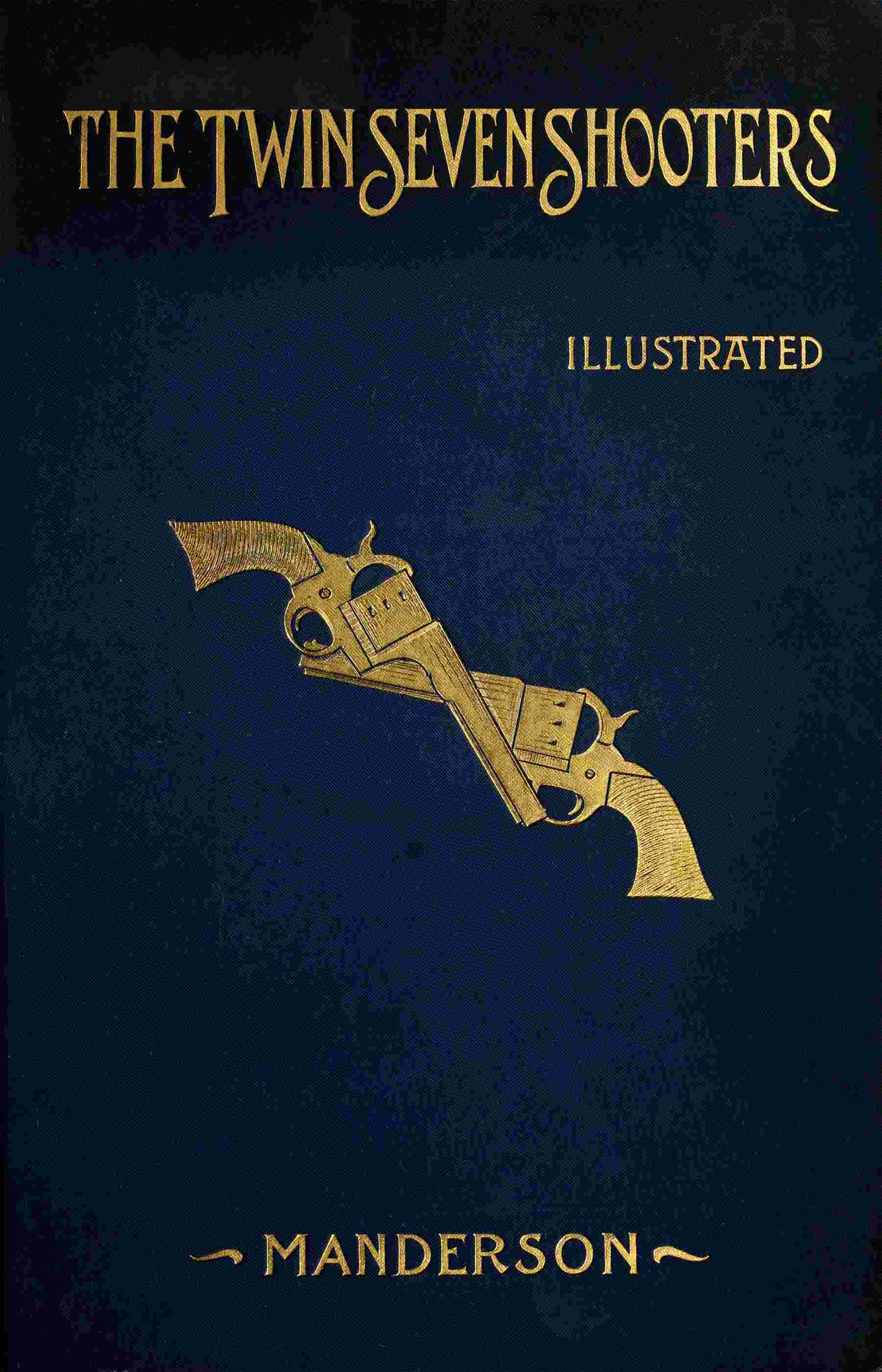
And thus finding each other, after a quarter of a century of separation, they came back to me, to be cherished fondly and I hope never again to be used.