
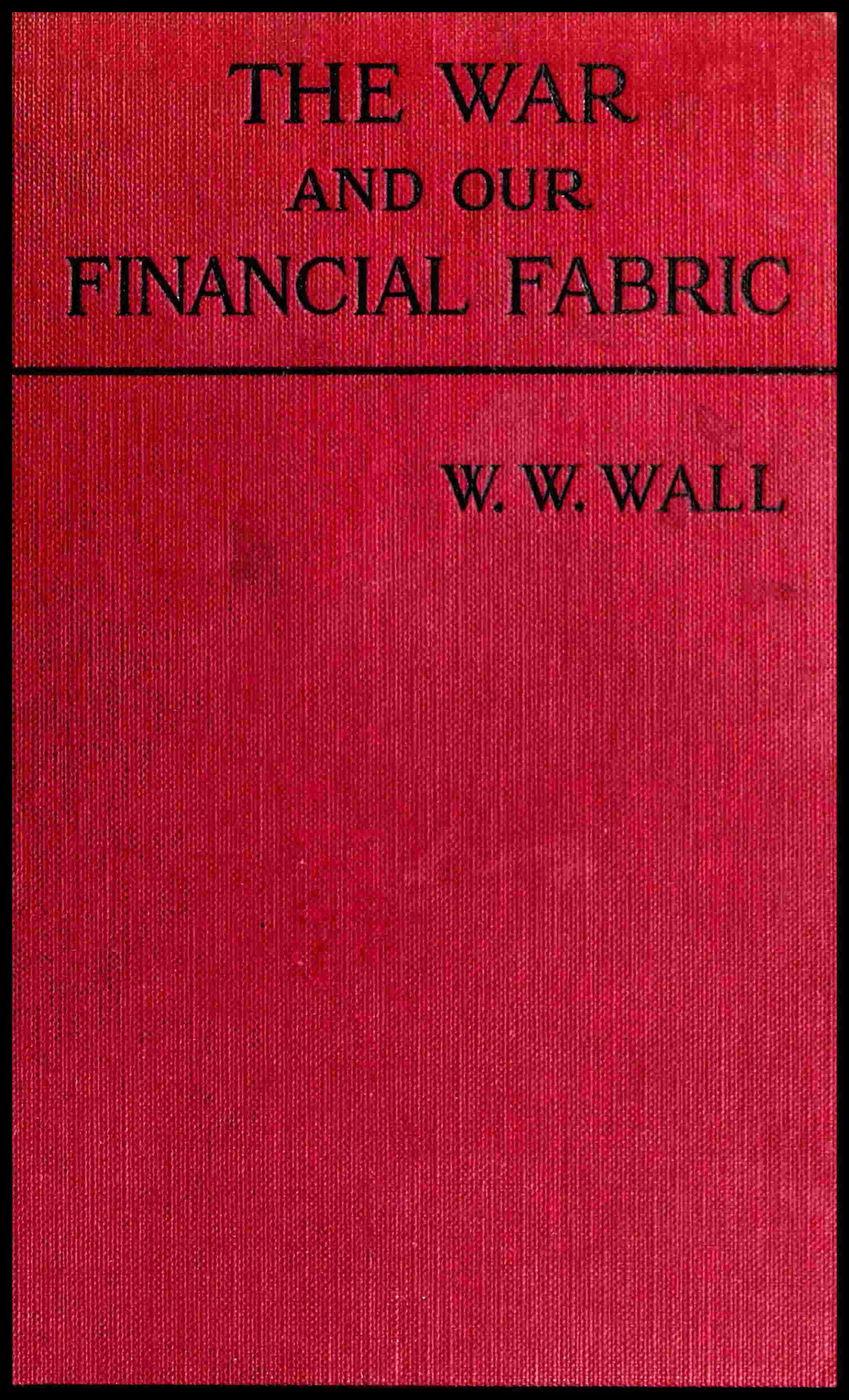
About This Book
The work gathers lessons from a major financial crisis and examines banking, credit, and currency problems revealed by wartime strain. It argues that banks do not create credit but convert existing wealth into liquid capital, enabling circulation and preventing economic stagnation. The author analyses reserve ratios and contends that both private banks and the central bank cannot simultaneously maintain high gold proportions without collectively ceasing to lend, making rigid reserve rules impractical. He recommends an elastic legal-tender mechanism and segregation of deposits into pure deposits and loan-deposits to clarify reserve responsibilities and reduce harmful hoarding, and stresses that panics are psychological rather than mathematical phenomena.
About the Author

You May Also Like
 A Brief History of Panics and Their Periodical Occurrence in the United States
by Clément Juglar
A Brief History of Panics and Their Periodical Occurrence in the United States
by Clément Juglar
 A Contribution to the Critique of Political Economy
by Karl Marx
A Contribution to the Critique of Political Economy
by Karl Marx
 A Critical Examination of Socialism
by W. H. Mallock
A Critical Examination of Socialism
by W. H. Mallock
 A Discourse on Trade, and Other Matters Relative to it
by John Cary
A Discourse on Trade, and Other Matters Relative to it
by John Cary
 A dissolução do regimen capitalista
by Teixeira Bastos
A dissolução do regimen capitalista
by Teixeira Bastos
 A History of Banks for Savings in Great Britain and Ireland
by William Lewins
A History of Banks for Savings in Great Britain and Ireland
by William Lewins