
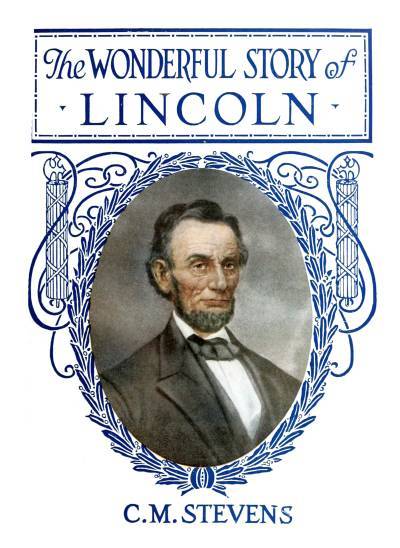
Lincoln was brought up in the midst of superstitions that prevailed in every act of life, but they seem to have made no impression on him. Many of the most estimable people believed the sun went round the earth, from the indisputable fact that in the morning it was on one side of the house and in the afternoon was on the other side. Many also believed the earth to be flat, because any one trying to go so far as to go around it would naturally become lost, travel in a circle, as all lost people do, and come back to the same place, thinking they had gone around the world.
People who argued otherwise were merely “stuck up” and “just proud to show themselves off.” Doubtless, his belief about the sun and earth lost him his first love affair.
He was going to school to Andrew Crawford, who also taught good manners, when he began to exchange special attention with Miss Roby, a fine lass of fifteen. He especially had her gratitude for some help he gave her in a spelling class. When she was about to spell “defied” with a “y,” he pointed to his eye, just in time to save her from disgrace with the teacher, and from losing her place in the class.
But one day as they were walking along the road she made a remark that brought up an unfortunate subject.
“Abe,” said she, “look yonder, the sun is going down.”
“Reckon not,” was the unfortunate reply. “It’s us coming up. That’s all.”
“Don’t you suppose I’ve got eyes,” she answered indignantly.
“Reckon so,” he replied, “but the sun’s as still as a tree. When we’re swung up so’s the shine’s cut off, we call it night.”
“Abe,” said she, “you’re a consarned fool,” and away she went, leaving him to the glory of his “stuck-up larnin’.”
III. SOME SIGNS ALONG THE EARLY WAY
The Lincoln boy impressed all who knew him as being different from other boys, though they did not know just how. We now know that the difference consisted in his having a purpose to have a mind rather than to have a good time. And yet, Lincoln loved joyful sports and he was a favorite in all the social gatherings of the community. But his mind was not composed of sport experience, nor his interest in life inspired by sport success. The world-mind of books contained more value and richer promise than the turmoil of happenings among companions, or than those who were juggling interests in the hope of events.
Lincoln’s books were very limited in number but exceedingly wide in their humanity. Weems’ “Life of Washington” seems to have given him his ideal of American character and statesmanship, while the “Statutes of Indiana” aroused his interest in civil law and the American government.
When addressing the senate of the state of New Jersey, in 1861, Lincoln said, “May I be pardoned if, on this occasion, I mention that away back in my childhood, the earliest days of my being able to read, I got hold of a small book, such a one as few of the younger members have ever seen, ‘Weems’ Life of Washington.’ I remember all the accounts there given of the battlefields and struggles for the liberties of the country, and none fixed themselves upon my imagination so deeply as the struggle here at Trenton, New Jersey. The crossing of the river, the contest with the Hessians, the great hardships endured at that time, all fixed themselves in my mind more than any single revolutionary event; and you all know, for you have all been boys, how these early impressions last longer than others. I recollect thinking then, boy even though I was, that there must have been something more than common that these men struggled for. I am exceedingly anxious that that thing shall be perpetuated in accordance with the original idea for which that struggle was made.”
Lincoln told one of his friends that he read through every book he had ever heard of in his surroundings for a distance of fifty miles. The industry with which he sought to learn and his unceasing endeavor to build up his mind were marks of the genius that possessed him, the spirit that made him one of the strongest men of a world-wide work.
In the whole country round there was only one newspaper subscriber, and that was in Gentryville, Indiana, for a weekly paper from Louisville. Lincoln walked to town every week to see that paper and discuss the news. By the time he had become a man, in Menard County, Illinois, his neighbors went to him in order to know things, and he was a good custodian of the knowledge he had gained. His opinions coincided with common sense. So, common sense made him President of the United States, saved a United Nation, and gave Lincoln a never-dying place in the love and honor of mankind.
Lincoln walked six miles to borrow a grammar, and he studied it till he mastered the principles of the English language. Many another boy has thought that he had few troubles more unbearable than the study of composition, but many another boy has not been prepared to speak the world-stirring speech, such as was spoken by Lincoln at the dedication of the battlefield of Gettysburg.
IV. ILLUSTRATIONS SHOWING THE MAKING OF A MAN
Lincoln, very early in life, believed that witnesses must tell the truth, the whole truth and nothing but the truth.
Matilda Johnson, his stepsister, was very fond of him, and she often ran away from the house to be with him where he was at work. Lincoln would rather tell her stories than work, so the mother forbade the child from following him to work. But, one morning, she disobeyed and ran after him. She tried to surprise him by jumping up at his back, and catching him by the shoulders. In doing so the axe was swung around so that it severely cut her ankle. Matilda screamed with pain but Lincoln soon had the bleeding stopped and the wound bound. Then came the problem.
“Tilda,” he exclaimed, “I am astonished at you. How could you disobey your mother? Now, what are you going to tell her?”
“I’ll tell her I did it with the axe,” she said in the midst of her crying. “That will be the truth, won’t it?”
“Yes,” replied the boy, “that’s the truth as far as it goes, but it is not all of the truth. You tell the whole truth and trust your mother for the rest.”
Tilda went home limping and weeping with the whole truth, and the good mother thought she had been punished enough.
The self-possessed way in which Lincoln conducted himself is well illustrated in his experience with the boaster who was telling of his horse-race, and especially endeavoring to impress his story upon the youthful Lincoln.
Uncle Jimmy Larkins, the boastful owner of the fast horse, was much of a hero in the eyes of a small boy who grew up to be Captain John Lamar, the man who tells the story.
Lincoln paid no attention to the boasting. Uncle Jimmy did not like this and the Lamar boy thought it very rude in Lincoln. Finally Uncle Jimmy said, “Abe, I’ve got the best horse in the world: he won that race and never drew a long breath.”
But Abe still paid no attention. Uncle Jimmy didn’t like it some more and the Lamar boy was disgusted that Lincoln did not give due respect for something so important.
“I say, Abe,” repeated Uncle Jimmy emphatically, “I have the best horse in the world; after all that running he never drew a long breath.”
Then Abe had to say something, so he said, “Well, Uncle Jimmy, why don’t you tell us how many short breaths he took.”
“Everybody laughed and Uncle Jimmy got all-fired hot,” says Captain Lamar. “He spoke something about fighting Abe, and Abe said, ‘If you don’t shut up, I’ll throw you into the pond,’ and Uncle Jimmy shut up.”
Captain Lamar, in concluding his comments, said, “I was very much hurt at the way my hero was treated, but I have lived to change my ideas about heroes.”
V. LINCOLN’S FIRST DOLLAR
Lincoln enjoyed the commonplace interests of ordinary life, and much that we know of him is from conversations with friends over the early lessons of his youth.
One day while he was president, as he was talking with Secretary Seward over weighty affairs of state, he suddenly broke from the subject they were discussing and said, “Seward, do you know how I earned my first dollar?”
The well-to-do and rather aristocratic Secretary of State replied that he did not know.
“It was this way,” Lincoln continued. “I was about eighteen years of age and had succeeded in raising enough produce to justify a trip down the Ohio to the markets at New Orleans. I made a flatboat big enough to hold the barrels containing our things and was soon ready for loading up and starting on our journey.
“There were few landing places for steamers, and, where passengers desired to get on to one of the passing boats, they had to be taken out into the river in order to get aboard.
“While I was looking my boat over to see if anything more could be done to strengthen it, two men came down to the shore in a carriage, with their trunks, for the purpose of boarding a passing steamer. They looked the boats over and came down to me.
“‘Who owns this boat?’ they asked.
“I very proudly answered, ‘I do.’
“‘Will you take us and our trunks out to the steamer?’
“I was glad for a chance to earn something and I soon had them and their trunks loaded into my boat. I soon sculled them out to the steamer. They climbed aboard and I lifted their trunks on deck. I expected them to hand me a couple of bits for my work, but both seemed to have forgotten their dues to me. The steamer was about to start, when I called out to them, ‘You have forgotten to pay me.’
“Each took a silver half-dollar and threw it over into the bottom of my boat. I could scarcely believe my good fortune. That seems like a little thing but it was one of the most important incidents in my life. I could hardly believe that I had been able to earn, by my own work, a dollar in less than a day. I now knew that such things could be done. I was a more hopeful and thoughtful boy from that time.”
Lincoln received eight dollars a month for his trip down the Ohio and Mississippi from Indiana, but he probably got much priceless value out of it in the broader view of life it gave him. He had already prepared himself to think on what he saw, and, from all attainable evidence from every side, to reach reasonable and justified conclusions.
This voyage was comparatively uneventful except that one night, after the little boat crew of three men had sold their goods, they were attacked by seven negroes, who came aboard intending to kill and rob them. But, after a lively fight, the assailants were driven off and the boat was swung out into the river.
One cannot help thinking about what a difference it would have made to the negro race if those negroes had killed the man whom destiny had then started on the way to make their people free.
VI. THE CHARACTERISTICS OF A SUPERIOR MIND
The boy who reads the story of Lincoln, desiring to get real help in building his life, will find no miracle nor any short-cuts to get easily the ambitions of life. Lincoln did not know the office he wanted to hold, but he knew the kind of man he wanted to be and he worked unceasingly to reach that ideal of mind and manhood. In proportion, it is no harder now to know more than others, in order to be correspondingly useful to others, than it was in Lincoln’s time.
Lincoln said that he went to school by “littles” altogether not more than a year, but no one ever thinks of him as anything less than a learned man. All records show that he was intellectually at home in company with any worldly-wise men. It was in the prudent selection of interests nobly directed in honorable ways that gave him world-wisdom from the most limited supply, while now the multiplication of great books has made the diffusion of knowledge almost unlimited for anyone who seeks to be worth while. But it was in his high moral nature where was to be found the secret of his unwavering progress. Numerous characteristic incidents illustrate how little he was disturbed by the ill-nature of others.
That Lincoln was above “holding spite” or “bearing a grudge” is shown in his experience with the noted Kentucky lawyer, John Breckenridge.
There had been a murder at Boonville, Indiana, and Lincoln went to hear the speech made to the jury by the defense. He had never before heard a learned and eloquent man. The powerful plea of the silver-tongued John Breckenridge went through the sensitive soul of Lincoln like heavenly music. Forgetting his backwoodsman appearance, he rushed forward with others at the close of the speech to express his admiration.
Breckenridge was a “gentleman” of the South, not used to being familiarly addressed by anyone having the appearance of being “poor white trash.” He gazed in insulted amazement at the presumptuous youth and strode indignantly away.
This was probably the first knowledge Lincoln had of the artificial social barriers set up by men developing antagonizing classes. Here he first met the great problem of the ages in a land where all are born free and equal before life and law. It was a social partisanship not only contrary to common sense and moral law, but in violation of the Declaration of Independence, the Constitution of the United States, and the entire meaning of America. This is the great significance of Lincoln, that his life so unmistakably refuted so many un-American ideas of society and civilization.
In 1862 this same Breckenridge, now an humble petitioner for presidential favors, was introduced to President Lincoln, who then completed his expression of admiration for the excellent speech made by Mr. Breckenridge in the Indiana murder case. The able lawyer was indeed dumbfounded and it gave him a new vision of Lincoln, if not of the relationship of men. That equality of mind and opportunity which Lincoln represented was the master meaning of America, disclosing that in its freedom there is opportunity for the poorest to become the greatest through human values the most lasting and worthwhile.
Lincoln could have satisfied a righteous resentment against such haughty treatment toward the poor as was shown by Breckenridge to him at Boonville, and he could have given a deserved rebuke to pride in a land where pride of that kind is unpatriotic as well as immoral, but Lincoln chose the better part. It reminds us of the words of Ralph Waldo Emerson, “Lincoln’s heart was as large as the world, but nowhere had any room for the memory of a wrong.”
CHAPTER IV
I. THE WILDERNESS AS THE GARDEN OF POLITICAL LIBERTY
The pioneer and frontiersman of early America are very strange beings when viewed from our present social customs, or as studied from the so-called refinements of modern interests and conveniences, but, no doubt, the problem is now before us, which shall be the makers of America, the pioneer view of freedom and right, or influence from the present methods of material distinctions and individual success. We may be sure that whichever one of these ideas gets first to the heart of the American boy, that is the ideal that will make of him the resulting man. The American boy loves to go to the bottom of things and so the submarine idea of interests is full of fancies. He likes to get to the top of things and the airship carries him away on the wings of adventure. But this all is merely because he likes freedom and conquest. There is a limit to the submarine and the airship, as there is to all machinery ideals, but there was no limit to the frontiersman and the pioneer. The boy wants no limit, and there is the same opening now to be a frontiersman and a pioneer in human values as there ever was, provided they are human values and not individual aggrandizement. The only consideration is that the scenes have changed and the obstacles known as “things in the way” are different.
The pioneer and the frontiersman were laboring to achieve something far more important than clearing away trees, killing wildcats or subduing the wild men of the wilderness. Such dangerous and exciting work was but an incident in the great struggle. They were striving for a safe, free and sufficient living for family and home. But far greater than the economic interest was the ideal interest of freedom from the will of overlords. That sublime goal of human endeavor is probably no nearer the heart’s desire now than it was then. Society is not yet out of the wilderness of wildcat schemers and wild men monopolists.
The American boy has an immeasurably greater opportunity to continue the heroic and patriotic work of the frontiersman and pioneer. The safety, freedom and sufficiency of America is merely well started on its second period. The first great epoch of American humanity became symbolized in the life of Washington and the second in the life of Lincoln. If there is a third great symbolic character, it is yet to come. The American boy must feel the meaning combined in Washington and Lincoln if he is to be a pioneer civilizing, socially and politically, the frontier of America for a nobler world.
II. SMALL BEGINNINGS IN PUBLIC ESTEEM
The wilderness family was humble as its needs. It was as least as good as its neighbors. One thing we should appreciate as significant, in the destitution of the times, the Lincoln family was adventurous and enterprising until it arrived for final settlement in the richest soil-regions of the Mississippi valley, and the freest mind-regions of political America.
In the spring of 1830, on account of ill health in the neighborhood, Lincoln’s father decided to move from the unpromising forests of Indiana to the fertile prairies of Illinois. Friends and relatives had already preceded him, and had sent back glowing accounts of the prairie lands. When the family arrived in Illinois, Lincoln was probably as near destitute as ever in his life, and he entered into a contract “to split four hundred rails for every yard of brown jeans dyed with white walnut bark that would make a pair of trousers.”
Lincoln was now past twenty-one, and, it may be said, not until his arrival at New Salem had he found firm ground on which to begin building to some plan of life. Undoubtedly, his vision of the future was one of very vague dreams. That he was adventurous and looked beyond his community for the fulfillment of his fortunes is shown in his effort at commercial enterprise with nothing as his capital. He now arranged to take a second raft of home goods to New Orleans. Such a venture required no small amount of courage and self-reliance.
Wide observation with suitable thinking seems to give one prudence and steadiness of mind in emergencies. In several trying instances this proved to be true in Lincoln’s experience, long before the civilization of America was depending upon his warm heart and clear head. Many such instances seem as trivial as the trimmings of a sapling, but they are the perfecting process that makes possible the great oak.
When his flatboat was finished at New Salem, it was necessary to have a canoe that was to trail along behind the boat. The canoe was made from a dugout log. When it was shoved into the booming Sangamon river, his two friends, John Seamon and Walter Carmon, sprang into it for the first ride, but the stream was too swift for them. The current began to sweep them away down stream.
“Head up stream,” Lincoln shouted, “and work back to shore.”
But they could not beat the rush of water. Nearing the wreck of an old flatboat, they tried to pull the canoe in among the timbers and hold themselves fast. Seamon caught hold of a stanchion as they came by and the canoe was overturned, leaving Seamon clinging to the timber and Carmon being borne down stream, clinging to the slippery log.
Lincoln yelled for Carmon to swim for the branches of an elm tree that swung in the high water near the shore. Carmon did this. Lincoln then called to Seamon to swim for the tree with Carmon and they could be rescued together.
It was a very cold April day and the men were in danger of becoming too benumbed to hold on. By this time the whole village of New Salem was gathered at the bank.
Lincoln procured a rope, which he fastened to a large log. The log was pushed into the water and a venturesome young fellow named Jim Darrell bestrode the log that was to be floated down stream to the rescue.
The log went straight to the tree all right, but the young man was too eager to help his fellows. In the struggles the log was turned and so caught in the current that it was swept away from them and there were now three to be rescued from the tree.
The log was towed back. Lincoln tied another rope to it, and held the end of the rope in his hand. He then mounted the log to take the dangerous ride himself. As the log came into the tree, he threw the rope around a limb and held fast. In another minute all three of the shipwrecked men were safely astride the log. He then told the people to let go the guiding rope. The well-calculated result was that the current against the log, and the pull on the rope fastened to the limb, swung them safely around to the shore.
Strange and foreign as it may seem, numerous clear-headed exploits like this made his neighbors believe in him. Such belief encouraged him to believe in himself, and, trivial as the analogy may seem, and unworthy as the comparison might be, it doubtless had much to do in strengthening his ambition to surpass his surroundings and gain the larger fields of service. It is said that no one ever learned faster in any situation than Lincoln. He never “lost his head” in any whirl of events, and always before the crisis arrived he was facing it as master.
Lincoln's Residence at Springfield, Illinois.
Lincoln’s raft from New Salem arrived in New Orleans in May, 1831. At that time it seemed as if all the adventurers in the world had gathered there, and it was probably the wickedest city on earth. It was the gathering place of pirates, robbers and wild boatmen of the river and gulf.
The city in its wild prosperity and barbarity must have made a strong impression on Lincoln. Worst of all was its hideous slave market. Here men and women were herded together like animals and sold like cattle. Here he saw negro girls, many of them nearly white, treated like beasts. At the auctioning off of a mulatto girl he turned away from the revolting spectacle, saying to his companions, “Boys, let’s get away from this. If I ever get a chance to hit that thing (meaning slavery), I’ll hit it hard.”
And to him was given the chance, through the terrible ordeal of civil war, to drive that shame forever from the land of freedom. Only in the light of twentieth century developments can we look back and see what a desperate condition America would be in if the Southern half of the United States had succeeded in becoming a separate slave-nation. Great evils were involved and great wrongs had to be worked out from among the passions and prejudice of the times, but we can now all believe, no matter how meritorious was state patriotism, or how sincere the faith of the people, or how correct their interpretation of the original Union, that we have a greater America, destined to take a better part in making a nobler civilization for a more progressive world.
III. TESTS OF CHARACTER ON THE LAWLESS FRONTIER
There were gangs of good-natured rowdies, and there were roughhouse communities in pioneer days.
Such a community and such a gang was in the neighborhood of New Salem, known as Clary’s Grove and the Clary Grove Boys. They delighted in being rough and coarse, though, it is said, to their credit, that they were generous and most faithful friends.
Denton Offutt for some reason liked to boast to them of his hired man. He seemed to believe that it shed glory on himself as an employer. He told the Clary Boys that his man could lift more, throw farther, run faster, jump higher and wrestle better than any man in Sangamon County. This hurt the Clary boys’ sense of superiority. They decided to test it out. Accordingly, they appointed Jack Armstrong as their best man to prove their right to the championship.
Lincoln objected to the “tussle and scuffle” ideas of the time, he disbelieved in the honors won by “wooling and pulling,” but the age of “fist-and-skull” duels was not yet at an end, and the question of best man had to be tried out.
Clary’s Grove came one day to back their man as representative of themselves, and New Salem turned out to back the other. It was to be “catch-as-catch-can and the best man wins.”
The task to represent New Salem against the neighboring rowdydom was not an easy one. But such is human nature that who can say what effect it would have had on Lincoln’s future if he had been beaten and bullied over in that fight. Perhaps it shows how needful it is to do well everything at hand to be done, because we do not know how it may be part of our way to the unknowable future.
The champions came together according to the “fair play” of the time. They clinched and swayed, those two strong men, but neither could be moved from his feet. Each side was yelling itself hoarse, as the one who was to be the greatest of Americans strove with the one who would long ago be as forgotten as his dust, except for the struggle he made and for the conquest.
Feeling himself being defeated, one of them did not play the game fair. It was not Lincoln. The champion of the Clary gang played a trick, and Lincoln caught him by the throat, holding him out at arm’s length, where he could only kick, and squirm and beat the air, but could do nothing against that long, strong right arm. The Clary gang rushed to the rescue, and it looked as if he would have to fight them all when Armstrong declared that he had enough, and that Lincoln was the “best fellow that ever broke into camp.”
Not long after this the Clary gang elected Lincoln as Captain of their sports and henceforth were among his most faithful friends. The fact that Lincoln could hold the political support and good-will of both the best and the worst shows that there was a reliability in his character to which they could together safely give allegiance.
The friendship of Jack Armstrong and his family, after the fight, never swerved, and the time came when Lincoln repaid their kindness and their simple loyalty in a great way. Years afterward, when Lincoln had become a renowned lawyer, Jack Armstrong’s son was accused of murder. They went for Lincoln and Lincoln came. He studied the case and became convinced that the son of his old friend was innocent.
There had been a quarrel among some young men one night near an out-of-door camp meeting, and one had been stabbed to death.
Young Armstrong was arrested on the testimony of one who claimed to have seen the blow struck by the light of the moon.
Lincoln made the witness repeat his testimony about the moon and then began his address to the jury. He told of his relations to the prisoner’s father, of the kindness of the mother, and how he had played with the boy as a child. Then he said that he was not there as paid attorney but as a friend of the family. With that explanation, he reviewed the testimony showing that all the evidence depended on what the witness had seen by the light of the moon. At this point he produced an almanac showing that there was no moon on the night of the murder. The jury took only a very short consultation to bring in a verdict of “Not Guilty.”
This story has often been told in which the almanac is represented as having been an old one, thus winning the case by a trick of falsehood, but investigation has proven this to be untrue, accordingly supporting the statement that Lincoln never used such tactics to win a case.
We have learned that no character in history can be understood except in relation to its surroundings. Otherwise, Lincoln’s fight with the backwoods’ ruffians might now seem vulgar and lawless, but it was in truth a powerful factor in building his life for its supreme service. It not only helped to establish his own conscious integrity, but it was planting respect for him among his neighbors, which was as necessary for his growth of reputation as anything at any time in his career. The time when a boy can afford not “to care what people think” depends very much not only upon the boy and the people, but also upon what is meant by the “care” and the “think.”
IV. THE PIONEER MISSIONARY OF HUMANITY
The pioneer West was indeed uncouth, but there were many noteworthy redeeming features in the zeal of the better classes for ideal interests. Doubtless, Lincoln was often inspired by such a fair view of humanity. Many an incident is told of the unselfish devotion among the people with whom Lincoln lived.
The zeal in having a mission in those days was something that is almost unimaginable in these days. It is illustrated by the following incident told by Milburn of the useful men of those days in touch with the Lincoln life.
A young travelling preacher, and the preachers of that period in those regions were really all travelling if they were preachers, for they had no abiding place, was so much beloved by a man who had acquired a large amount of land, that the man made the young preacher the present of a deed to half a section of land. The young man, being destitute, was much rejoiced to receive the gift of three hundred and twenty acres of good prairie soil. He went away with a grateful heart toward his generous benefactor. Three months later he returned, and, as he greeted the generous friend at the door, he handed back the deed, saying, “Here, sir, I want you to take back your title-deed.”
“What’s the matter,” asked the surprised friend. “Anything wrong with it?”
“No,” replied the young man, as if somewhat ashamed to give his reason.
“Isn’t the land good enough?”
“Good as any in the state.”
“Are you afraid it is a sickly place?”
“Healthy as anywhere.”
“Do you think I am sorry I gave it to you?”
“I haven’t the slightest reason to doubt your whole-hearted generosity.”
“Then why in the thunder don’t you keep it?” inquired the dumbfounded benefactor.
“Well, sir, if I must tell you,” said the young preacher, “you know I am very fond of singing, and there’s one hymn in my book, which has been one of my greatest comforts in life, and it is not so any more. I have lost the joy of singing it, and it has killed so much other joy that I can no longer endure the privation. I will sing you one verse.”
Then he sang:
“Please take your title-deed,” he exclaimed. “I want to have the joy I used to have in singing that song. I’d rather sing it with a clear conscience than to own America.”
It was among such people sacrificing themselves for humanity that Lincoln found his great inspiration from the sordid and mean that are ever to be found muckraking at the bottom. The family may be in a good home, safe for its children, but the good home must be in a good community or they are not safe. In fact, we cannot be sure of a good home unless its good community is in a good world. Good people in a good community are of priceless help to a good mother bringing up a good boy, with the biggest meaning of life in the word good.
V. EXPERIENCES IN THE INDIAN WAR
Great events probably have less effect in shaping one’s life than the little incidents that compose them. It seems so with Lincoln.
The confidence and appreciation of his friends (note that it was not his self-seeking aggressiveness) caused him to believe that he should try to become their representative in the state legislature. He was in the midst of this, his first political campaign, which was at the age of twenty-three, when Black Hawk, the Indian warrior, crossed the Mississippi River, April 6, 1832, with his five hundred followers and began what is known as the Black Hawk War.
The white settlers had gradually occupied the Indians’ land, and the government by treaties had caused the Indians to be removed to territory west of the Mississippi. Black Hawk, a leader of the Sacs and Foxes, believed the Indians to be mistreated and so resolved to drive the white settlers back to the treaty line.
“My reason teaches me,” he wrote to the government, “that land cannot be sold. The Great Spirit gave it to his children to live upon, and cultivate, as far as is necessary for their living; and so long as they occupy and cultivate it they have a right to the soil, but, if they willingly leave it, then any other people have a right to settle on it. Nothing can be sold but such things as can be carried away.”
There are now several social theories based on this idea that the earth belongs to the people who use it. The theory of right things governs the minds of all who think, even of the wild men in the wilderness.
When the news arrived that the Indians had declared war against the whites, with the appeal from Governor Reynolds for volunteers, Lincoln dropped his canvass for the legislature in order to enlist for the defense of his country.
The man-making incident in this important event was Lincoln’s election as captain of his home company. If there had been one thing which Lincoln had not studied, that was the tactics of a soldier. He knew nothing about military orders, and yet the time was coming, all too soon, when he was to be chief of the greatest military organization then in the world.
A sawmill owner named Kilpatrick was pushing himself forward to be made captain. This man owed Lincoln two dollars for work and would not pay it.
Lincoln got an idea and he said to his friend Greene, “Bill, I believe I can now make Kilpatrick pay that two dollars he owes me. I’ll run against him for captain.”
When it came to the vote, the two candidates stood out in the open, and the men were told to stand up by the man they wanted to be captain. More than three-fourths of them gathered around Lincoln, and he became Captain Lincoln. He tells us himself that he never had any success in life which gave him more satisfaction. It was a vote of confidence in the reality of a man.
In telling of his ignorance of military command, he says that he was marching his company across a field when they came to a gate. “I could not for the life of me remember the proper word of command for getting my company endwise, so that the line could get through the gate; so, as we came up to the gate, I shouted, ‘This company is dismissed for two minutes, when it will fall in again on the other side of the gate.’”
He was also totally unfamiliar with camp discipline, and he once had his sword taken from him for shooting off his rifle within limits. At another time his company stole some whisky, and, during the night, became so drunk that they could not fall in line the next morning. For this neglect of discipline Lincoln had to wear a wooden sword for two days. But his men respected him and were his devoted friends. They knew he meant what he said, and whatever they saw of him was the truth.
His firmness in the right “as God gives us to see the right,” even against his associates, is illustrated in the incident of saving an Indian’s life.
The frontiersman’s standard of morality toward an Indian was that the only good Indian is a dead Indian.
One day an Indian was brought into camp. He was trying to cross the country and return to his tribe. To do this was his privilege and General Cass had given him an order of safe conduct. But the frontiersmen had come out to kill Indians and this was their first chance. Lincoln stood up by the side of the red man, and boldly took the Indian’s part. Some rebellious ones determined to take the Indian and kill him, even if they had to fight Lincoln to do it. But Lincoln stood up by the side of the red man and gave them to understand that it could be done only over his dead body. They knew that he meant it. The result was that the Indian was allowed to go his way, and the resolute Captain never lost a friend for it. Many an act of mercy in keeping with this one has made his name beloved throughout the earth. His soldiering lasted three months, but it doubtless gave him many ideas for use in the greater events of after years.
VI. LIFE-MAKING DECISIONS
At the close of his unsuccessful canvass, in August of 1832, for the Illinois Assembly, he was out of anything to do, and he seriously considered the advice of his friends to become a blacksmith. This was a suitable trade for him, they said, because he was so strong armed. But this work gave him no leisure for study and he decided against it. The only thing he knew was store-keeping and he decided to buy a store. The opportunity was open for him to buy a half interest with William Berry and he did so, giving notes for the goods. Business prospered rapidly while the enthusiasm was on, but Berry loved whisky as much as Lincoln loved books, and between the one who squandered time and money on liquor, and the one who neglected business for books, there could not be expected any results more natural than that business should finally go to pieces.
It was in the midst of these conditions that Berry took out a tavern license for the firm. It is understood that this was not for the purpose of keeping a liquor grocery, but to enable them to sell the stock on hand that had come to them from the stores they had bought out, and probably to get the much needed money to conduct their business. In those days a store could get no business if it had no liquor to sell. The personal morality of a thing must be considered in relation to the times. The selling of liquor by the quart was then as unquestioned propriety as selling potatoes or flour. Liquor was sold in all grocery stores as a part of the general business of the store the same as tobacco or sugar.
But it should be noted that the license was taken out in the name of Berry and that Lincoln’s name was signed by some other person to the bond.
Among the characteristic incidents told of Lincoln during this period is that of his encounter with a swaggering stranger who came into the store and used his choicest oaths in the presence of some women. Lincoln asked him to stop but he paid no attention. At the second request, more firmly given, he declared that nobody could dictate his style of language in a free country.
“Well,” said Lincoln, as the newcomer continued swearing, “if you must be whipped, I suppose I might as well whip you as any other man.”
The man believed he could “whip” Lincoln and vindicate the freedom of speech and the rights of man. According to his theory, right was on his side, and it could be vindicated by battle. Lincoln’s more concrete object was to prevent swearing in the presence of women. So they went outside to begin the war. The obliging persons present formed a ring around the combatants to insure fair play, and the freedom of decency began its war with the freedom of speech, according to the ancient wager of battle.
New Salem had little doubt about which would win. In a minute Lincoln was rubbing smartweed into the eyes of the freedom of speech, and the rights of man was bellowing for mercy.
New Salem was at bottom composed of real men and they liked that sort of thing. The champion of genuine human freedom and real rights in New Salem was building his unknown way to be the champion of the same fundamental human interests in the capital of his nation.
It is very likely that those who feel little think even less, because those wideawake enough to think much must have imagination, which is the mother of sympathy. Many stories are told of Lincoln’s deep feeling of sympathy for those about him, and especially he was the friend who believed in decency and loved moral order.
“Honest Abe” is a name that would be generally regarded now as a “nickname” expressing a kind of good-natured contempt. Justice now wades deep streams in the adjustments of big business. But Abraham Lincoln had a musical soul and the color harmony of a great scenic artist for humanity. He might not have an eye for fitness in clothes or the idealism of pretty things, but his soul was in pain over any mistreatment of human beings. He could not endure the discordant note in any dishonest transaction, and he could not stand for any blur on the canvas in the scenes of mercy and justice. Like great standards of right-life waving in the breeze were many acts of Lincoln endearing him to the confidence of his people. As an illustration may be mentioned the incident of his taking six and a quarter cents too much from a customer. He walked three miles in the evening after the store closed, in order to restore the money. Another time he weighed out half a pound of tea and afterward discovered that a four-ounce weight had been on the scales. He weighed out the extra four ounces and closed the store so he could promptly deliver the remainder of the tea. This was probably poor business, but it meant much for human liberty that the people believed in him, and that he always made good in fulfillment of that belief.
Any one doing these things now would very likely be playing the game of getting a reputation for honesty as the best policy for the sake of the policy, and if he required such strictness of dealing with himself he would be regarded merely as a miser. Only bankers, the post office and big business are expected legitimately to hunt for the lost cent all night before the account books can be closed. But this was Lincoln’s whole life and his neighbors knew it. They told other people that he was a man to be trusted until at last the whole world knew it, and the historians recorded it among the imperishable records of civilization.
A nation is rich as it has such ideals of character, especially in this kind striving on from the lowliest to the highest, through the destitution and discouragement that may drag down the aspiring dream of better life.
Robert Browning appreciates the honored names when he says,