
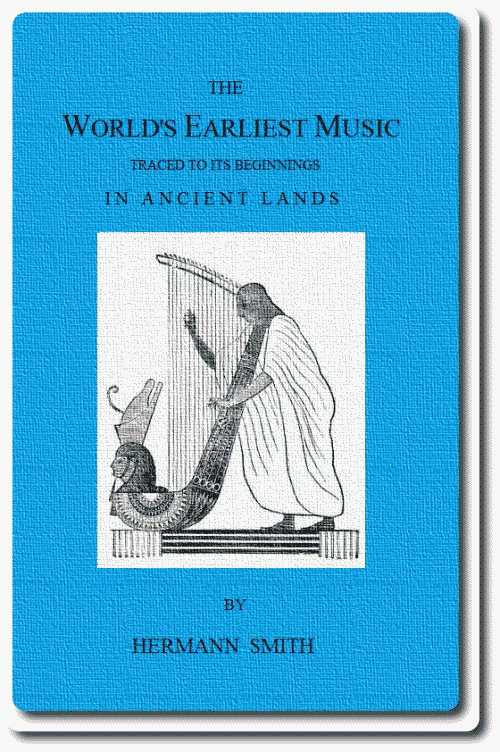
The World's Earliest Music / Traced to Its Beginnings in Ancient Lands by Collected Evidence of Relics, Records, History, and Musical Instruments from Greece, Etruria, Egypt, China, Through Asyria and Babylonia, to the Primitive Home, the Land of Akkad and Sumer
Explore more books like this:
About This Book
The author examines the origins and development of music by surveying archaeological and iconographic evidence from ancient civilizations across the Mediterranean and Asia. Drawing on reliefs, vases, tablets, and surviving instruments, the book traces wind, string, and percussion instruments—double pipes, flutes, lyres, harps, and early free-reed and mouth-organ types—and discusses their construction, acoustic properties, performance techniques, and role in ritual and daily life. Comparative descriptions follow regional traditions from Egypt, Etruria, Greece, China, and other early centers, and the narrative considers scale formation and the gradual evolution of musical systems culminating in classical tuning settlements. Practical experiments and illustrations support reconstructions and interpretive conclusions.
About the Author

You May Also Like
 "Five-Head" Creek; and Fish Drugging in the Pacific / 1901
by Louis Becke
"Five-Head" Creek; and Fish Drugging in the Pacific / 1901
by Louis Becke
 "Pennsylvania Dutch," and other essays
by Phebe Earle Gibbons
"Pennsylvania Dutch," and other essays
by Phebe Earle Gibbons
 "Sterminator Vesevo" (Vesuvius the great exterminator) / Diary of the Eruption of April 1906
by Matilde Serao
"Sterminator Vesevo" (Vesuvius the great exterminator) / Diary of the Eruption of April 1906
by Matilde Serao
 21 Jahre in Indien. Dritter Theil: Sumatra.
by Heinrich Breitenstein
21 Jahre in Indien. Dritter Theil: Sumatra.
by Heinrich Breitenstein
 21 Jahre in Indien. Erster Theil: Borneo.
by Heinrich Breitenstein
21 Jahre in Indien. Erster Theil: Borneo.
by Heinrich Breitenstein
 A Bakony (1. kötet)
by Károly Eötvös
A Bakony (1. kötet)
by Károly Eötvös