
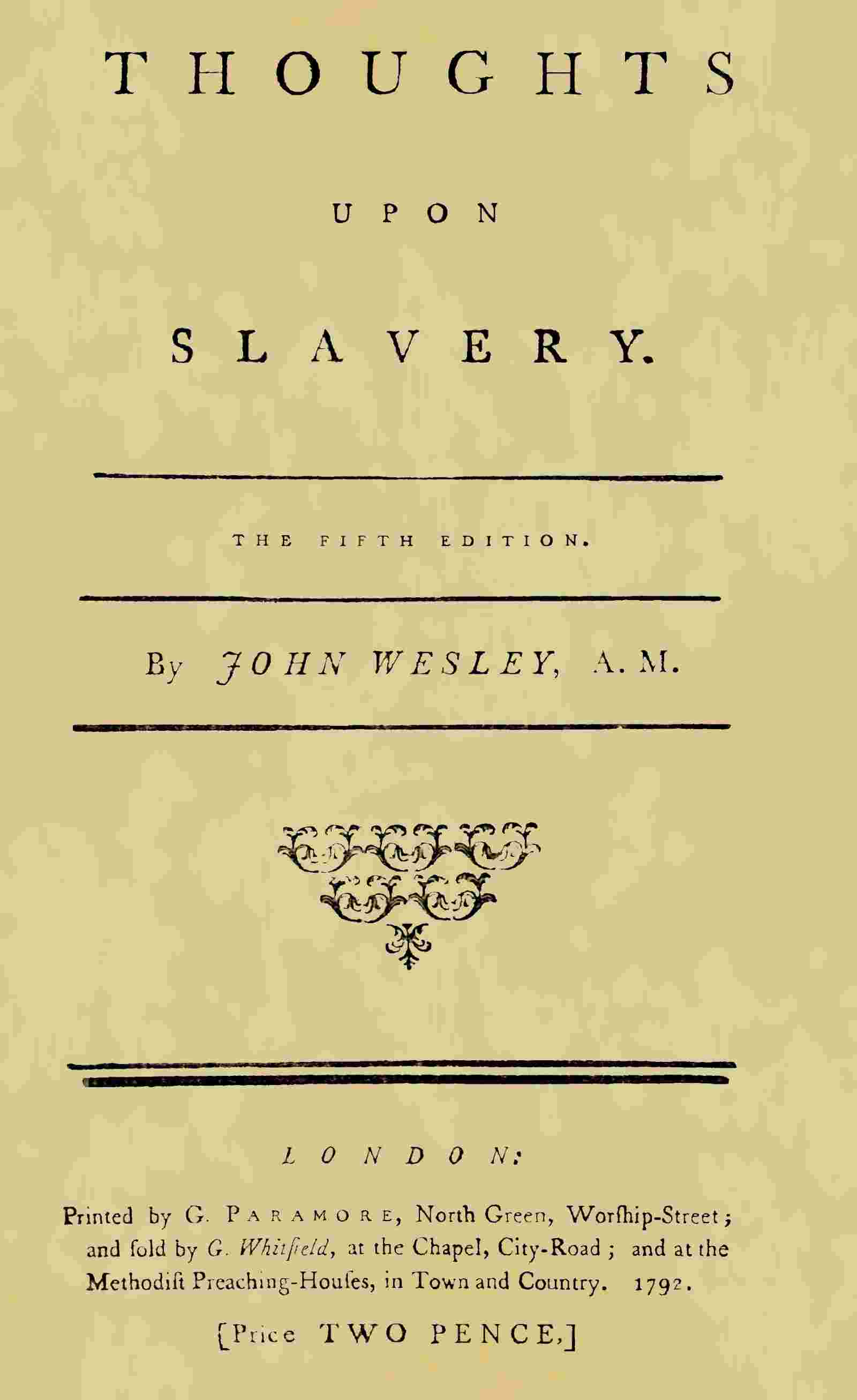
About This Book
The author defines domestic slavery through its legal and social features—perpetual service, restricted rights, alienation, and arbitrary correction—and traces its historical decline and revival connected to colonial expansion and the transatlantic trade. He compiles eyewitness descriptions of African regions, portraying fertile lands, organized communities, and skilled craftspeople. He outlines how people are procured, transported, and subjected to harsh conditions in the Americas. Moral and religious arguments are applied to condemn the practice and to urge emancipation and legal action. The pamphlet blends descriptive reportage, historical overview, and ethical appeal to persuade readers against slavery.
About the Author

More Books by This Author
6 picks
 The works of the Rev. John Wesley, Vol. 01 (of 32)
by John Wesley
The works of the Rev. John Wesley, Vol. 01 (of 32)
by John Wesley
 The works of the Rev. John Wesley, Vol. 02 (of 32)
by John Wesley
The works of the Rev. John Wesley, Vol. 02 (of 32)
by John Wesley
 The works of the Rev. John Wesley, Vol. 03 (of 32)
by John Wesley
The works of the Rev. John Wesley, Vol. 03 (of 32)
by John Wesley
 The works of the Rev. John Wesley, Vol. 04 (of 32)
by John Wesley
The works of the Rev. John Wesley, Vol. 04 (of 32)
by John Wesley
 The works of the Rev. John Wesley, Vol. 05 (of 32)
by John Wesley
The works of the Rev. John Wesley, Vol. 05 (of 32)
by John Wesley
 The works of the Rev. John Wesley, Vol. 06 (of 32)
by John Wesley
The works of the Rev. John Wesley, Vol. 06 (of 32)
by John Wesley
You May Also Like
6 picks
 "'Tis Sixty Years Since" / Address of Charles Francis Adams; Founders' Day, January 16, 1913
by Charles Francis Adams
"'Tis Sixty Years Since" / Address of Charles Francis Adams; Founders' Day, January 16, 1913
by Charles Francis Adams
 "... és a felelősségtől való rettegés"
by Émile Faguet
"... és a felelősségtől való rettegés"
by Émile Faguet
 "A Most Unholy Trade," Being Letters on the Drama by Henry James
by Henry James
"A Most Unholy Trade," Being Letters on the Drama by Henry James
by Henry James
 "About My Father's Business": Work Amidst the Sick, the Sad, and the Sorrowing
by Thomas Archer
"About My Father's Business": Work Amidst the Sick, the Sad, and the Sorrowing
by Thomas Archer
 "America for Americans!" / The Typical American, Thanksgiving Sermon
by John Philip Newman
"America for Americans!" / The Typical American, Thanksgiving Sermon
by John Philip Newman
 "Bethink Yourselves!"
by graf Leo Tolstoy
"Bethink Yourselves!"
by graf Leo Tolstoy