WeRead Powered by ReaderPub
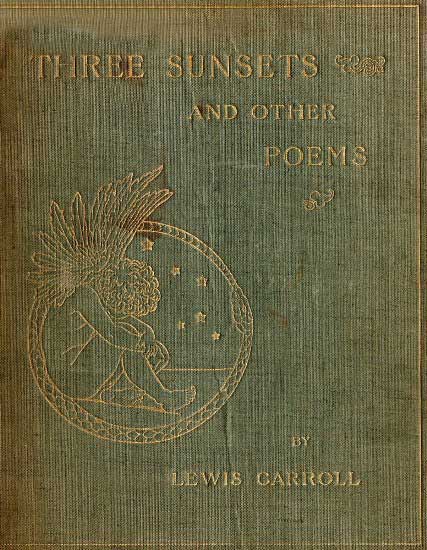
Three Sunsets and Other Poems cover

Three Sunsets and Other Poems

Chapter 49: [Pg 49]
Open in WeRead

Explore more books like this:

About This Book

A varied collection of lyric and narrative poems that alternates reflective meditations on love, loss, solitude, mortality, and religious or martial sacrifice with lighter fairy-lore and whimsical pieces. Several longer ballads dwell on yearning, memory, and grief, while shorter lyrics capture fleeting feeling or playful imagination; the volume mixes reprinted serious verse with newly gathered child-oriented fairy-fancies accompanied by delicate illustrations, exploring how memory, longing, consolation, and fantasy reshape everyday experience.


THE WILLOW-TREE.

The morn was bright, the steeds were light,
The wedding guests were gay:
Young Ellen stood within the wood
And watched them pass away.
She scarcely saw the gallant train:
The tear-drop dimmed her ee:
Unheard the maiden did complain
Beneath the Willow-Tree.

“Oh Robin, thou didst love me well,
Till, on a bitter day,
She came, the Lady Isabel,
And stole thy heart away.
My tears are vain: I live again
In days that used to be,
When I could meet thy welcome feet
Beneath the Willow-Tree.

“Oh Willow gray, I may not stay
Till Spring renew thy leaf;
But I will hide myself away,
And nurse a lonely grief.
It shall not dim Life’s joy for him:
My tears he shall not see:
While he is by, I’ll come not nigh
My weeping Willow-Tree.

“But when I die, oh let me lie
Beneath thy loving shade,
That he may loiter careless by,
Where I am lowly laid.
And let the white white marble tell,
If he should stoop to see,
‘Here lies a maid that loved thee well,
Beneath the Willow-Tree.’”

1859.


ONLY A WOMAN’S HAIR.

‘Only a woman’s hair’! Fling it aside!
A bubble on Life’s mighty stream:
Heed it not, man, but watch the broadening tide
Bright with the western beam.

Nay! In those words there rings from other years
The echo of a long low cry,
Where a proud spirit wrestles with its tears
In loneliest agony.

And, as I touch that lock, strange visions throng
Upon my soul with dreamy grace—
Of woman’s hair, the theme of poet’s song
In every time and place.

A child’s bright tresses, by the breezes kissed
To sweet disorder as she flies,
Veiling, beneath a cloud of golden mist,
Flushed cheek and laughing eyes—

Or fringing, like a shadow, raven-black,
The glory of a queen-like face—
Or from a gipsy’s sunny brow tossed back
In wild and wanton grace—

Or crown-like on the hoary head of Age,
Whose tale of life is well-nigh told—
Or, last, in dreams I make my pilgrimage
To Bethany of old.

I see the feast—the purple and the gold—
The gathering crowd of Pharisees,
Whose scornful eyes are centred to behold
Yon woman on her knees.

The stifled sob rings strangely on mine ears,
Wrung from the depth of sin’s despair:
And still she bathes the sacred feet with tears,
And wipes them with her hair.

He scorned not then the simple loving deed
Of her, the lowest and the last;
Then scorn not thou, but use with earnest heed
This relic of the past.

The eyes that loved it once no longer wake:
So lay it by with reverent care—
Touching it tenderly for sorrow’s sake—
It is a woman’s hair.

Feb. 17, 1862.


THE SAILOR’S WIFE.

See! There are tears upon her face—
Tears newly shed, and scarcely dried:
Close, in an agonised embrace,
She clasps the infant at her side.

Peace dwells in those soft-lidded eyes,
Those parted lips that faintly smile—
Peace, the foretaste of Paradise,
In heart too young for care or guile.

No peace that mother’s features wear;
But quivering lip, and knotted brow,
And broken mutterings, all declare
The fearful dream that haunts her now.

The storm-wind, rushing through the sky,
Wails from the depths of cloudy space;
Shrill, piercing as the seaman’s cry
When death and he are face to face.

Familiar tones are in the gale:
They ring upon her startled ear:
And quick and low she pants the tale
That tells of agony and fear:

“Still that phantom-ship is nigh—
With a vexed and life-like motion,
All beneath an angry sky,
Rocking on an angry ocean.

“Round the straining mast and shrouds
Throng the spirits of the storm:
Darkly seen through driving clouds,
Bends each gaunt and ghastly form.

“See! The good ship yields at last!
Dumbly yields, and fights no more;
Driving, in the frantic blast,
Headlong on the fatal shore.

“Hark! I hear her battered side,
With a low and sullen shock,
Dashed, amid the foaming tide,
Full upon a sunken rock.

“His face shines out against the sky,
Like a ghost, so cold and white;
With a dead despairing eye
Gazing through the gathered night.

“Is he watching, through the dark
Where a mocking ghostly hand
Points a faint and feeble spark
Glimmering from the distant land?

“Sees he, in this hour of dread,
Hearth and home and wife and child?
Loved ones who, in summers fled,
Clung to him and wept and smiled?

“Reeling sinks the fated bark
To her tomb beneath the wave:
Must he perish in the dark—
Not a hand stretched out to save?

“See the spirits, how they crowd!
Watching death with eyes that burn!
Waves rush in——” she shrieks aloud,
Ere her waking sense return.

The storm is gone: the skies are clear:
Hush’d is that bitter cry of pain:
The only sound, that meets her ear,
The heaving of the sullen main.

Though heaviness endure the night,
Yet joy shall come with break of day:
She shudders with a strange delight—
The fearful dream is pass’d away.

She wakes: the grey dawn streaks the dark:
With early song the copses ring:
Far off she hears the watch-dog bark
A joyful bark of welcoming!

Feb. 23, 1857.


AFTER THREE DAYS.

I stood within the gate
Of a great temple, ’mid the living stream
Of worshipers that thronged its regal state
Fair-pictured in my dream.

Jewels and gold were there;
And floors of marble lent a crystal sheen
To body forth, as in a lower air,
The wonders of the scene.

Such wild and lavish grace
Had whispers in it of a coming doom;
As richest flowers lie strown about the face
Of her that waits the tomb.

The wisest of the land
Had gathered there, three solemn trysting-days,
For high debate: men stood on either hand
To listen and to gaze.

The aged brows were bent,
Bent to a frown, half thought, and half annoy,
That all their stores of subtlest argument
Were baffled by a boy.

In each averted face
I marked but scorn and loathing, till mine eyes
Fell upon one that stirred not in his place,
Tranced in a dumb surprise.

Surely within his mind
Strange thoughts are born, until he doubts the lore
Of those old men, blind leaders of the blind,
Whose kingdom is no more.

Surely he sees afar
A day of death the stormy future brings;
The crimson setting of the herald-star
That led the Eastern kings.

Thus, as a sunless deep
Mirrors the shining heights that crown the bay,
So did my soul create anew in sleep
The picture seen by day.

Gazers came and went—
A restless hum of voices marked the spot—
In varying shades of critic discontent
Prating they knew not what.

“Where is the comely limb,
The form attuned in every perfect part,
The beauty that we should desire in him?”
Ah! Fools and slow of heart!

Look into those deep eyes,
Deep as the grave, and strong with love divine;
Those tender, pure, and fathomless mysteries,
That seem to pierce through thine.

Look into those deep eyes,
Stirred to unrest by breath of coming strife,
Until a longing in thy soul arise
That this indeed were life:

That thou couldst find Him there,
Bend at His sacred feet thy willing knee,
And from thy heart pour out the passionate prayer
“Lord, let me follow Thee!”

But see the crowd divide:
Mother and sire have found their lost one now:
The gentle voice, that fain would seem to chide
Whispers “Son, why hast thou”—

In tone of sad amaze—
“Thus dealt with us, that art our dearest thing?
Behold, thy sire and I, three weary days,
Have sought thee sorrowing.”

And I had stayed to hear
The loving words “How is it that ye sought?”—
But that the sudden lark, with matins clear,
Severed the links of thought.

Then over all there fell
Shadow and silence; and my dream was fled,
As fade the phantoms of a wizard’s cell
When the dark charm is said.

Yet, in the gathering light,
I lay with half-shut eyes that would not wake,
Lovingly clinging to the skirts of night
For that sweet vision’s sake.

Feb. 16, 1861.


FACES IN THE FIRE.

The night creeps onward, sad and slow:
In these red embers’ dying glow
The forms of Fancy come and go.

An island-farm—broad seas of corn
Stirred by the wandering breath of morn—
The happy spot where I was born.

The picture fadeth in its place:
Amid the glow I seem to trace
The shifting semblance of a face.

’Tis now a little childish form—
Red lips for kisses pouted warm—
And elf-locks tangled in the storm.

’Tis now a grave and gentle maid,
At her own beauty half afraid,
Shrinking, and willing to be stayed.

Oh, Time was young, and Life was warm,
When first I saw that fairy-form,
Her dark hair tossing in the storm.

And fast and free these pulses played,
When last I met that gentle maid—
When last her hand in mine was laid.

Those locks of jet are turned to gray,
And she is strange and far away
That might have been mine own to-day—

That might have been mine own, my dear,
Through many and many a happy year—
That might have sat beside me here.

Ay, changeless through the changing scene,
The ghostly whisper rings between,
The dark refrain of ‘might have been.’

The race is o’er I might have run:
The deeds are past I might have done;
And sere the wreath I might have won.

Sunk is the last faint flickering blaze:
The vision of departed days
Is vanished even as I gaze.

The pictures, with their ruddy light,
Are changed to dust and ashes white,
And I am left alone with night.

Jan., 1860.


A LESSON IN LATIN.

Our Latin books, in motley row,
Invite us to our task—
Gay Horace, stately Cicero:
Yet there’s one verb, when once we know,
No higher skill we ask:
This ranks all other lore above—
We’ve learned “‘Amare’ means ‘to love’!”

So, hour by hour, from flower to flower,
We sip the sweets of Life:
Till, all too soon, the clouds arise,
And flaming cheeks and flashing eyes
Proclaim the dawn of strife:
With half a smile and half a sigh,
Amare! Bitter One!” we cry.

Last night we owned, with looks forlorn,
“Too well the scholar knows
There is no rose without a thorn”—
But peace is made! We sing, this morn,
“No thorn without a rose!”
Our Latin lesson is complete:
We’ve learned that Love is Bitter-Sweet!

May, 1888.


PUCK LOST AND FOUND.

Puck has fled the haunts of men:
Ridicule has made him wary:
In the woods, and down the glen,
No one meets a Fairy!

“Cream!” the greedy Goblin cries—
Empties the deserted dairy—
Steals the spoons, and off he flies.
Still we seek our Fairy!

Ah! What form is entering?
Lovelit eyes and laughter airy!
Is not this a better thing,
Child, whose visit thus I sing,
Even than a Fairy?

Nov. 22, 1891.

Puck has ventured back agen:
Ridicule no more affrights him:
In the very haunts of men
Newer sport delights him.

Capering lightly to and fro,
Ever frolicking and funning—
“Crack!” the mimic pistols go!
Hark! The noise is stunning!

All too soon will Childhood gay
Realise Life’s sober sadness.
Let’s be merry while we may,
Innocent and happy Fay!
Elves were made for gladness!

Nov. 25, 1891.


A SONG OF LOVE.

Say, what is the spell, when her fledgelings are cheeping,
That lures the bird home to her nest?
Or wakes the tired mother, whose infant is weeping,
To cuddle and croon it to rest?
What the magic that charms the glad babe in her arms,
Till it cooes with the voice of the dove?
’Tis a secret, and so let us whisper it low—
And the name of the secret is Love!
For I think it is Love,
For I feel it is Love,
For I’m sure it is nothing but Love!

Say, whence is the voice that, when anger is burning,
Bids the whirl of the tempest to cease?
That stirs the vexed soul with an aching—a yearning
For the brotherly hand-grip of peace?
Whence the music that fills all our being—that thrills
Around us, beneath, and above?
’Tis a secret: none knows how it comes, how it goes—
But the name of the secret is Love!
For I think it is Love,
For I feel it is Love,
For I’m sure it is nothing but Love!

Say, whose is the skill that paints valley and hill,
Like a picture so fair to the sight?
That flecks the green meadow with sunshine and shadow,
Till the little lambs leap with delight?
’Tis a secret untold to hearts cruel and cold,
Though ’tis sung, by the angels above,
In notes that ring clear for the ears that can hear—
And the name of the secret is Love!
For I think it is Love,
For I feel it is Love,
For I’m sure it is nothing but Love!

Oct., 1886.


THE END.


[TURN OVER.


WORKS BY LEWIS CARROLL.


ALICE’S ADVENTURES IN WONDERLAND. With Forty-Two Illustrations by Tenniel. (First published in 1865.) Crown 8vo, cloth, gilt edges, price 6s. net. Eighty-sixth Thousand.

THE SAME; PEOPLE’S EDITION. (First published in 1887.) Crown 8vo, cloth, price 2s. 6d. net. Seventieth Thousand.

AVENTURES D’ALICE AU PAYS DES MERVEILLES. Traduit de l’Anglais par Henri Bué. Ouvrage illustré de 42 Vignettes par John Tenniel. (First published in 1869.) Crown 8vo, cloth, gilt edges, price 6s. net. Second Thousand.

Alice’s Abenteuer im Wunderland. Aus dem Englischen von Antonie Zimmermann. Mit 42 Illustrationen von John Tenniel. (First published in 1869.) Crown 8vo, cloth, gilt edges, price 6s. net.

LE AVVENTURE D’ALICE NEL PAESE DELLE MERAVIGLIE. Tradotte dall’ Inglese da T. Pietrocola-Rossetti. Con 42 Vignette di Giovanni Tenniel. (First published in 1872.) Crown 8vo, cloth, gilt edges, price 6s. net.

ALICE’S ADVENTURES UNDER GROUND. Being a Facsimile of the original MS. Book, which was afterwards developed into “Alice’s Adventures in Wonderland.” With Thirty-seven Illustrations by the Author. (Begun, July, 1862; finished, Feb. 1863; first published, in facsimile, in 1886.) Crown 3vo, cloth, gilt edges, price 4s. net. Third Thousand.

THE NURSERY “ALICE.” Containing Twenty Coloured Enlargements from Tenniel’s Illustrations to “Alice’s Adventures in Wonderland.” With Text adapted to Nursery Readers. Cover designed by E. Gertrude Thomson. (First published in 1890.) 4to, boards, price 4s. net. Eleventh Thousand.

THROUGH THE LOOKING GLASS, AND WHAT ALICE FOUND THERE. With Fifty Illustrations by Tenniel. (First published in 1871.) Crown 8vo, cloth, gilt edges, price 6s. net. Sixty-first Thousand.

THROUGH THE LOOKING-GLASS, AND WHAT ALICE FOUND THERE; PEOPLE’S EDITION. (First published in 1887.) Crown 8vo, cloth, price 2s. 6d. net. Forty-sixth Thousand.

ALICE’S ADVENTURES IN WONDERLAND; AND THROUGH THE LOOKING-GLASS; PEOPLE’S EDITIONS. Both Books together in One Volume (First published in 1887.) Crown 3vo, cloth, price 4s. 6d. net.

THE HUNTING OF THE SNARK. An Agony in Eight Fits. With Nine Illustrations, and two large gilt designs on cover, by Henry Holiday. (First published in 1876.) Crown 8vo, cloth, gilt edges, price 4s. 6d. net. Twentieth Thousand.

RHYME? AND REASON? With Sixty-five Illustrations by Arthur B. Frost, and Nine by Henry Holiday. (First published in 1883, being a reprint, with a few additions, of the comic portion of “Phantasmagoria and other Poems,” published in 1869, and of “The Hunting of the Snark,” published in 1876.) Crown 8vo, cloth, gilt edges, price 6s. net. Sixth Thousand.

SYMBOLIC LOGIC. In three Parts, which will be issued separately:—

Part I. Elementary. (First published in 1896.) Crown 8vo, limp cloth, price 2s., net.
Second Thousand, Fourth Edition.
Part II. Advanced.
Part III. Transcendental.
} [In preparation.

N.B.—An envelope, containing two blank Diagrams (Biliteral and Triliteral) and 9 Counters (4 Red and 5 Grey) can be had for 3d., by post 4d.

A TANGLED TALE. Reprinted from The Monthly Packet. With Six Illustrations by Arthur B. Frost. (First published in 1885.) Crown 8vo, cloth, gilt edges, price 4s. 6d. net. Fourth Thousand.

SYLVIE AND BRUNO. With Forty-six Illustrations by Harry Furniss. (First published in 1889.) Crown 8vo, cloth, gilt edges, price 7s. 6d. net. Thirteenth Thousand.

N.B.—This book contains 395 pages—nearly as much as the two “Alice” books put together.

SYLVIE AND BRUNO CONCLUDED. With Forty-six Illustrations by Harry Furniss. (First published in 1893.) Crown 8vo, cloth, gilt edges, price 7s. 6d. net. Third Thousand.

N.B.—This book contains 411 pages.

ORIGINAL GAMES AND PUZZLES. Crown 8vo, cloth, gilt edges. [In preparation.

THREE SUNSETS, and Other Poems. With Twelve Fairy-Fancies by E. Gertrude Thomson. (First published in 1893.) Fcap. 4to, cloth, gilt edges, price 4s., net.

N.B.—This is a reprint, with a few additions, of the serious portion of “Phantasmagoria, and other Poems,” published in 1869.


MACMILLAN AND CO., Limited, LONDON.


ADVICE TO WRITERS.

Buy “THE WONDERLAND CASE FOR POSTAGE STAMPS,” invented by Lewis Carroll, Oct. 29, 1888, size 4 inches by 3, containing 12 separate pockets for stamps of different values, 2 Coloured Pictorial Surprises taken from Alice in Wonderland, and 8 or 9 Wise Words about Letter-Writing. It is published by Messrs. Emberlin & Son, 4 Magdalen Street, Oxford. Price 1s.

N.B.—If ordered by Post, an additional payment will be required, to cover cost of postage, as follows:—

One copy, 1½d. Two or three do., 2d. Four do., 2½d. Five to fourteen do., 3d. Each subsequent fourteen or fraction thereof, 1½d.