
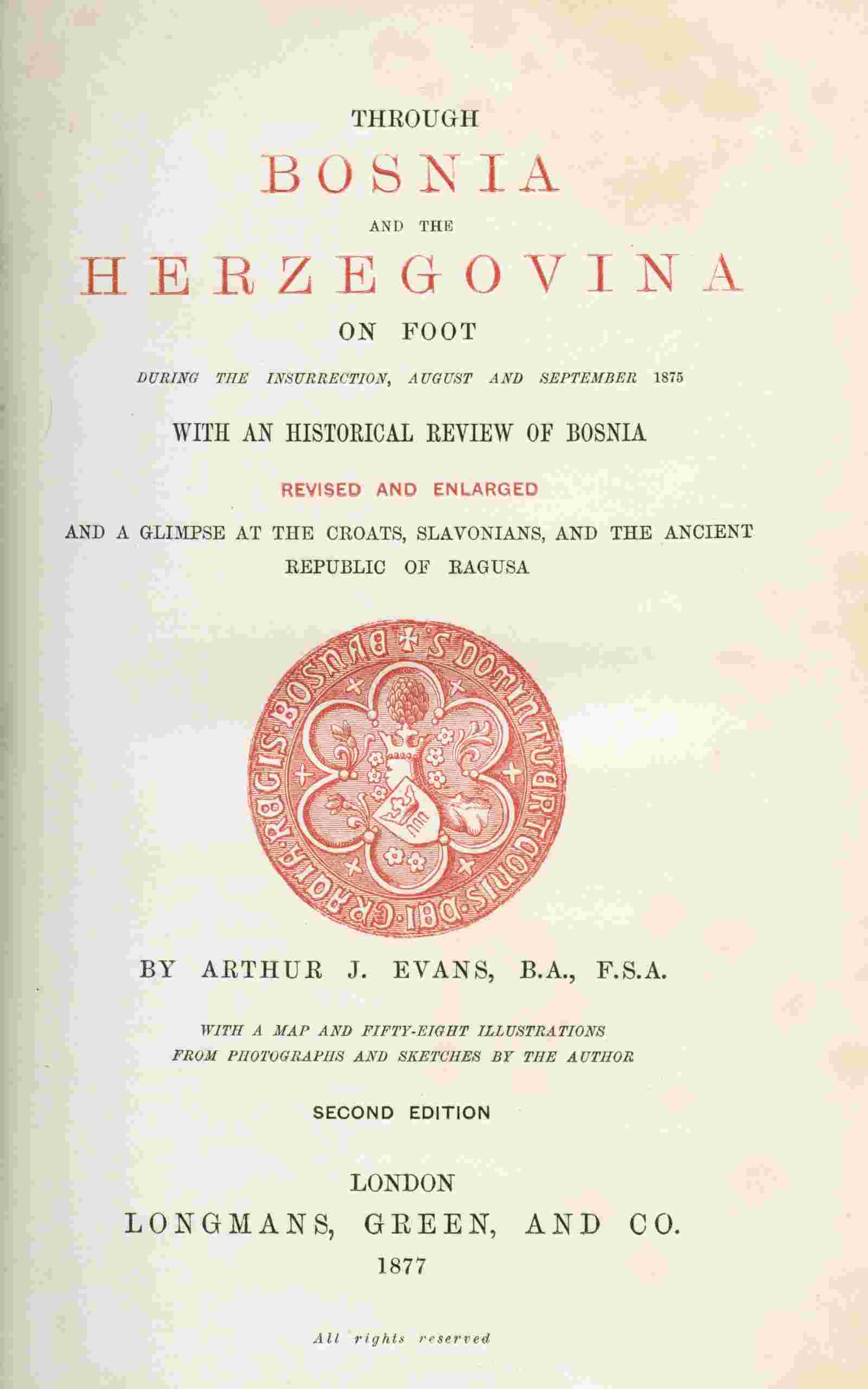
Having obtained access to some new authorities on Bosnian history, I have thought it desirable to make some additions to my ‘Historical Review’ in the present Edition. I was the more anxious to do this as the brevity with which I had expressed my views on the most important aspect of Bosnian history—its connection, namely, with the early history of Western Protestantism—has led in some quarters to strange misconception. In setting my conclusions on this head in, I trust, a clearer light, I have been greatly aided by the recent appearance of Herr Jireček’s Geschichte der Bulgaren, which contains some valuable data from South-Sclavonic sources touching the tenets and Church government of the Bogomiles, and their missionary triumphs in Italy and Provence.
I have also added a few considerations on the present state of Bosnia, the malign and artificial character of the Osmanlì government in that province, and the reforms which it were most desirable that an united Europe should enforce.
In doing so—though I, for one, was never so sanguine as to imagine that the agreement of the great Powers was anything else than a hollow pretence—I had found it convenient to assume that the Conference was prepared to speak to Turkey in the only language to which she was capable of listening. As I write, however, the divisions of Christendom, and, more than all, the anti-Sclavonic jealousies of Austria-Hungary, have baffled the efforts of diplomacy; and, after womanish expostulation and pitiable huckstering, the representatives of Europe have been shown the door by the Sick Man. The two alternatives apparently left to us are, to England at least, equally pernicious and equally shameful—a Russo-Turkish war, or a new cycle of tyranny, agitation, and revolt, ending where it began, and involving the solution, it may be, of graver questions, than the fate of one Empire.