
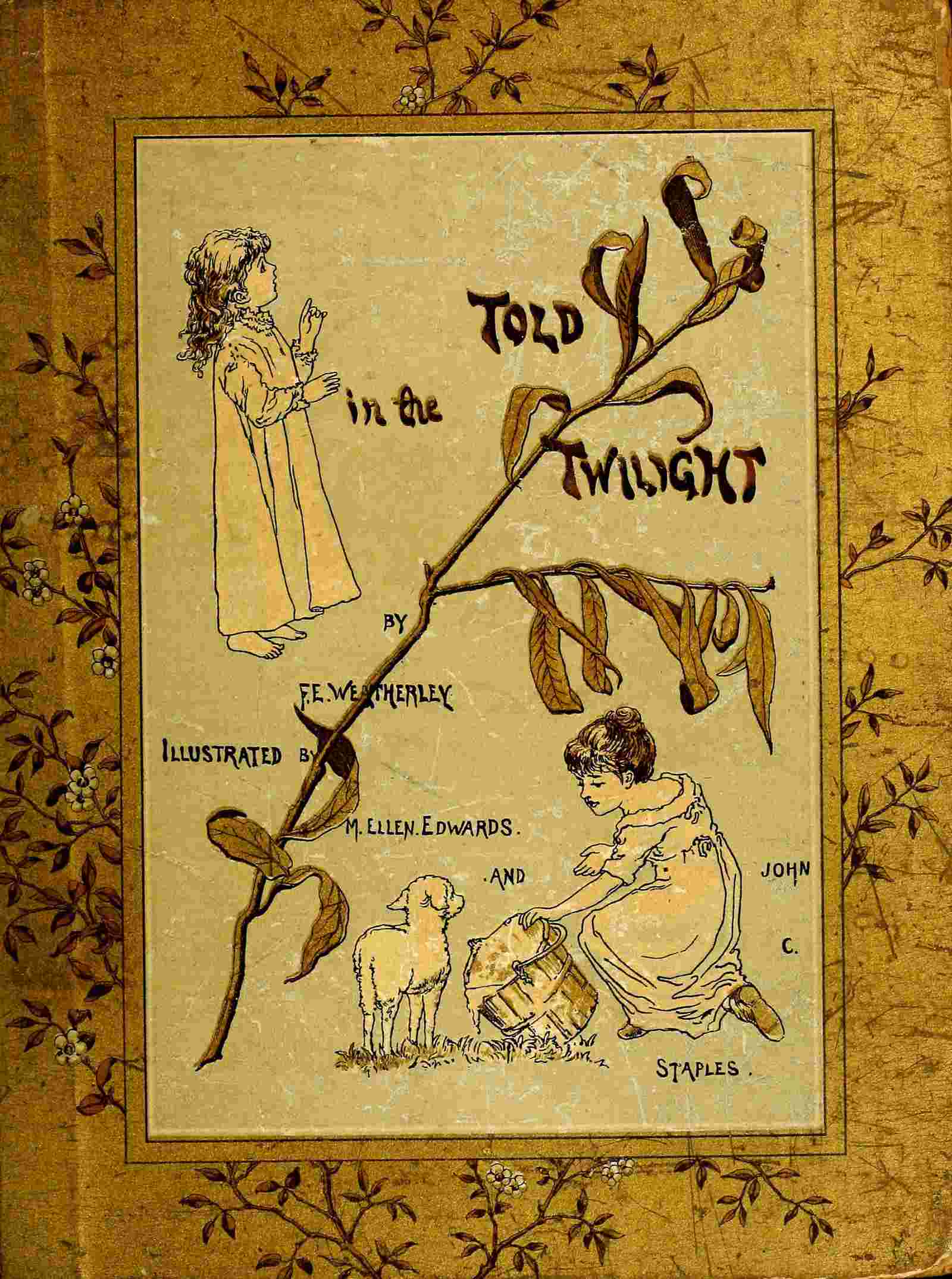
It was the little Isabel,
Upon the sand she lay,
The summer sun struck hotly down,
And she was tired of play,
And down she sank into the sea,
Though how, she could not say.—
She stood within a dreadful court,
Beneath the rolling tide,
There sate a sturgeon as a judge,
Two lobsters at her side;
She had a sort of vague idea
That she was being tried.
And then the jurymen came in,
And, as the clock struck ten,
Rose Sergeant Shark and hitched his gown,
And trifled with a pen,
“Ahem—may’t please your Lordship,
And gentle jurymen!
“The counts against the prisoner
Before you, are that she
Has eaten salmon once at least,
And soles most constantly,
Likewise devoured one hundred shrimps
At Margate with her tea.”
“Call witnesses!”—An oyster rose,
He spoke in plaintive tone,
“Last week her mother bought a fish,”
(He scarce could check a moan,)—
“He was a dear dear friend of mine,
His weight was half a stone!”
“No oysters, ma’am?” the fishman said,
“No, not to-day!” said she;
“My child is fond of salmon, but
Oysters do not agree!”
The fishman wiped a salt salt tear,
And murmured “Certainly!”
“Ahem—but,” interposed the judge,
“How do you know,” said he,
“That she did really eat the fish?”
“My Lud, it so must be,
Because the oysters, I submit,
With her did not agree!”
“Besides, besides,” the oyster cried
Half in an injured way,
“The oysters in that fishman’s shop
My relatives were they:
They heard it all, they wrote to me,
The letter came to-day!”
“’Tis only hearsay evidence,”
The judge remarked, and smiled,
“But it will do in such a case,
With such a murd’rous child.—
Call the next witness!” for he saw
The jury getting wild.
And then uprose a little shrimp:
“I am the last,” said he,
“Of what was once, as you all know,
A happy familee!
Without a care we leapt and danced
All in the merry sea!”
“Alack! the cruel fisherman,
He caught them all but me;
The pris’ner clapped her hands and yelled—
I heard her—‘Shrimps for tea!’
And then went home and ate them all
As fast as fast could be.”
The foreman of the jury rose,
(All hope for Bel has fled,)
“There is no further need, my Lord,
Of witnesses,” he said;
“The verdict of us one and all
Is Guilty on each head!”
“Guilty,” his Lordship said, and sighed,
“A verdict sad but true:
To pass the sentence of the court
Is all I have to do;
It is, that as you’ve fed on us,
Why, we must feed on you!”
She tried to speak; she could not speak;
She tried to run, but no!
The lobsters seized and hurried her
Off to the cells below,
And each pulled out a carving knife,
And waved it to and fro.
* * * *
But hark! there comes a voice she knows,
And some one takes her hand;
She finds herself at home again
Upon the yellow sand;
But how she got there safe and sound,
She cannot understand.
And many a morning afterwards,
Whene’er she sees the tide,
She still retains that vague idea
That she is being tried,
And seems to see the sturgeon judge
And the lobsters at her side.