
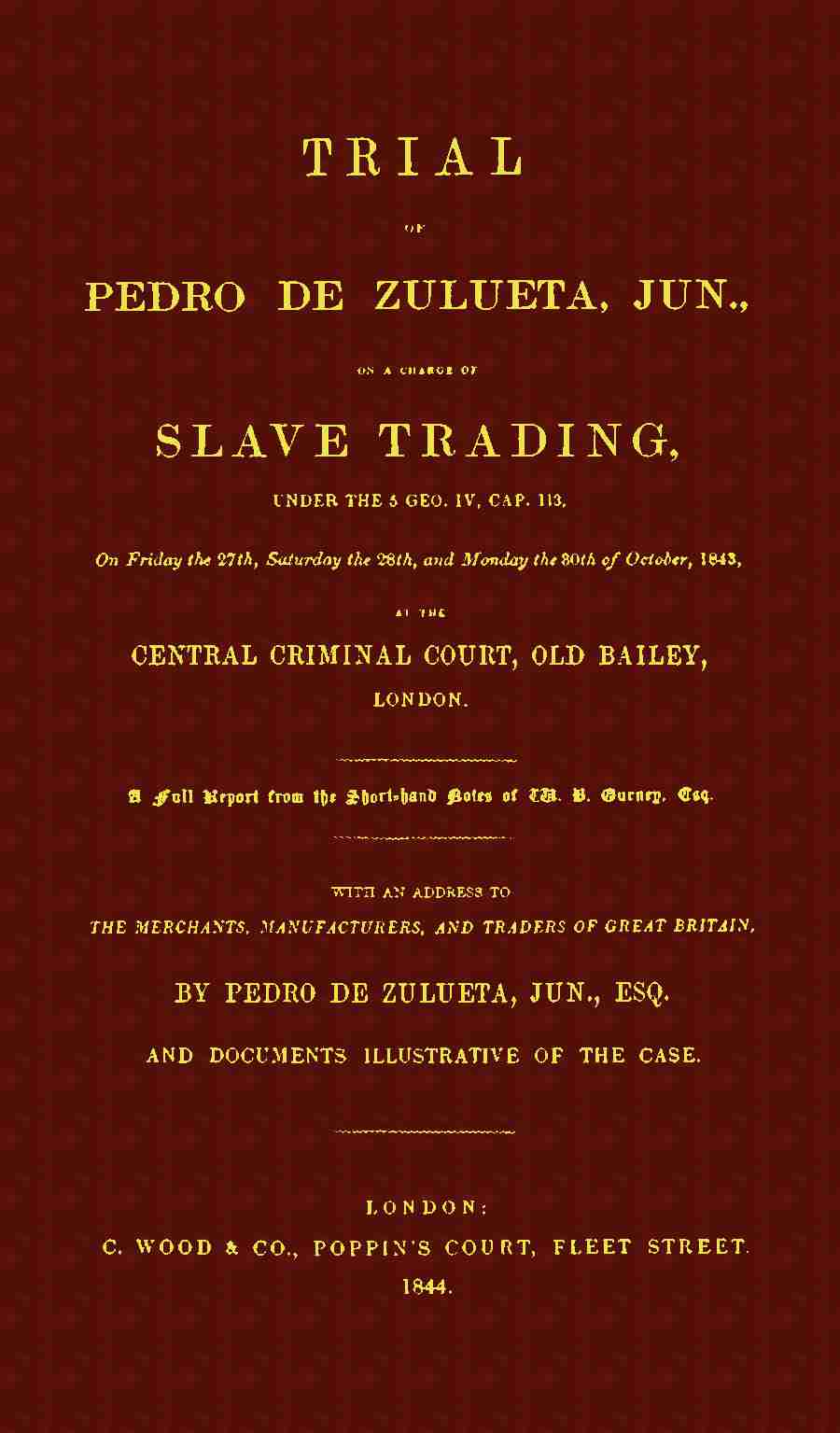
Trial of Pedro de Zulueta, jun., on a Charge of Slave Trading, under 5 Geo. IV, cap. 113, on Friday the 27th, Saturday the 28th, and Monday the 30th of October, 1843, at the Central Criminal Court, Old Bailey, London / A Full Report from the Short-hand Notes of W. B. Gurney, Esq.
Explore more books like this:
About This Book
The volume presents a complete record of a nineteenth-century criminal prosecution for alleged involvement in the transatlantic slave trade, compiling the full shorthand trial transcript, indictments, witness statements, legal opinions, committee reports, and related correspondence. It reproduces the defendant’s address to commercial interests, testimony taken before a parliamentary select committee on the West African coast, and documentary exhibits used at the Central Criminal Court. Legal argumentation focuses on agency, burden of proof, and the interpretation of a statute forbidding participation in slave trading, while supporting materials include letters, expert summaries, and procedural motions that illuminate mercantile practice and contemporary enforcement challenges.
About the Author

You May Also Like
 "Bear ye one another's burdens." A Plain Sermon on the Lancashire Distress
by James Galloway Cowan
"Bear ye one another's burdens." A Plain Sermon on the Lancashire Distress
by James Galloway Cowan
 "Brother Bosch", an Airman's Escape from Germany
by Gerald Featherstone Knight
"Brother Bosch", an Airman's Escape from Germany
by Gerald Featherstone Knight
 "Hear Ye the Rod, and Who Hath Appointed It" / A Sermon for the Fast Day, October 7, 1857
by James Galloway Cowan
"Hear Ye the Rod, and Who Hath Appointed It" / A Sermon for the Fast Day, October 7, 1857
by James Galloway Cowan
 "The Red Watch": With the First Canadian Division in Flanders
by John Allister Currie
"The Red Watch": With the First Canadian Division in Flanders
by John Allister Currie
 "Their Majesties' Servants." Annals of the English Stage (Volume 1 of 3)
by Dr. Doran
"Their Majesties' Servants." Annals of the English Stage (Volume 1 of 3)
by Dr. Doran
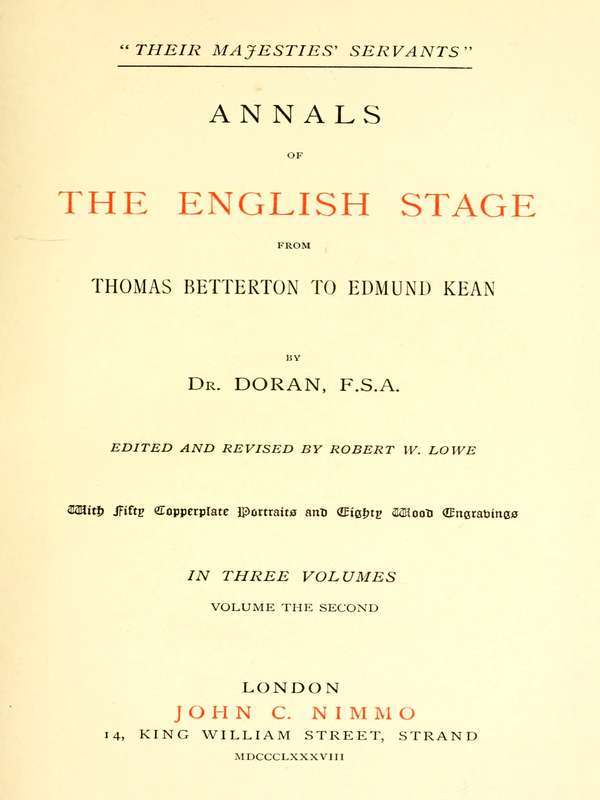 "Their Majesties' Servants." Annals of the English Stage (Volume 2 of 3)
by Dr. Doran
"Their Majesties' Servants." Annals of the English Stage (Volume 2 of 3)
by Dr. Doran