
DRAWN BY GERTRUDE HUEBSCH
About This Book
The essay is a meditation on an ancient marble statue, praising its living presence and the sculptor's fidelity to nature; Rodin argues that beauty and strength arise from truthful observation, patient study, and harmonious unity of forms rather than idealized fantasy. He contrasts antique mastery with nature's supremacy, rejects fragmentary or anatomical analysis that disrupts holistic form, and celebrates the statue's capacity to embody womanhood, vitality, and timeless appeal. The piece exhorts artists to persistent, loving study of nature to apprehend life and to achieve works where every detail serves an indivisible whole, producing cohesion, expressive depth, and enduring admiration across generations.
VENUS
TO THE VENUS OF MELOS
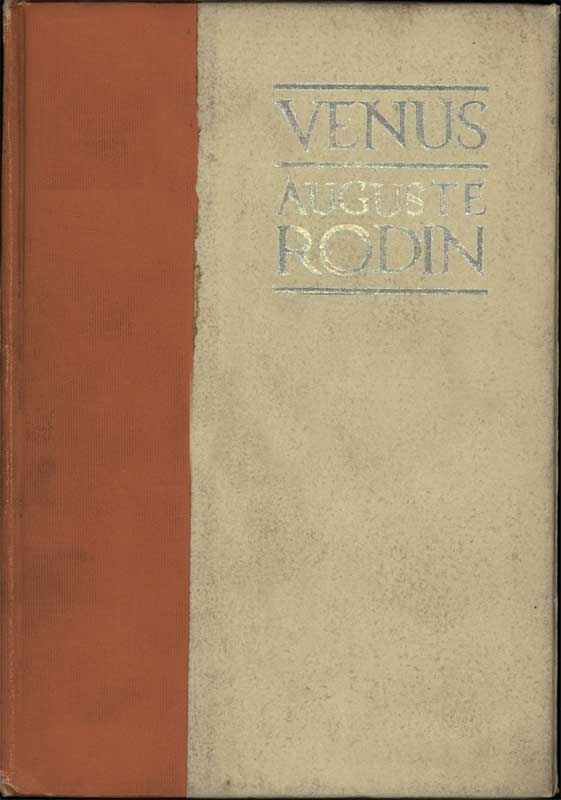
VENUS
AUGUSTE RODIN
AUTHORIZED TRANSLATION
FROM THE FRENCH BY
DOROTHY DUDLEY
NEW YORK: B. W. HUEBSCH
1912
Copyright, 1912,
By B. W. HUEBSCH
Printed in U.S.A.