
CHAPTER X.
THE STORM.
"HOW are you, grandfather?" asked Judith, next morning, tapping at the old man's door.
"Come in, dear," he answered. "I'm not well; quite tired out, Judith. I'm not so young as I was. I must give up work, except mending and making nets, and I like doing that as well as anything; it reminds me of the disciples when the Master called them. It can't be long before He calls me."
"I'll bring you a cup of tea, grandfather," said the little girl, stooping down to kiss him tenderly. "I'm so glad you didn't try to get up until you are more rested."
Towards afternoon Captain Nance was so far better as to take his old place in his arm-chair. He tried to mend a net, but his hands did not move so rapidly as usual.
"I must give in to-day, Philippa," he said at last. "I'm so very, very weary. I'm going to tell John he was right when he said I wasn't fit to be a huer this year. I'm going to look-out for something better than pilchards—my sailing orders, they won't be long before they come."
"You're tired and out of spirits to-day, father," said Mrs. Trevan, kindly. "Another night's rest will set you up again."
"Never, Philippa; I've gone beyond that. I've only one prayer to be answered now, then I can say,—
"'Lord, now lettest thou thy servant depart in peace, according to thy
word.'
"On my bended knees, night and day, I have and will supplicate my Heavenly Father, that Willy may yet return. His coming will bring matters into plain sailing before I go the way of all flesh. I shall have nothing left to wish for or to care for. He'll come before I die."
Mrs. Trevan's eyes filled with tears, but she made no remark, and for some minutes neither father nor daughter spoke.
"I think I'll have a little walk," said Captain Nance, breaking the silence, and rising from his arm-chair. "Give me my stick, Philippa."
"Let one of the children go with you, father, or I will. You seem too poorly to be alone."
"I'd rather go by myself, Philippa. I shall only walk as far as the Tolcarne. You may send the children after me in half an hour."
The old man wended his way slowly down New Street, and crossed the bridge over the little river which runs through Newlyn. Turning past the flour mill, he took a narrow road which led up a steep hill, and brought him to the Tolcarne. These rocks command a charming view of Mount's Bay and the hills around it, for they lie on the edge of a high cliff. In Cornwall is heard what is locally termed the calling of the sea; a murmuring roaring noise which sometimes extends eight or ten miles inland. As Captain Nance gazed on the scene which he had known from boyhood, he thought he heard the sea calling.
"Calling me home," he said aloud. "What mercy there is in the call. I'm ready to answer;—
"'Speak, Lord, for thy servant heareth.'
"I'm not afraid of receiving my sailing orders."
And the aged man stretched out his hands as if he wished to respond to what seemed to him a call to another and brighter world. But he drew them back when he heard footsteps approaching, and recognised voices that he knew.
"Who were you speaking to, grandfather?" asked Dorothy.
Captain Nance smiled. "To the waves, dear," he replied. "It's almost hard to return back again to the world, even to be with those I love so well. I feel so very, very weary to-day."
"Grandfather, come home," said Judith, taking his hand, gently. "You go the other side, Dorothy."
So they led him down the hill, and beguiled him along by their loving words. He fell into a calm sleep on his return, and then they told their mother how they had found their grandfather, and what he had said.
"I believe the end is approaching," she answered; "we shall have to brace ourselves up to bid him farewell soon. We shall miss him, but we dare not pray to God to let him live amongst us when he longs so much to be safely landed with his Saviour."
The month of September found the fishermen still busy; but a great change had passed over Captain Nance in the few weeks which intervened since he had taken an active part in curing the first pilchards of the season. He no longer attempted to make or mend a net, but sat in his arm-chair all day long. He rarely tried to walk even so far as the iron railings, and sometimes slept for several hours during the day.
The doctor said that no medicine could prevent the candle of life from burning out.
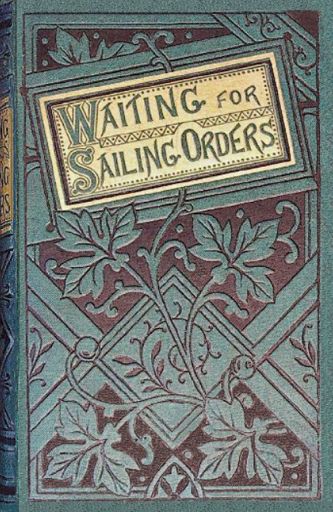
To the question which his friends so often asked, "How are you to-day, Captain Nance?" he replied, "As well as I ever shall be. I'm waiting, waiting, waiting for my sailing orders to come."
"There's no going out fishing to-day," said John Trevan, entering the room where his wife sat with her father, about twelve o'clock one morning in the third week of September. "It's blowing a strong sou'-wester outside the bay; when the tide turns we shall have rough weather. Give me a bit of dinner, wife, for I'm going to take the 'Mary Ann' into Penzance harbour, lest any harm should befall her; there's not much chance for a fishing-boat if she breaks away from her moorings in such a gale as we shall have."
Mount's Bay was soon alive with vessels sailing across from Newlyn to find a better place of refuge than the little harbour affords when the wind sets in from this quarter. Not only were the small craft glad to gain shelter, but many merchant-ships were seen making for the bay.
At the turn of the tide, John Trevan's words were verified. The waves rolled up with terrific force, and broke over houses and walls; over the high road between Penzance and Newlyn, which lies exposed to the beach; over carriages and carts; over grown-up people and young children.
It happened to be market day at Penzance, so that many were passing to and from Newlyn. At length the road became dangerous, for the waves threw up great stones; so the women took to the fields and the men ran along the wall which divided the road from the fields. Many were heavily laden; husbands had been making purchases, and wives had their baskets filled with provisions for home consumption; but even the fields were flooded at last, and few escaped a wetting.
The water dashed over the seawall at Newlyn, and right up the narrow way past John Trevan's house. Dorothy and Judith, who were standing at the iron railing, were nearly swept down by the fury of a wave, and, thoroughly drenched, were glad to run home.
John Trevan was returning from Penzance after placing the "Mary Ann" in safe anchorage, when he spied a boat which had evidently broken from its moorings in the bay. "Do unto others as you would that they should do unto you" was his motto, so he went down on the beach to see if he could save the boat from being dashed on the rocks.
"Let it alone," shouted one of his comrades; "it belongs to James Thompson, and if it's lost, he deserves it."
"Nay, nay," answered John, "that's not what my Gospel teaches me. Come and give me a hand."
The other man passed on. But John was not to be deterred from doing the right by this conduct. He stopped one and another of the fishermen who had been to Penzance on the same errand as himself, and enlisted their services. The boat was secured at last and dragged into a place of safety, just as Thompson, who had been warned of the danger to which it was exposed, came running up to look after his property.
He was a cross-grained fellow, and not a favourite in Newlyn; but he now advanced to John Trevan and offered him his hand.
"You've done more to make me acknowledge the truth of the Gospel than any man in Newlyn," he said. "I did not believe you when you declared one day you tried to carry out the golden rule in your words and actions; now I do believe you. There must be something real in such religion as yours. I shan't forget this in a hurry."
John shook the hand thus held out to him warmly, and from that hour these two became staunch friends.
By six o'clock in the evening the waves dashed mountains high, and the whole length of the shore was a bubbling, surging mass of foam. One ship was struggling across the bay; she was driven about in all directions, but evidently hoped to reach the harbour.
Between Newlyn and Penzance there are many reefs of rocks, and it needs careful navigation to steer clear of them; it seemed as if the vessel which was battling with the waves must be wrecked on these rocks. As she neared the pier she drifted to seaward; the coast-guardsmen signalled to her and prepared boats and rockets; when anxiety was at its height, a sudden shift of wind caught her sails, and she safely cleared the pier.
While this vessel was saved, another, later in that evening, was lost. She came from America and was bound to Plymouth, but she could not reach Mount's Bay; she was driven into Lamorna Cove.
It is a wild spot at all times, for the rocks are on a large scale, and the shore is strewn with great boulders. A few workmen's cottages scattered here and there are the only signs of habitation. The sea on a calm day leaves only a fringe of sand, but in storm dashes up furiously, carrying all before it.
The American vessel soon went to pieces. Only two of her crew reached land, and only one of the two lived through the night. Both of them were cast on to a rock; a young man and an old man. While the latter had no strength to crawl out of danger, his companion managed to creep high enough away from the waves to save his life. There he lay unable to move until morning broke, when he was discovered by one of the workmen, who took him to his cottage.
This was how Willy Trevan came home.
————————
CHAPTER XI.
SAILING ORDERS.
THE sea was not calm enough the next day to allow the Newlyn fishermen to go out in their boats, but it was not raging as on the previous night, though wise heads said that at the turn of the tide the waves would come up almost as wildly as on the previous evening.
The fishermen stood together in knots through Newlyn, talking over the last night's gale, and retailing the news that one and another had picked up by the way.
The streets and rough pathways gave evidence of the storm; seaweed lay in large quantities everywhere, while on the shore they were gathering it up into heaps ready to cart away to manure the fields. One little garden which lay exposed to the seawall was literally washed away, and where flowers had been on the previous day, there was seaweed; while the cockle shells that had ornamented the borders were strewn about in wild disorder.
Captain Nance felt very weakly; he found it difficult to leave his bed at all; but his brave spirit went far to sustain him, and with the assistance of his daughter, he was placed in his accustomed chair by dinner-time.
John Trevan came home with a sad list of accidents that had befallen different vessels along the coast, and also said that an American ship had been wrecked in Lamorna Cove, "and only one poor fellow saved, who lies ill at Tressider's cottage," he added.
"He'll be well looked after there," remarked Mrs. Trevan. "I wonder who he is, and whether he was homeward bound. We must see if he has lost his all, and help him, John, if he is in want. You will meet Tressider either to-morrow or the next day, when he comes to market, so mind you ask him some particulars."
John nodded his assent; he knew why his wife was so anxious to hear about this wrecked man; it was her tribute to Willy's memory.
"We've not heard the extent of the damages," said Captain Nance. "There's been more mischief done; you may depend upon it many lives were lost last night. Some, I dare say, prayed when danger threatened, as the disciples did of old,—
"'Lord, save us: we perish.'
"But others, it may be, found a watery grave without having time to cry for mercy. There are many sorrowful hearts, and anxious ones, too, about our world to-day."
Here grandfather was interrupted by a tap at the door. Dorothy, who was sitting close by, opened it.
"Here's a letter for Mr. Trevan. I'll come back for an answer directly."
John took the note; it was closely sealed. He tore it open, and as he read the first words he uttered an exclamation which he checked quickly, glancing at his wife.
"What is it?" she asked, anxiously noting her husband's agitation. "John, tell me;" and she would have taken the letter from him.
"No, no, Philippa," he said, "not yet. Can you bear it?"
"Bear what, John? Tell me."
"Willy's come home. He's the young man who lies ill at Tressider's."
Philippa could not bear the joyful news; she fainted away. The strain and weariness, the tears and long waiting, had lasted for years; and now the joy was so unlooked for. But consciousness soon returned.
"He's come at last," she murmured. "My God, I thank Thee for hearing a mother's prayers."
"Bear up bravely, wife; our son is not far off; he's only at Lamorna; we must go and fetch him home."
"Where is he?" she asked, as if she scarcely comprehended her husband's words.
"At Lamorna. Tressider found him lying on a rock, bruised and hurt, but living. He was the only one saved from the wreck."
Mr. and Mrs. Trevan made all haste to reach Lamorna Cove. There indeed were signs of storm, for scattered about far inland were quantities of seaweed and timbers which had been washed up by the great waves.
Tressider's cottage was planted half way up the ravine, so they were obliged to leave their hired cart at the little roadside inn, and walk to it. Philippa's knees trembled; she could scarcely command herself enough to go forward; and her teeth chattered with agitation. Mr. Trevan threw his strong arm round her and almost carried her at last.
"John, let me go to him alone," she said.
No one but God and the angels witnessed the meeting between the mother and her newly found son. When the husband entered the room ten minutes later, they were still locked in a close embrace; but they made room for him, and Willy was forgiven and welcomed home by his father.
More than a week elapsed before he could bear the journey to Newlyn. His mother remained with him, and little by little heard the sad history of his life. It was an old, old story that Willy told. The story of the prodigal wandering from his father, and choosing his own way; finding the world a hard taskmaster; going from one scene of wickedness to another; then being in want and resolving to go home. But in the meantime he had learned by stern discipline that he had wronged a Heavenly Father as well as an earthly parent; he remembered his mother's tears and prayers, and he arose and went to his God; made confession of his sins, and sued for pardon through Jesus Christ.
When the family was once more re-united in the old home, every heart was full to overflowing with gratitude to God. Willy was carried from the spring cart and laid on the sofa that had been brought in from the best parlour for him. It was an old-fashioned couch, which was deemed too good for ordinary occasions, but was not thought too good for sick Willy to rest upon.
The meeting between Captain Nance and his grandson was solemn and touching.
"'Lord, now lettest thou thy servant depart in peace, according to thy word,'" said the old man, as he bent over him and kissed him. "Willy, I believed I should live to see you, and God has sent you home. Praise the Lord for all His mercies, and most of all for teaching you, even though suffering, that there's no safe anchorage anywhere out of Christ."
Dorothy and Judith were silent with pleasure; they looked lovingly and admiringly at their tall sun-burnt brother, who pressed the hands that fondled his. It was not a noisy family party that sat in that little parlour at Newlyn on the evening that Willy returned, but a very happy, quiet, earnest group; even his father remained at home to receive him.
Captain Nance, as usual, conducted prayer.
"Good-bye, my children and grandchildren," he said, ere he left the room. "My sailing orders will come soon now. My old weather-beaten bark will be safely landed on the eternal shore before long. The harbour-master will come alongside and release me from any further waiting. Bless and thank God for it. Kiss me, all of you."
They obeyed him, and then his daughter helped him to bed as usual. Afterwards she came to her Willy, and his room, which had so long been empty, was once more tenanted by its rightful occupant.
The next morning there was a sound of weeping in the fisherman's cottage, for they loved the brave old man so much. His sailing orders had been brought to him during the night, and his weather-beaten bark was safely landed where the wicked cease from troubling and the weary are at rest.
LONDON: R. K. BURT AND CO., PRINTERS.