
WOLF
The advisability of using dogs in the war was under consideration by the United States War Department for many months. Provision had been made for the training of these dogs, and in fact many had been mustered into service, when a final decision was reached to eliminate their use.
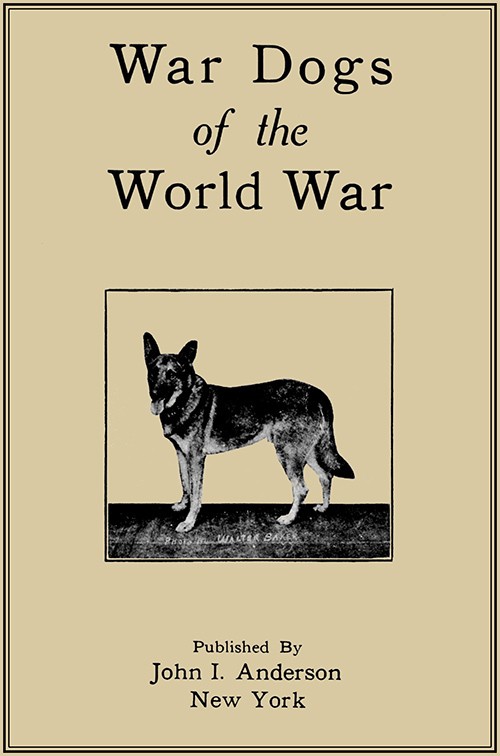
In 1914, just a few weeks before war was declared, I purchased in the city of Neuremberg, Bavaria, a fine specimen of the German Police dog. The reader can see by the picture of this animal that he was by no means an ordinary dog, but one of the finest specimens of this famous breed. Wolf stood 28½ inches from fore feet to shoulder blades and weighed 170 pounds.
Through a fellow member of the Police Dog Club of America, who had been commissioned by the U. S. Government as official trainer, I had Wolf enlisted for war service and he was sent to Athens, Georgia, to complete his training. After the War Department concluded to debar war dog service, he was turned over to the French War Department, and in December, 1917, was sent to France. In June, 1918, I received a picture of Wolf, showing him in camp in company with two French soldiers, apparently enjoying the novel experience of fighting with the enemies of his native land.
During my stay in France following the armistice, I spent many days and dollars in my efforts to discover the whereabouts of my old friend Wolf, but all without avail. Great difficulties were encountered in locating missing men, and naturally my task to find a dog was much greater. On my return to France I shall continue my efforts and still hope to meet with success. When I find him—and I pray that I may—Wolf shall spend his declining days in the enjoyment of everything a dog likes best, and when his days are ended, he shall have bestowed upon him a decent burial and the lasting memories of his master.
Huskie, Alaskan Dog.