
| THE SQUIRREL | |
“They sat on the branches with their bushy tails curving
over their backs” | Frontispiece |
| THE OPOSSUM | PAGE |
“In a few minutes another and another baby followed
the big brother and clung there on the mother’s
furry back” | 5 |
| THE MANATEE | |
“The old mother manatee held him close to her” | 19 |
| THE WHALE | |
“The old mother whale came tearing back to the rescue” | 39 |
| THE ELK | |
“Grazing over the upland meadows” | 48 |
| THE BEAVER | |
“Across the pond to feast in the woods” | 65 |
| THE RABBIT | |
“It was pleasant there in the underbrush of the woods” | 84 |
| THE FOX | |
“Now and then the fox stopped to listen” | 131 |
| THE WOLF | |
“It was the father wolf coming in” | 137 |
| THE MOLE | |
“The greedy young ones shoved and pushed and fought
as if they were starving” | 152 |
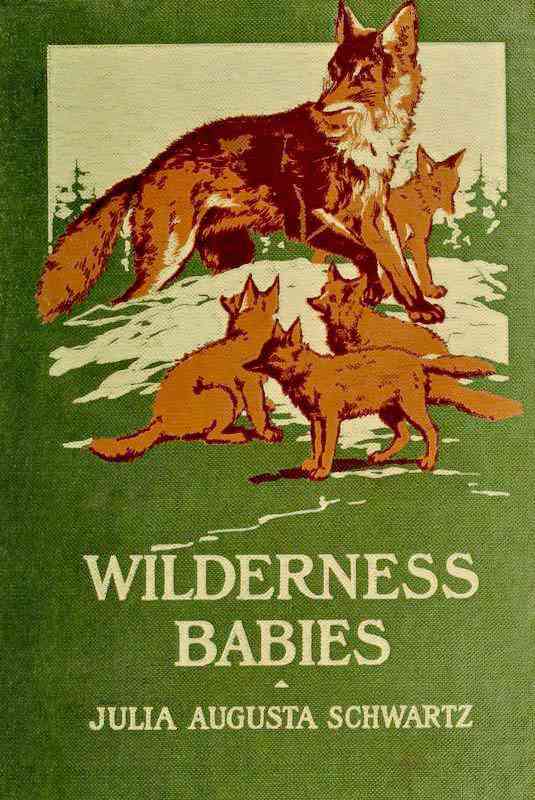
About This Book
A series of natural-history sketches presents the early lives of various wild mammals, portraying how each species is born, nurtured, learns to feed, move, and protect itself in its habitat. Each chapter focuses on a different animal—pouch-carrying opossums, sea-cows and whales, hoofed deer, gnawers like beavers and squirrels, burrowing moles, and carnivores such as foxes and wolves—describing nesting, feeding, locomotion, building or digging, seasonal habits like hibernation, and parental care. Simple anecdotes and illustrations emphasize diversity of form and behavior, stages of growth, and the practical skills young animals must acquire to survive in forests, plains, mountains, and waters.