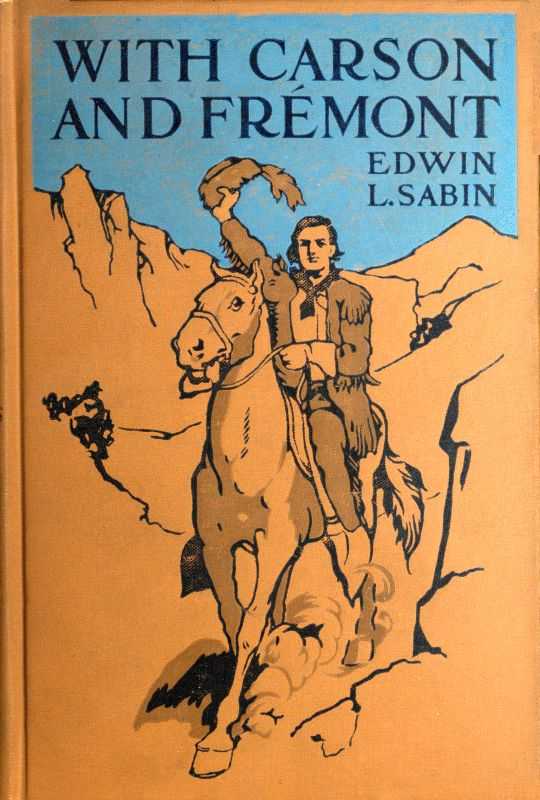
| Christopher Carson |
John Charles Frémont |
| Born Madison County, Ky., December 25, 1809. |
January 21, 1813, born at Savannah, Ga. |
| Father: Lindsay (Linsey) Carson, of North Carolina and Kentucky. |
Father: John Charles Frémont, of France and of Virginia. |
| Mother: Rebecca Robinson, of Virginia. |
Mother: Anne Beverley Pryor, of Virginia. |
| Reared without education, on the Missouri frontier. |
Educated by tutor and college at Charleston, S. Carolina. |
| Apprenticed to a harness-maker at Franklin, Mo.—1825. |
1833–1836—Teacher of Mathematics to Midshipmen on Sloop-of-War Natchez. |
| On the Santa Fé Trail at Fifteen—1826. |
1836—Commissioned Professor of Mathematics in the Navy, Assigned to
the Frigate Independence. |
| Interpreter and Teamster, in New Mexico and Old Mexico—1827–1829. |
1837–1838—Railroad and Army Surveyor. |
| Trapper to California—1829–1830. |
1838—Commissioned Second Lieutenant, Topographical Engineers, U. S. A. |
| Rocky Mountain Trapper—1830–1838. |
1838–1839—Government Survey of Upper Mississippi River, under J. N. Nicollet. |
| Married an Arapahoe Indian girl—1835. |
1841—Married
Jessie Benton of Washington. |
| Hunter and Captain of Trappers, at Bent’s Fort and Taos—1838–1842. |
1841—Survey of Lower Des Moines River. |
| Hunter with the Frémont First Expedition—1842. |
1842—First Government Exploring Expedition, to the South Pass and
Frémont’s Peak. |
| Married Josefa Jaramillo of Taos—1843. |
1843–1844—Second Government Exploring Expedition, to the Salt Lake, to the Columbia,
south through California, back by the Spanish Trail and the Rocky Mountains. |
| Hunter and General Assistant with Frémont Second Expedition—1843–1844. |
1845—Promoted by brevet to First Lieutenant and Captain. |
| Goes to Ranching in New Mexico—1845. |
1845–1846—Third Government Exploring Expedition, across the Great Basin into
Northern California. |
| Guide and General Assistant with the Frémont Third Expedition—1845–1846. |
1846—As Major Commands a Battalion for the Conquest of California. |
| Scout and Express Bearer under Colonel Frémont, Commodore Stockton and General
Kearny, in the Conquest of California—1846. |
1846–1847—Military Commander and Governor of California. |
| Express Service with Despatches Across the Continent to Washington—1847–1848. |
1846—Promoted to Lieutenant-Colonel of Mounted Rifles, U. S. A. |
| Commissioned Second Lieutenant of Mounted Rifles, U. S. A., but the Commission
not confirmed—1847. |
1847–1848—Court-martialed
at Washington for Insubordination, Found Guilty, but Recommended for Leniency. |
| Serves on Outpost Duty in California—1847. |
1848—Resigns from Army. |
| His Express Duty of 1848 Completed, Becomes Private Citizen at Taos—1848. |
1848–1849—Fourth Exploring Expedition, into the Southern Colorado Mountains; thence
Forced Back, and to California by a Southern Route. |
| Seeks ranch life in New Mexico—1849–1850. |
1849–1850—Seeks ranch life in California. |
| Scout Duty against the Indians, with Army Detachments—1850. |
1850–1851—Senator from California. |
| Overland to California with a Drove of 30,000 sheep—1853. |
1851–1853—California and Europe. |
| Government Indian Agent over Utes and Apaches, Quarters at Taos—1854–1860. |
1853–1854—Fifth Exploring Expedition, across the Great Basin of Utah and Nevada
to California. |
| Scout Duty against the Indians, with Army Detachments—1854–1855. |
1856—Nominated by the Republican Party for the Presidency. Defeated by Buchanan. |
| Lieutenant-Colonel and Colonel, First New Mexican Infantry, U. S. Vols.—1861–1862. |
1861—Major-General, Department of the West, U. S. A., headquarters at St. Louis. |
| Colonel of First New Mexican Cavalry, U. S. Vols., conducting campaigns against
the Apaches, Navajos and Kiowas, New Mexico and Arizona—1862–1864. |
1862—Resigns from Army, after service in Command of the Mountain Department of Virginia,
Tennessee and Kentucky. |
| Military Service on the Santa Fé Trail and Special Commissioner to treat with Cheyennes
and Arapahoes—1865. |
1864—Nominated
for Presidency. Withdraws. |
| Lieutenant-Colonel (Brigadier General by Brevet, for Distinguished Service) in command
at Fort Garland, Colorado—1866–1867. |
1866–1878—Railroad Construction, etc. |
| Resigned from the Army, on Account of Ill Health—1867. |
1878–1882—Governor of Arizona. |
| Special Commissioner to Treat with the Utes, at Washington—1868. |
1890—Appointed Major-General, on the Retired List. |
| Died at New Fort Lyon, Colorado, May 23, 1868. |
July 13, 1890, died in New York City. |