
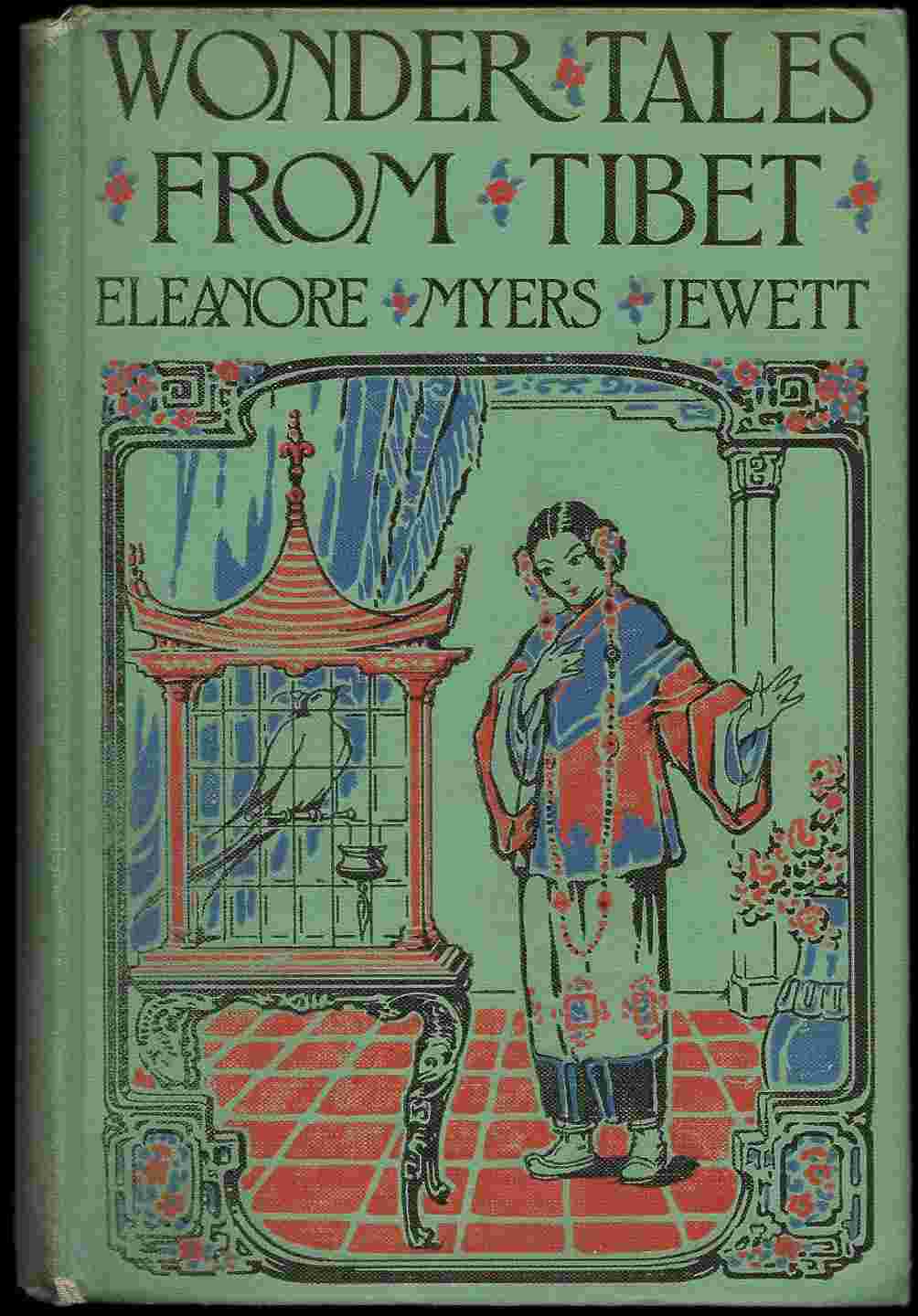
The Project Gutenberg eBook of Wonder Tales from Tibet
Title: Wonder Tales from Tibet
Author: Eleanore Myers Jewett
Illustrator: Maurice Day
Release date: October 1, 2021 [eBook #66443]
Most recently updated: October 18, 2024
Language: English
Credits: Jeroen Hellingman and the Online Distributed Proofreading Team at https://www.pgdp.net/ for Project Gutenberg (This file was produced from images generously made available by The Internet Archive/American Libraries.)
WONDER TALES FROM TIBET
The two friends felt themselves picked up and whizzed through the air. Frontispiece.
See page 127.
LITTLE, BROWN, & COMPANY
1922
Copyright, 1922,
By Little, Brown, and Company.
All Rights Reserved
Published September, 1922
Printed in the United States of America
PREFACE
The Siddhi-kur is a strange and mysterious creature! He is so old that we cannot even guess at his age, and he has traveled so many leagues from the land that originally produced him that we really do not know how much of him is as he was, and how much of him has been changed by time and place. Dusky little boys and girls in faraway India, long, long ago, were the first to listen to the stories that gathered around the figure of the Siddhi-kur, tales of wonder and magic which always ended with the hint of another, even better one to follow. Then from India, still in the unknown long ago, wandering tribes, or perhaps occasional single travelers, carried the stories into the highlands of Tibet. There they grew and flourished, till the Siddhi-kur in his mango tree, with his clever wit and quaint [viii]sense of humor, and the ever persevering Khan’s Son, became as familiar to Kalmuck and Mongolian children as St. George and his dragon are to us. Some European travelers, hearing the tales from the people and realizing their unusual qualities, their picturesqueness, their fun and adventure, collected them and brought them home. They were first published in 1866 by a German scholar, Bernhardt Jülg, and it is from his pamphlet, “Kalmükische Märchen,” and an English translation of the same (“Sagas from the Far East,” by R. H. Busk, 1873), that I have drawn the following stories, changing and adapting them freely to suit Occidental ethics and taste.
I was first moved to put them into book form because of the interest they aroused in a certain small group of boys and girls to whom I told them, one hot, happy summer not so very long ago. The element of repetition, the distinctly human characters, the atmosphere of another land and [ix]strange people, and the romance of quest—these things give to the Wonder Tales from Tibet the appeal to the childhood of all times and all races, which is their reason for having lived so long and traveled so far, and reason, too, for believing they will hold the interest of our modern American girls and boys.
Eleanore Myers Jewett. [xi]
CONTENTS
[xiii]
ILLUSTRATIONS
[1]