
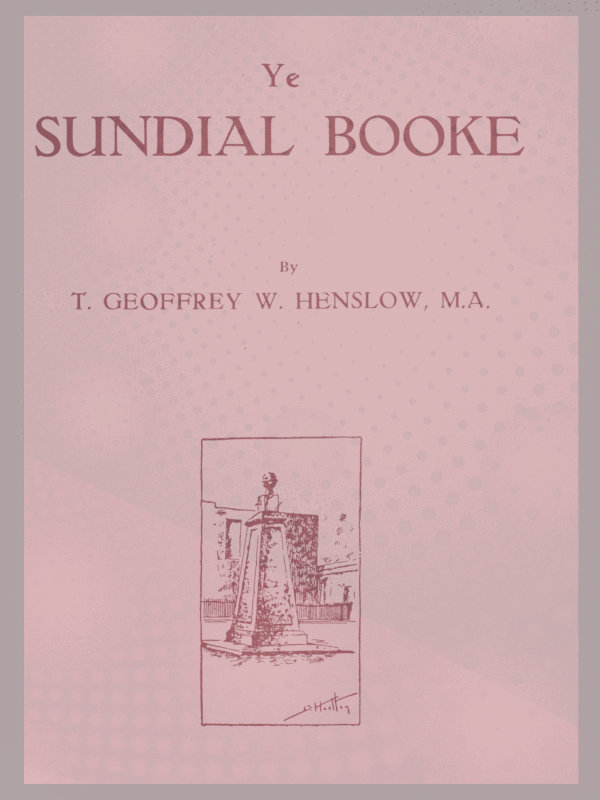
THE MAID AND THE SUNDIAL
I.
A maiden glanced at a sundial old,
For to learn both the time of the day
And to read its motto written bold,
Made so clear by each sun-lightened ray.
II.
Beauty, it said, is a thing of naught,
And true love, like the sun, sinks ever;
For the joys that please can all be bought,
Time only shall last on for ever.
III.
The maiden laughed as she read this rhyme,
And exclaimed, “But man could compose it
Who had loved and lost, upon a time,
And so now on a stone he shows it.”
IV.
“Beauty,” she said, “is a thing to hold,
Both women and men they adore it.
Love is eternal, far above gold,
Mark well how the world doth implore it.”
V.
“Money that buys some beautiful thing,
And which gives what is called love a place,
Ends with the bell, the gift of a ring,
Will not change the rich purchaser’s face.”
VI.
“Love, like the sun, may sink down to rest,
But daily the heavens renew it;
So learn of all gifts love is the best—
Go win, and not buy, lest you rue it.”
T. G. W. H.