THE FATUOUS FLOWER.


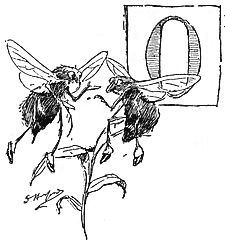
nce on a time a Bumblebee

Addressed a Sunflower. Said he:

“Dear Sunflower, tell me is it true

What everybody says of you?”

Replied the Sunflower: “Tell me, pray,

How should I know what people say?

Why should I even care? No doubt

’T is some ill-natured tale without

A word of truth; but tell me, Bee,

What is it people say of me?”

“Oh, no!” the Bee made haste to add;

“’T is really not so very bad.

I got it from the Ant. She said

She’d heard the Sun had turned your head,
nce on a time a Bumblebee

Addressed a Sunflower. Said he:

“Dear Sunflower, tell me is it true

What everybody says of you?”

Replied the Sunflower: “Tell me, pray,

How should I know what people say?

Why should I even care? No doubt

’T is some ill-natured tale without

A word of truth; but tell me, Bee,

What is it people say of me?”

“Oh, no!” the Bee made haste to add;

“’T is really not so very bad.

I got it from the Ant. She said

She’d heard the Sun had turned your head,


And that whene’er he walks the skies

You follow him with all your eyes

From morn till eve—”

“Oh, what a shame!”

Exclaimed the Sunflower, aflame,

“To say such things of me! They know

The very opposite is so.


“They know full well that it is he

The Sun—who always follows me.

I turn away my head until

I fear my stalk will break; and still

He tags along from morn till night,

Starting as soon as it is light,

And never takes his eyes off me

Until it is too dark to see!

They really ought to be ashamed.

Soon they’ll be saying I was named

For him, when well they know ’t was he

Who took the name of Sun from me.”

The Sunflower paused, with anger dumb.

The Bee said naught, but murmured, “H’m!

’T was very evident that he

Was much impressed—this Bumblebee.

He spread his wings at once and flew

To tell some other bees he knew,

Who, being also much impressed,

Said, “H’m!” and flew to tell the rest.

And now if you should chance to see,

In field or grove, a Bumblebee,

And hear him murmur, “H’m!” then you

Will know what he’s alluding to.


A LOVE STORY.

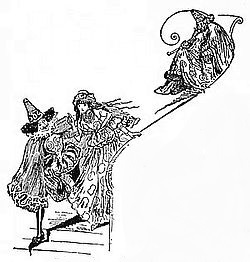
He was a Wizard’s son,

She an Enchanter’s daughter;

He dabbled in Spells for fun,

Her father some magic had taught her.


A LOVE STORY.

He was a Wizard’s son,

She an Enchanter’s daughter;

He dabbled in Spells for fun,

Her father some magic had taught her.

They loved—but alas! to agree

Their parents they could n’t persuade.

An Enchanter and Wizard, you see,

Were natural rivals in trade—

And the market for magic was poor—

There was scarce enough business for two

So what started rivalry pure

Into hatred and jealousy grew.

Now the lovers were dreadfully good;

But when there was really no hope,

After waiting as long as they could,

What else could they do but elope?

They eloped in a hired coupé;

And the youth, with what magic he knew—

Made it go fully five miles a day.

(Such wonders can sorcery do!)

Then the maiden her witcheries plied,

And enchanted the cabman so much,

When they got to the end of their ride

Not a cent of his fare would he touch!

Now they’re married and live to this day

In a nice little tower, alone,

For the building of which, by the way,

Their parents provided the stone.

Then the parents relented? Oh, no!

They pursued with the fury of brutes,

But arrived just too late for the show,

Through a leak in their seven-league boots;

And finding their children were wed,

Into such a wild rage they were thrown,

They rushed on each other instead

And each turned the other to stone.

Then the lovers, since lumber was high,

And bricks were as then quite unknown,

As soon as their tears were quite dry—

They quarried their parents for stone.

And now in a nice little tower,

In Blissfulness tinged with Remorse,

They live like as not to this hour—

(Unless they have got a divorce).

MORAL.

Crime, Wickedness, Villany, Vice,

And Sin only misery bring;

If you want to be Happy and Nice,

Be good and all that sort of thing.