
WeRead Powered by ReaderPub
Fatigue study cover

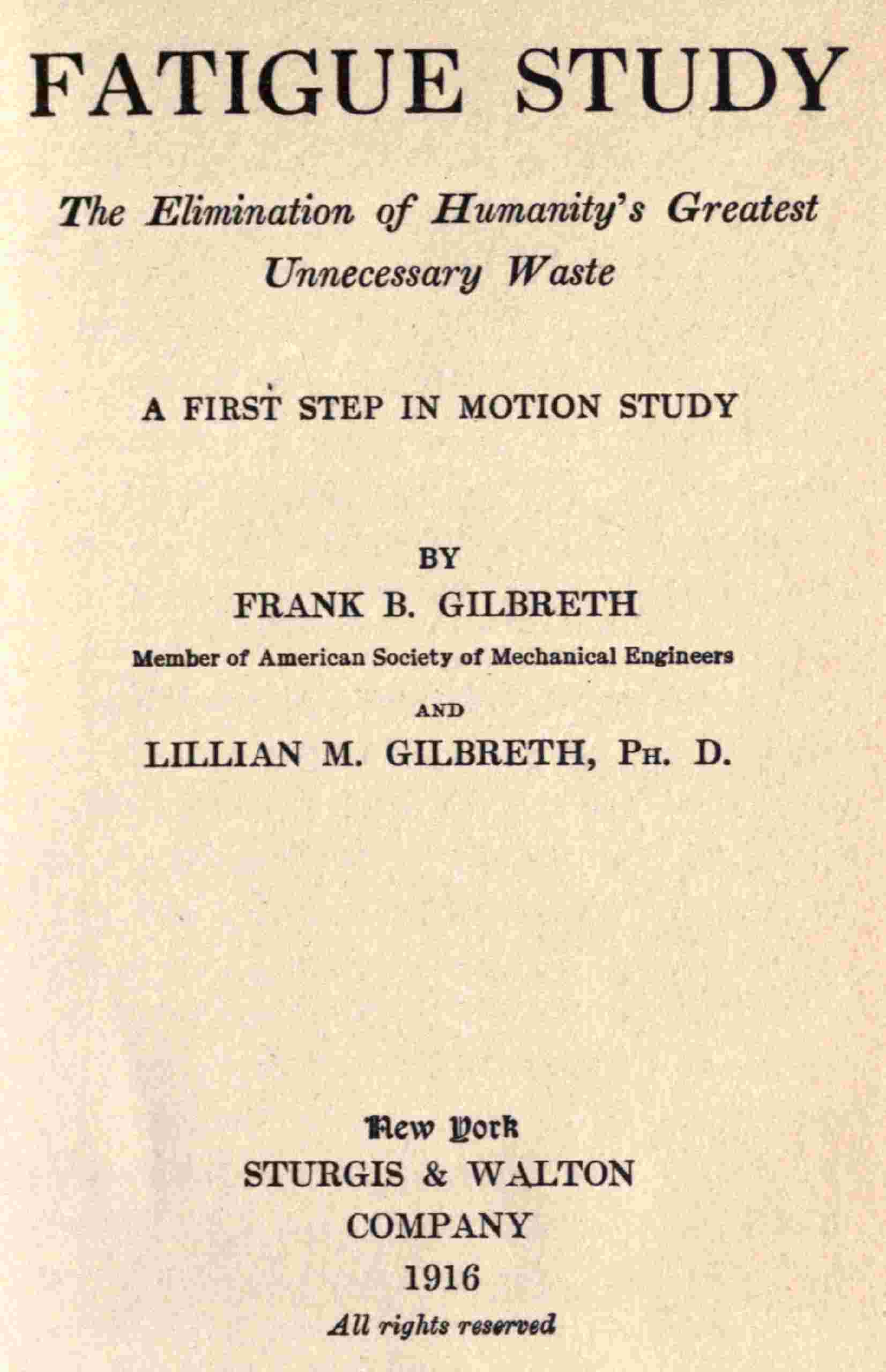
Fatigue study

Chapter 109: Transcriber’s Notes
Open in WeRead

About This Book

The authors define fatigue as the after-effect of work that reduces capacity and generates waste, then set out practical and scientific methods to identify, measure, and eliminate unnecessary fatigue. They describe how to conduct fatigue surveys, introduce immediate provisions for rest and better chairs, and present a Home Reading Box movement as an illustration of welfare practice. Guidance covers lighting, ventilation, safety, tools, workbench and clothing arrangements, while a fatigue museum gathers examples of devices. Measurement approaches include motion and micromotion study with cyclegraph and chronocyclegraph tools, and the text explains standardizing work, testing adjustments, and implementing improved practices.

Transcriber’s Notes

Obvious errors in punctuation have been fixed.

Page 29: “indentical surroundings” changed to “identical surroundings”

Page 57: “of the organiaztion” changed to “of the organization”

Page 68: “old mgazines” changed to “old magazines”

Page 97: “loss in efficency” changed to “loss in efficiency”

Page 114: “FATIGUE ELIMINANATION” changed to “FATIGUE ELIMINATION”

Page 141: The caption referring to the “carrier packet shown in Fig. 31” was fixed to refer to Fig. 29.

Page 144: The paragraph for caption 31 was missing the label for A. and had it out of order. This has been fixed.