
WeRead Powered by ReaderPub
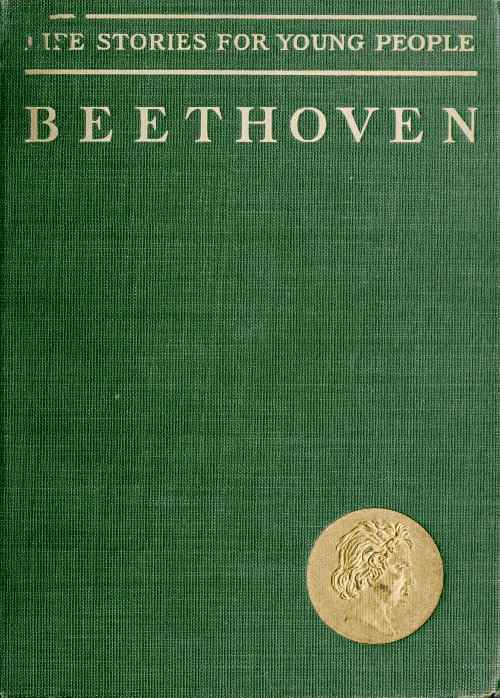
Ludwig Van Beethoven cover

Ludwig Van Beethoven

Chapter 11: Appendix
Open in WeRead

About This Book

A concise biography recounts the composer’s early life and formative years, concentrating on childhood hardships, family struggles, and the development of musical talent. It traces his instruction and opportunities, the steady growth of his dedication to composition, and the personal trials that tested his resolve, including progressive loss of hearing, while outlining later milestones to round out the narrative. Presented in episodic, accessible chapters for young readers, the account emphasizes themes of perseverance, moral courage, industry, and self-devotion as engines of artistic achievement.

The happiness of knowing he could create sublime masterpieces was greater than the unhappiness of being deaf and misunderstood. He was not solitary, for the divine genius of art always was his companion. Beethoven was really happy because he was greater than his misfortunes. Upon his heroic brow rests a more splendid ornament than the crown of any king,—the laurel-wreath of everlasting fame, the radiant diadem of immortality.

Footnotes

[1]Johann or Jean van Beethoven, father of the composer, was a tenor singer in the chapel of the Elector of Cologne at Bonn.
[2]Max Franz was brother of the Emperor Joseph II.
[3]The Graus Haus, where Beethoven was born, is No. 515 in the Bonn Gasse (Bonn Street), and is now marked by a tablet, placed there in 1870.
[4]Beethoven’s mother, Marie Magdelena Laym, was the daughter of the chief cook at Ehrenbreitstein.
[5]There is a question whether Beethoven was born on the 16th or 17th of December, 1770. Probably he was born on the 16th.
[6]Beethoven’s grandfather was Ludwig van Beethoven, chapelmaster for the Elector of Cologne. He died in 1773, when his grandson was three years of age.
[7]Pfeiffer was a tenor singer in the opera at Bonn.
[8]Van den Eeden was organist at the Court Chapel and an old friend of Beethoven’s grandfather.
[9]Neefe succeeded Van den Eeden as organist, and when he in turn gave up the position, he left Beethoven in charge of the organ.
[10]Seven Mountains.
[11]A castle on the Rhine, twenty-two miles from Cologne.
[12]Königswinter is seven miles from Bonn, and is the favorite resort of tourists to the “Sieben Gebirge,” a mountainous region famous for its picturesque beauty.
[13]Dr. Wegeler was a physician of Bonn, who subsequently married Eleonora von Breuning, a daughter in the Breuning family, Beethoven’s devoted friends.
[14]Beethoven had four brothers, viz.: Ludwig Maria, born April 1, 1769; Caspar Anton Carl, April 7, 1774; Nikolaus Johann, Oct. 1, 1776; August Franz Georg, Jan. 16, 1781; and two sisters, the elder of whom, born Feb. 23, 1779, lived only four days, and Maria Margaretha Josepha, born May 4, 1786.
[15]Reader.
[16]“Auf wiedersehen,” or, “till we see each other again,” equivalent to the French “Au revoir.”
[17]Frau von Breuning was the widow of the electoral counsellor von Breuning. The family consisted of three sons and a daughter, Eleonora, who for some time was a pupil of Beethoven, and eventually married Dr. Wegeler. Beethoven dedicated his first variations for the piano to her.
[18]Franz Anton Ries, violinist, was born at Bonn, Nov. 10, 1755, and was a teacher and friend of Beethoven. His son Ferdinand was a pupil of Beethoven.
[19]The Count von Waldstein was a patron of the arts and a connoisseur in music. He was of special service to Beethoven, who dedicated to him his great Sonata (op. 53).
[20]Beethoven was appointed organist to the electoral chapel in 1785, being then in his fifteenth year.
[21]Dr. Heinrich Doring, in his “Life and Characteristics of Beethoven,” says: “He preferred the English writers to the French. Thompson is his favorite poet, but particularly great is his admiration for Shakespeare.”
[22]A bass singer in the electoral chapel.
[23]Prince Karl Lichnowski was a highly cultivated nobleman, and a pupil of Mozart. His consort, Princess Christiane, born Countess of Thun, was also refined, scholarly, and devoted to music.
[24]Mozart was at this time thirty-one, and Beethoven seventeen years of age.
[25]Gluck was born in 1714, and Haydn in 1732, so at this time (1788) Gluck was seventy-four and Haydn fifty-six years of age. Both these composers made Vienna their home, and both died there.
[26]Haydn was at this time returning from his visit to England.
[27]Beethoven was now in the twenty-second year of his age.
[28]Prince Louis Ferdinand of Prussia, nephew of Frederick the Great, was born Nov. 18, 1772, and died on the battlefield at Saalfeld, Oct. 10, 1806. He was an excellent pianist and composer, and so fond of music that he kept musicians with him in the army.
[29]Archduke Rudolph, son of Leopold of Tuscany and Marie Louise of Spain, was born at Florence, Jan. 8, 1788, and died at Vienna, July 24, 1831. He was a pupil of Beethoven, but eventually gave up music and went into the Church, and was appointed cardinal.
[30]Ferdinand Ries, pianist and composer, and the pupil of Beethoven, was born at Bonn, Nov. 28, 1784, and died at Frankfurt, Jan. 13, 1838. He was considered one of the best pianists of his time.
[31]Buda is that part of Budapest lying on the west bank of the Danube.
[32]These gardens were attached to the imperial palace of Schönbrunn.
[33]Baron Gottfried van Swieten was a distinguished musical amateur and a patron of Beethoven and Haydn. Beethoven dedicated his first symphony to him.
[34]In the original text the will ends at this point. The remaining portion directs Doctor Schmidt to describe his disease, makes his two brothers his heirs, and expresses his joy that when death comes, it will release him from constant suffering. The will is dated Oct. 6, 1802.

Appendix

The following is a chronological statement of the principal events in the life of Ludwig van Beethoven, which was mostly spent in Vienna, and mainly devoted to composition:

1770 Born at Bonn, Prussia, Dec. 16.
1783 First composition, “Variations on a March.”
1785 Appointed Court Organist.
1787 Sent to Vienna by Elector of Cologne to study with Mozart.
1792 Second visit to Vienna to study with Haydn.
1795 Composed three trios in Vienna, marked Opus 1, indicating that he regarded all he had previously produced as of no consequence.
1796 Made an artistic tour in North Germany.
1797 First Symphony.
1798 Deafness began, and continually increased during the remainder of his life.
1802 Second Symphony.
1803 Oratorio of “Mount of Olives” performed in Vienna.
1804 Third Symphony (“Eroica”).
1805 Composed “Fidelio,” his only opera.
1806 Fourth Symphony.
1808 Fifth Symphony.
1808 Sixth Symphony (“Pastoral”).
1812 Seventh Symphony.
1812 Eighth Symphony (“The Little”).
1822 Mass in D.
1823 Ninth Symphony (“Choral”).
1827 Died in Vienna, Dec. 26.

LIFE STORIES FOR YOUNG PEOPLE

AN ATTRACTIVE SERIES FOR CHILDREN

TITLES

HISTORICAL

BARBAROSSA
WILLIAM OF ORANGE
MARIA THERESA
THE MAID OF ORLEANS
FREDERICK THE GREAT
THE LITTLE DAUPHIN
HERMANN AND THUSNELDA
THE SWISS HEROES
EMPEROR WILLIAM I
LOUISE, QUEEN OF PRUSSIA
THE YOUTH OF THE GREAT ELECTOR
ELIZABETH, EMPRESS OF AUSTRIA AND QUEEN OF HUNGARY
MARIE ANTOINETTE’S YOUTH
THE DUKE OF BRITTANY

MUSICAL BIOGRAPHY

BEETHOVEN
MOZART
JOHANN SEBASTIAN BACH
JOSEPH HAYDN

LEGENDARY

FRITHJOF SAGA
GUDRUN
THE NIBELUNGS
WILLIAM TELL
ARNOLD OF WINKELRIED
UNDINE

Sold single or boxed in sets of two, four, and eight volumes

Uniform size, 5 × 6¾ inches. Green cloth binding, stamped in white and gold. Each, 60 cents net; by mail, 68 cents


A. C. McCLURG & CO.
PUBLISHERS
NEW YORK CHICAGO SAN FRANCISCO

LIFE STORIES FOR YOUNG PEOPLE

Translated from the German by
GEORGE P. UPTON

24 Volumes Now Ready

Historical and Biographical

Barbarossa
William of Orange
Maria Theresa
The Maid of Orleans
Frederick the Great
The Little Dauphin
Herman and Thusnelda
The Swiss Heroes
Marie Antoinette’s Youth
The Duke of Brittany
Louise, Queen of Prussia
The Youth of the Great Elector
Emperor William First
Elizabeth, Empress of Austria

Musical Biography

Beethoven
Mozart
Johann Sebastian Bach
Joseph Haydn

Legendary

Frithjof Saga
Gudrun
The Nibelungs
William Tell
Arnold of Winkelried
Undine

Illustrated. Each 60 cents net

In Preparation

Eugenie, Empress of the French
Charlemagne
Prince Eugene
Queen Marie
Sophie of Naples

A. C. McCLURG & CO., Chicago

Transcriber’s Notes

  • Copyright notice provided as in the original—this e-text is public domain in the country of publication.
  • In the text versions, delimited italics text in _underscores_ (the HTML version reproduces the font form of the printed book.)
  • Silently corrected palpable typos; left non-standard spellings and dialect unchanged.