
WeRead Powered by ReaderPub
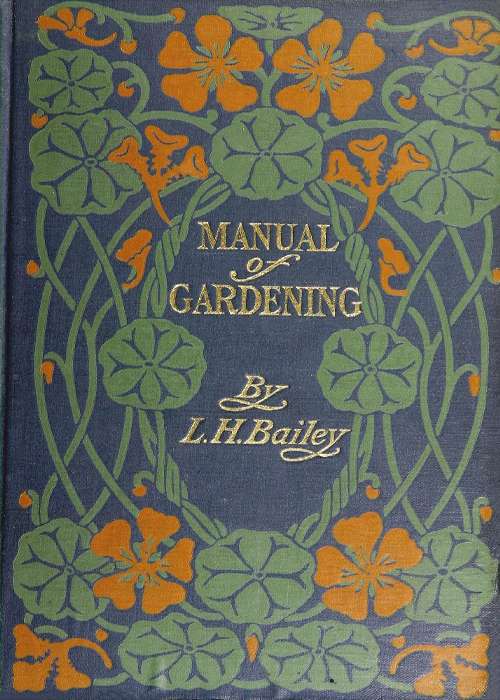
Manual of Gardening (Second Edition) / A Practical Guide to the Making of Home Grounds and the Growing of Flowers, Fruits, and Vegetables for Home Use cover

Manual of Gardening (Second Edition) / A Practical Guide to the Making of Home Grounds and the Growing of Flowers, Fruits, and Vegetables for Home Use

Chapter 3: SECOND EDITION 1910
Open in WeRead

Explore more books like this:

About This Book

The guide presents practical, experience-based instruction for designing and maintaining home grounds, covering garden planning and landscape composition, lawn construction and care, soil preparation, drainage, and tools for tillage. It explains planting techniques, propagation by seed and cuttings, transplanting, pruning, tree surgery, and protection against pests and diseases with spraying and fumigation formulas. Chapters address hotbeds and coldframes, storage of produce, and the creation of ornamental effects through choices of shrubs, borders, hedges, rockeries, and aquatic plants. Advice is aimed at the amateur gardener and emphasizes adaptable principles over rigid locality-specific prescriptions.

The Project Gutenberg eBook of Manual of Gardening (Second Edition)

This ebook is for the use of anyone anywhere in the United States and most other parts of the world at no cost and with almost no restrictions whatsoever. You may copy it, give it away or re-use it under the terms of the Project Gutenberg License included with this ebook or online at www.gutenberg.org. If you are not located in the United States, you will have to check the laws of the country where you are located before using this eBook.

Title: Manual of Gardening (Second Edition)

Author: L. H. Bailey

Release date: December 1, 2005 [eBook #9550]
Most recently updated: April 17, 2020

Language: English

Credits: Produced by by Steve Schulze and Project Gutenberg Distributed Proofreaders

*** START OF THE PROJECT GUTENBERG EBOOK MANUAL OF GARDENING (SECOND EDITION) ***

Manual of Gardening

A PRACTICAL GUIDE
TO THE MAKING OF HOME GROUNDS AND THE GROWING OF FLOWERS, FRUITS, AND VEGETABLES FOR HOME USE

by L. H. Bailey

SECOND EDITION

1910


Contents

EXPLANATION

CHAPTER I. THE POINT OF VIEW
CHAPTER II. THE GENERAL PLAN OR THEORY OF THE PLACE
CHAPTER III. EXECUTION OF SOME OF THE LANDSCAPE FEATURES
CHAPTER IV. THE HANDLING OF THE LAND
CHAPTER V. THE HANDLING OF THE PLANTS
CHAPTER VI. PROTECTING PLANTS FROM THINGS THAT PREY ON THEM
CHAPTER VII. THE GROWING OF THE ORNAMENTAL PLANTS—THE CLASSES OF PLANTS, AND LISTS
CHAPTER VIII. THE GROWING OF THE ORNAMENTAL PLANTS—INSTRUCTIONS OF PARTICULAR KINDS

Abutilons; agapanthus; alstremeria; amaryllis; anemone; aralia; araucaria; auricula; azaleas; begonias; cactus; caladium; calceolaria; calla; camellias; cannas; carnations; century plants; chrysanthemums; cineraria; clematis; coleus; crocus; croton; cyclamen; dahlia; ferns; freesia; fuchsia; geranium; gladiolus; gloxinia; grevillea; hollyhocks; hyacinths; iris; lily; lily-of-the-valley; mignonette; moon-flowers; narcissus; oleander; oxalis; palms; pandanus; pansy; pelargonium; peony; phlox; primulas; rhododendrons; rose; smilax; stocks; sweet pea; swainsona; tuberose; tulips; violet; wax plant.

CHAPTER IX. THE GROWING OF THE FRUIT PLANTS

Almond; apples; apricot; blackberry; cherry; cranberry; currant; dewberry; fig; gooseberry; grape; mulberry; nuts; orange; peach; pear; plum; quince; raspberry; strawberry;

CHAPTER X. THE GROWING OF THE VEGETABLE PLANTS

Asparagus; artichoke; artichoke; Jerusalem; bean; beet; broccoli; brussels sprouts; cabbage; carrot; cauliflower; celeriac; celery; chard; chicory; chervil; chives; collards; corn salad; corn; cress; cucumber; dandelion; egg-plant; endive; garlic; horseradish; kale; kohlrabi; leek; lettuce; mushroom; mustard; muskmelon; okra; onion; parsley; parsnip; pea; pepper; potato; radish; rhubarb; salsify; sea-kale; sorrel; spearmint; spinach; squash; sweet-potato; tomato; turnips and rutabagas; watermelon.

CHAPTER XI. SEASONAL REMINDERS
INDEX

LIST OF PLATES

PLATE I. The open center.
PLATE II. The plan of the place.
PLATE III. Open-center treatment in a semi-tropical country.
PLATE IV. Subtropical bedding against a building. Caladiums, cannas, abutilons, permanent rhododendrons, and other large stuff, with tuberous begonias and balsams between.
PLATE V. A subtropical bed. Center of cannas, with border of Pennisetum longistylum (a grass) started in late February or early March.
PLATE VI. A tree that gives character to a place.
PLATE VII. Bedding with palms. If a bricked-up pit is made about the porch, pot palms may be plunged in it in spring and tub conifers in winter; and fall bulbs in tin cans (so that the receptacles will not split with frost) may be plunged among the evergreens.
PLATE VIII. A well-planted entrance. Common trees and bushes, with Boston ivy. on the post, and Berberis Thunbergii in front.
PLATE IX. A rocky bank covered with permanent informal planting.
PLATE X. A shallow lawn pond, containing water-lilies, variegated sweet flag, iris, and subtropical bedding at the rear; fountain covered with parrot’s feather (Myriophyllum proserpinacoides).
PLATE XI. A back yard with summer house, and gardens beyond.
PLATE XII. A back yard with heavy flower-garden planting.
PLATE XIII. The pageant of summer. Gardens of C.W. Dowdeswell, England, from a painting by Miss Parsons.
PLATE XIV. Virginia creeper screen, on an old fence, with wall-flowers and hollyhocks in front.
PLATE XV. Scuppernong grape, the arbor vine of the South. This plate shows the noted scuppernongs on Roanoke Island, of which the origin is unknown, but which were of great size more than one hundred years ago.
PLATE XVI. A flower-garden of China asters, with border of one of the dusty millers (Centaurea).
PLATE XVII. The peony. One of the most steadfast of garden flowers.
PLATE XVIII. Cornflower or bachelor’s button. Centaurea Cyanus.
PLATE XIX. Pyracantha in fruit. One of the best ornamental-fruited plants for the middle and milder latitudes.
PLATE XX. A simple but effective window-box, containing geraniums, petunias, verbenas, heliotrope, and vines.
PLATE XXI. The king of fruits. Newtown as grown in the Pacific country.
PLATE XXII. Wall-training of a pear tree.
PLATE XXIII. Cherry currant.
PLATE XXIV. Golden Bantam sweet corn.
PLATE XXV. The garden radish, grown in fall, of the usual spring sorts.