
| MEDIEVAL RHETORIC |
| A. Sources |
| I. Inheritance of declamatio, as typically through Sidonius, 77-87 |
| II. Authorities |
| 1. De inventione (rhetorica prima), 89, 152, 175 |
| 2. Rhetorica ad Herennium (rhetorica secunda), 90, 181 |
| 3. Ars poetica, 86, 88, 129, 159 |
| 4. (secondary) Martianus Capella, 92-95, 179, 193 |
| 5. (occasional) Cicero, De oratore, 143; Quintilian, 169, 175 |
| B. Fields |
| [Of the three ancient fields, deliberative, forensic, and occasional, the characteristically medieval use was of the third.] |
| I. Dictamen, 206-227 |
| II. Preaching, 51-73, 228-257 |
| C. Components |
| I. Investigation (inventio) largely transferred to dialectica (which see, and also judicium, status, topica), 172, 182, 192 |
| 1. inventio perverted, 187, 191 |
| II. Order (dispositio) little taught, 171, 180, 196; perverted, 179 |
| 1. conventional items for encomium, 30-32, 187 |
| 2. natural order and artistic, 180 |
| 3. traditional parts |
| a. exordium (in dictamen), 215, 221 |
| b. statement (narratio, in dictamen), 215, 222 |
| (1) narratio perverted to narrative, 193 |
| (2) fabula, historia, argumentum, 161, 175 |
| c. argument (confirmatio, refutatio) largely transferred to dialectica |
| (1) petitio (in dictamen), 215, 222 |
| d. conclusion, 222 |
| III. Style (elocutio) |
| 1. diction |
| a. three styles (tenue, medium, grande), 68, 144, 216 |
| (1) Rota Virgili, 192 |
| (2) high style, 270, 292 |
| b. elegance (with review of correctness), 82, 216 |
| c. aptness |
| (1) conformity to type, 35, 159, 187 |
| (2) in dictamen, especially important for salutatio, 220, 221 |
| d. elaboration (ornatus, dignitas), 79, 82, 216, 219 |
| (1) descriptive dilation (through poetria), 85, 174, 180, 186, 294 |
| (2) figures (in poetria and dictamen) from Rhetorica ad Herennium |
| (a) figuræ verborum |
| 1. repetitio, initial repetition |
| 2. conversio, end repetition |
| 3. complexio, 1 with 2 |
| 4. traductio, iteration |
| 5. contentio, antithesis |
| 6. exclamatio, exclamation |
| 7. interrogatio, summary challenge |
| 8. ratiocinatio, questioning oneself |
| 9. sententia, apothegm |
| 10. contrarium, putting the opposite |
| 11. membrum, clause in relation |
| 12. articulus, staccato |
| 13. continuatio, closing series |
| 14. compar, balance |
| 15. similiter cadens, rime on inflections |
| 16. similiter desinens, rime |
| 17. annominatio, word-play |
| 18. subiectio, suggestion of reply |
| 19. gradatio, linking repetition |
| 20. definitio, definition |
| 21. transitio, linking summary |
| 22. correctio, substitution |
| 23. occupatio (occultatio, præteritio) specifying under cover of passing over |
| 24. disiunctio, syntactical separation |
| 25. coniunctio, syntactical combination |
| 26. adiunctio, salient key-word |
| 27. conduplicatio, iteration |
| 28. interpretatio, repetition in other words |
| 29. commutatio, chiasmus |
| 30. permissio (concessio), yielding |
| 31. dubitatio, feigned hesitation |
| 32. expeditio, logical exclusion |
| 33. dissolutio, asyndeton |
| 34. præcisio (aposiopesis), unfinished sentence |
| 35. conclusio, syllogistic summary |
| [the ten tropi] |
| 36. nominatio, onomatopœia |
| 37. pronominatio, title or epithet for name |
| 38. denominatio, metonymy |
| 39. circuitio, periphrasis |
| 40. transgressio, hyperbaton |
| 41. superlatio, hyperbole |
| 42. intellectio, synecdoche |
| 43. abusio, catachresis |
| 44. translatio, metaphor |
| 45. permutatio, allegorical or ironical allusion |
| (b) figuræ sententiarum |
| 1. distributio, itemizing |
| 2. licentia, boldness |
| 3. diminutio, disparagement |
| 4. descriptio, descriptive detail |
| 5. divisio, dilemma |
| 6. frequentatio, cumulation |
| 7. expolitio, iteration |
| 8. sermocinatio, direct discourse |
| 9. commoratio, iteration |
| 10. contentio, antithesis |
| 11. similitudo, simile |
| 12. exemplum, instance |
| 13. imago, comparison |
| 14. effictio, portrait |
| 15. notatio, ethopœia |
| 16. conformatio, prosopopœia |
| 17. significatio, suggestion, insinuation |
| 18. brevitas, rapid narration |
| 19. demonstratio, ecphrasis |
| 2. sentence movement (compositio), 83, 216 |
| a. prosaicum (epistolare), metricum, rhythmicum, 220 |
| b. stilus Aurelianensis, Hilarianus, Isidorianus, Romanus, Tullianus, 194, 217 |
| c. distinctiones |
| (1) dependens (cæsum), 218 |
| (2) constans (membrum), 218 |
| (3) periodus (circuitus), 219 |
| d. euphony, 83, 218, 221 |
| e. balance, 42-48, 80, 145, 252 |
| (1) prose rime, 252, 253 |
| (2) refrain, 254-257 |
| f. cadence, 69, 70, 250 |
| (1) cursus: planus, tardus, velox, 223-227 |
| IV. Delivery (237) and V. Memory (163) little discussed |
| MEDIEVAL POETIC |
| A. Poetica in School |
| I. Prælectio, 88, 129, 160-164 |
| II. Metric and Verse-writing, 87, 96, 129, 131, 184 |
| 1. coöperative and cumulative school verse, 141, 191 |
| 2. merging of poetic with rhetoric, 76, 186, 193 |
| a. doctrine from Ars poetica, 86, 159 |
| b. figures from Rhetorica ad Herennium (see above) |
| III. Kinds of Poetry, 131, 175 |
| B. Latin Poetry |
| I. Ambrosian Development, 116-118, 132 |
| II. Corde natus Development, 119-121, 134, 201 |
| III. Other Hymn Measures, 121, 122, 136-141 |
| IV. Dactylic and Spondaic Effects, 122, 137, 198 |
| V. Rime and Stanza, 141, 197-203 |
| C. Symbolism |
| I. Allegory, 92, 104, 172, 173 |
| II. Type, Prefiguration, Mysticism, 120, 124, 203-205, 239-245, 273-276 |
| D. Vernacular Narrative |
| I. Epic: Germanic (intensive), 145-149; French (extensive), 259, 260 |
| II. Romance |
| 1. conventions of composition, 196, 261, 267, 281 |
| 2. salience and movement, 263, 268, 269, 275-277, 297 |
| a. dialogue, 266, 286 |
| 3. characterization, 265-267, 287-289, 298 |
| III. Oral Values and Habits, 245, 285, 301 |
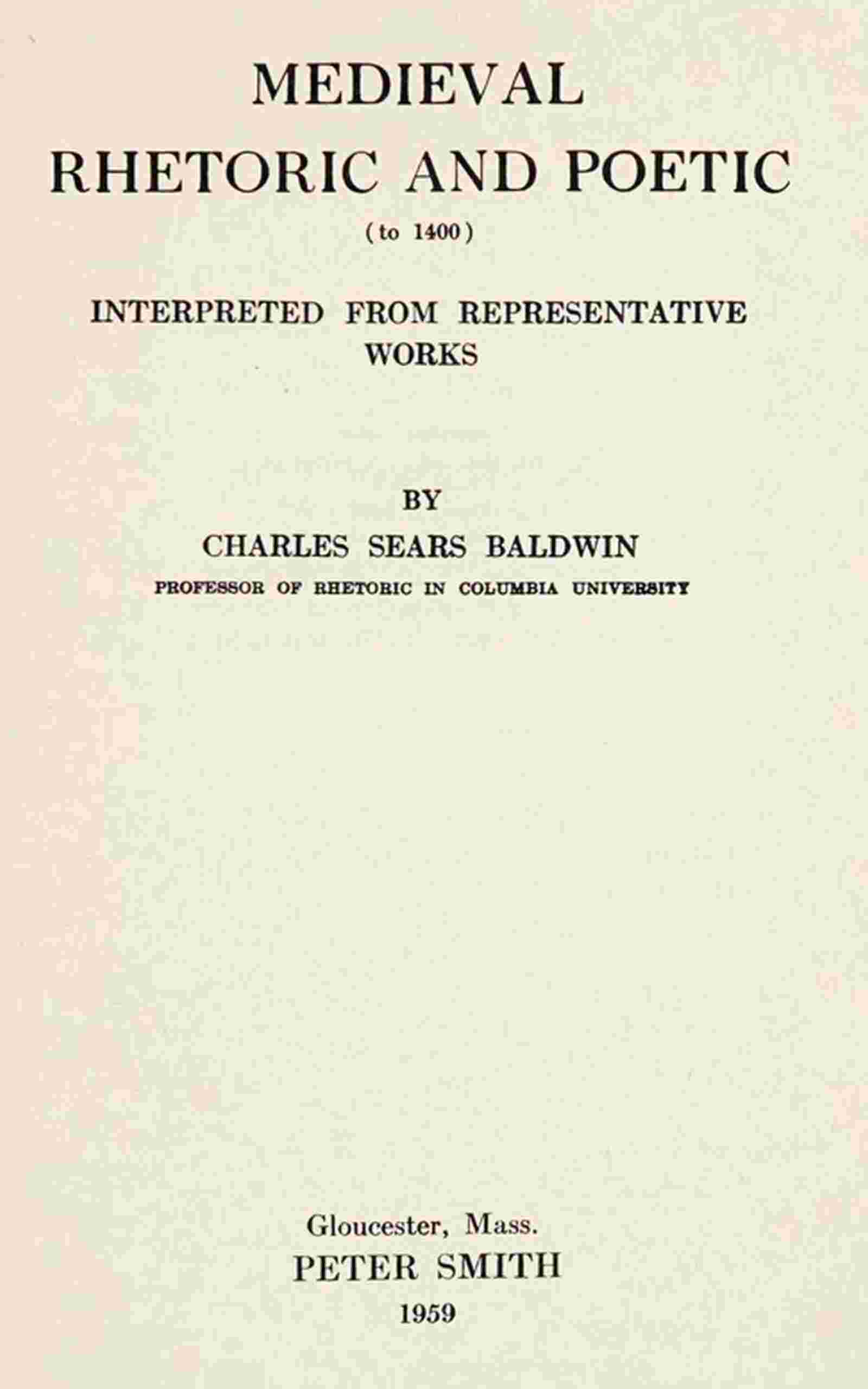
About This Book
A concise historical survey traces the development of rhetorical and poetic theory within medieval Latin education and literary practice. It explains how classical models—both sophistic showmanship and the Ciceronian tradition—were transmitted through late Roman schools and reshaped by medieval grammarians. School rhetoric concentrated on style and ornament within grammatica, while practical applications centered on sermons and letters; poetic practice flourished in Latin hymnody and emerging stanzaic forms that influenced vernacular poetry. Formal poetic theory remained largely pedagogical and often lagged behind vernacular verse narrative, a disjunction later critics such as Chaucer helped to expose.