

About This Book
The essay cautions against overreaching interpretations of archaeological and ethnographic remains, arguing that many attempts to link North American artifacts to distant or lost peoples are unjustified without geological and paleontologic context. It emphasizes that human dispersion predates the known antiquities and that local continuity often suffices to explain pueblos, mounds, and other remains. The writer notes that material culture and artistic traits cross linguistic boundaries, complicating tribal identification, and that pictographs are mostly mnemonic rather than fully informative records. The piece calls for systematic collection, careful classification, and restrained inference when reconstructing past peoples and customs.
About the Author

More Books by This Author
6 picks
 Canyons of the Colorado
by John Wesley Powell
Canyons of the Colorado
by John Wesley Powell
 First through the Grand Canyon
by John Wesley Powell
First through the Grand Canyon
by John Wesley Powell
 Indian Linguistic Families of America, North of Mexico / Seventh Annual Report of the Bureau of Ethnology to the Secretary of the Smithsonian Institution, 1885-1886, Government Printing Office, Washington, 1891, pages 1-142
by John Wesley Powell
Indian Linguistic Families of America, North of Mexico / Seventh Annual Report of the Bureau of Ethnology to the Secretary of the Smithsonian Institution, 1885-1886, Government Printing Office, Washington, 1891, pages 1-142
by John Wesley Powell
 On the Evolution of Language / First Annual Report of the Bureau of Ethnology to the Secretary of the Smithsonian Institution, 1879-80, Government Printing Office, Washington, 1881, pages 1-16
by John Wesley Powell
On the Evolution of Language / First Annual Report of the Bureau of Ethnology to the Secretary of the Smithsonian Institution, 1879-80, Government Printing Office, Washington, 1881, pages 1-16
by John Wesley Powell
 Report on the lands of the arid region of the United States, with a more detailed account of the lands of Utah
by John Wesley Powell
Report on the lands of the arid region of the United States, with a more detailed account of the lands of Utah
by John Wesley Powell
 Sketch of the Mythology of the North American Indians / First Annual Report of the Bureau of Ethnology to the Secretary of the Smithsonian Institution, 1879-80, Government Printing Office, Washington, 1881, pages 17-56
by John Wesley Powell
Sketch of the Mythology of the North American Indians / First Annual Report of the Bureau of Ethnology to the Secretary of the Smithsonian Institution, 1879-80, Government Printing Office, Washington, 1881, pages 17-56
by John Wesley Powell
You May Also Like
6 picks
 "Five-Head" Creek; and Fish Drugging in the Pacific / 1901
by Louis Becke
"Five-Head" Creek; and Fish Drugging in the Pacific / 1901
by Louis Becke
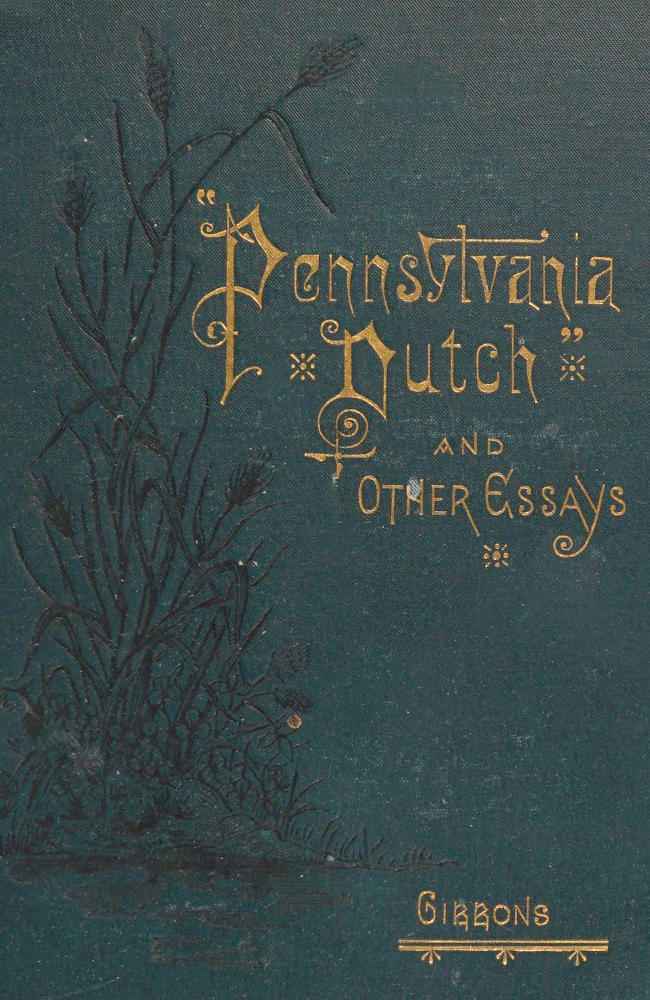 "Pennsylvania Dutch," and other essays
by Phebe Earle Gibbons
"Pennsylvania Dutch," and other essays
by Phebe Earle Gibbons
 "Sterminator Vesevo" (Vesuvius the great exterminator) / Diary of the Eruption of April 1906
by Matilde Serao
"Sterminator Vesevo" (Vesuvius the great exterminator) / Diary of the Eruption of April 1906
by Matilde Serao
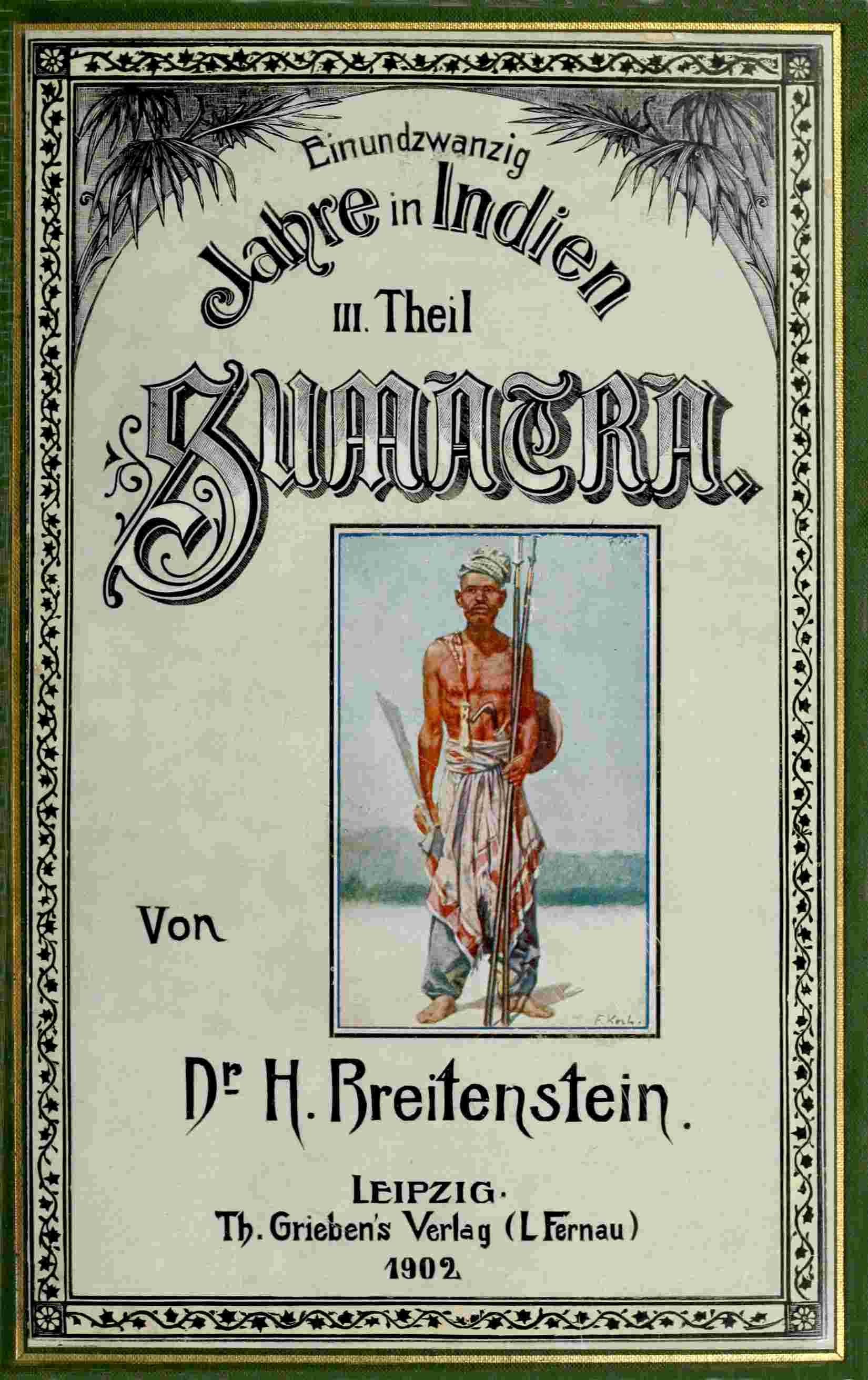 21 Jahre in Indien. Dritter Theil: Sumatra.
by Heinrich Breitenstein
21 Jahre in Indien. Dritter Theil: Sumatra.
by Heinrich Breitenstein
 21 Jahre in Indien. Erster Theil: Borneo.
by Heinrich Breitenstein
21 Jahre in Indien. Erster Theil: Borneo.
by Heinrich Breitenstein
 A Bakony (1. kötet)
by Károly Eötvös
A Bakony (1. kötet)
by Károly Eötvös