
WeRead Powered by ReaderPub
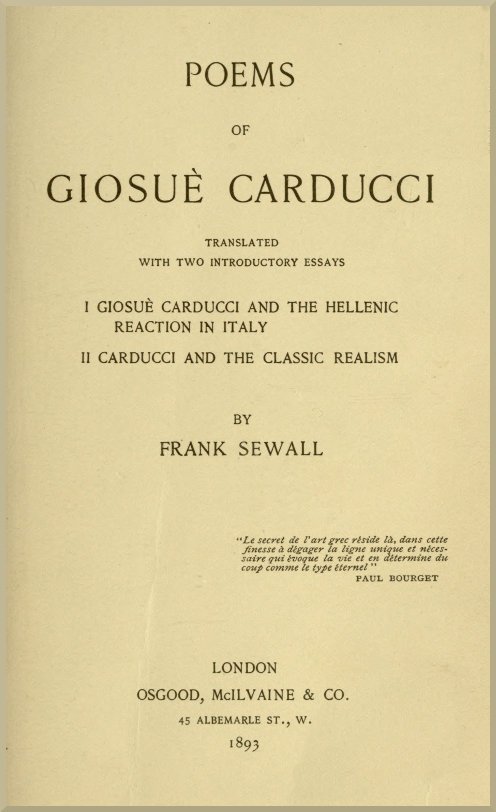
Poems of Giosuè Carducci, Translated with two introductory essays: / I. Giosuè Carducci and the Hellenic reaction in Italy. II. Carducci and the classic realism cover

Poems of Giosuè Carducci, Translated with two introductory essays: / I. Giosuè Carducci and the Hellenic reaction in Italy. II. Carducci and the classic realism

Chapter 47: XXXVIII THE ANCIENT TUSCAN POETRY
Open in WeRead

Explore more books like this:

About This Book

The volume opens with two essays that analyze the poet's Hellenic revival and his classic-realist aesthetic, situating his work amid tensions between ecclesiastical influence, chivalric import, and native national feeling. It then presents translations of numerous poems—hymns, sonnets, dedicatory pieces, patriotic and religious lyrics, and descriptive sketches—covering classical subjects, Dantean and Virgilian allusions, personal reflection, and social observation. Together the critical essays and translated poems emphasize classical forms, historical memory, and a restrained realism that seeks to renew Italian literary identity.

XXXVIII THE ANCIENT TUSCAN POETRY

A child in gardens, fields, and city squares

I grew 'mid war's alarms and love's alluring;

But manhood's school of mysteries and cares

Enticed me to the temple's dark immuring.

Where now the lofty dames, with glance securing

What free-born knight or brave civilian dares?

Bright April days the roses bloom assuring?

The oak that through the castle rampart stares?

Poor and alone, again to that dear dwelling

I come where pious love did once deny

That I should heed the Enchantress' sweet impelling.

Open! O Child: though be the times awry,

Thy vision, Beatrice, wakes my heart's rebelling,—

Open! The Tuscan poesy am I!

Levia Gravia.