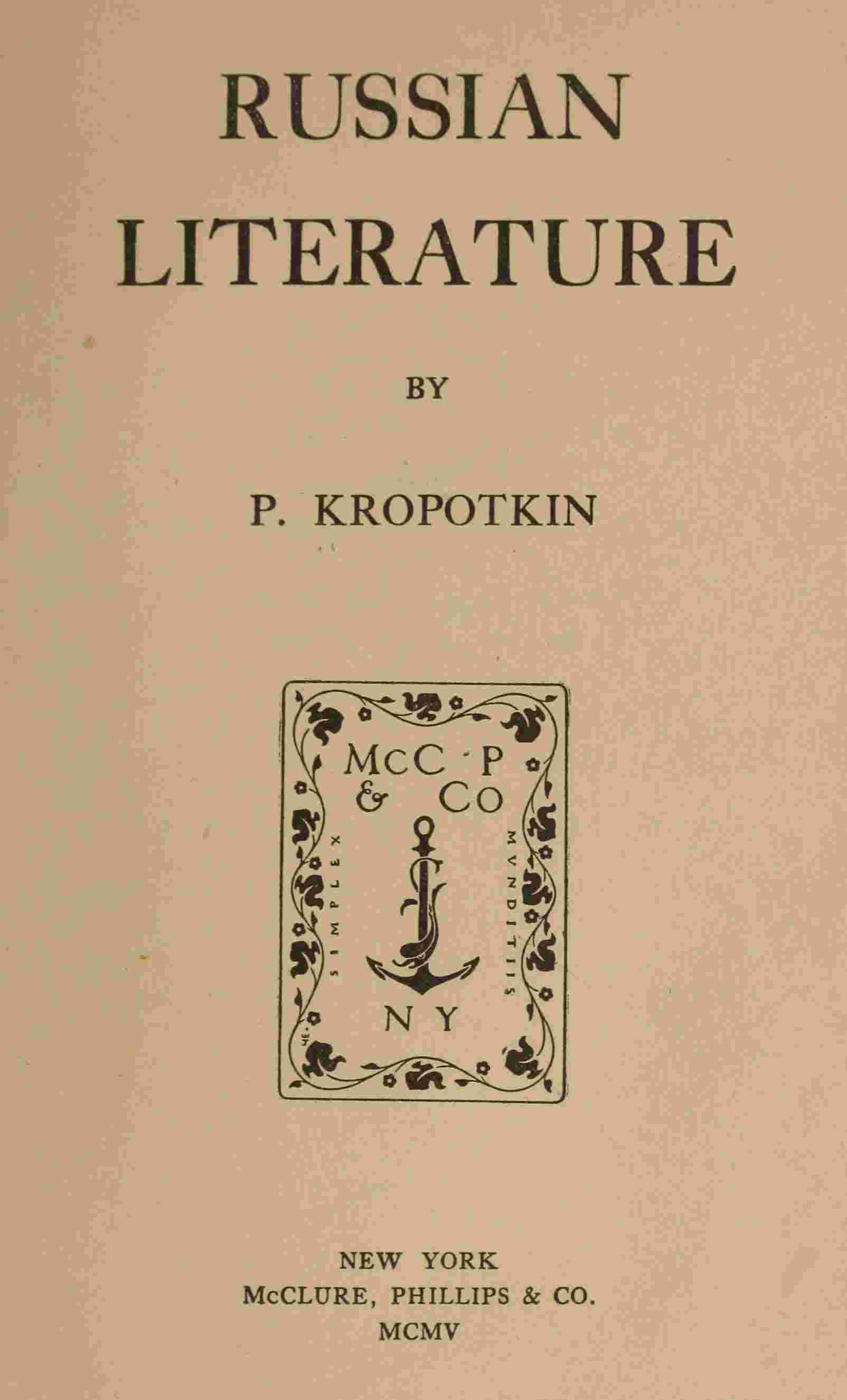
A series of lectures surveys Russian literary development from folk songs and medieval chronicles through the eighteenth and nineteenth centuries, outlining how language, genres, and social conditions shaped poetic, prose, and dramatic forms. The author sketches early influences, then examines leading poets, novelists, dramatists, and critics—treating representative works and currents associated with figures such as Pushkin, Lermontov, Gogol, Turgenev, Tolstoy, and Dostoevsky. Themes include realism, the interplay of art and social and political ideas, the nation’s linguistic richness, and the influential role of criticism. Throughout, literature is presented as a primary medium for expressing collective aspirations and moral debates.