
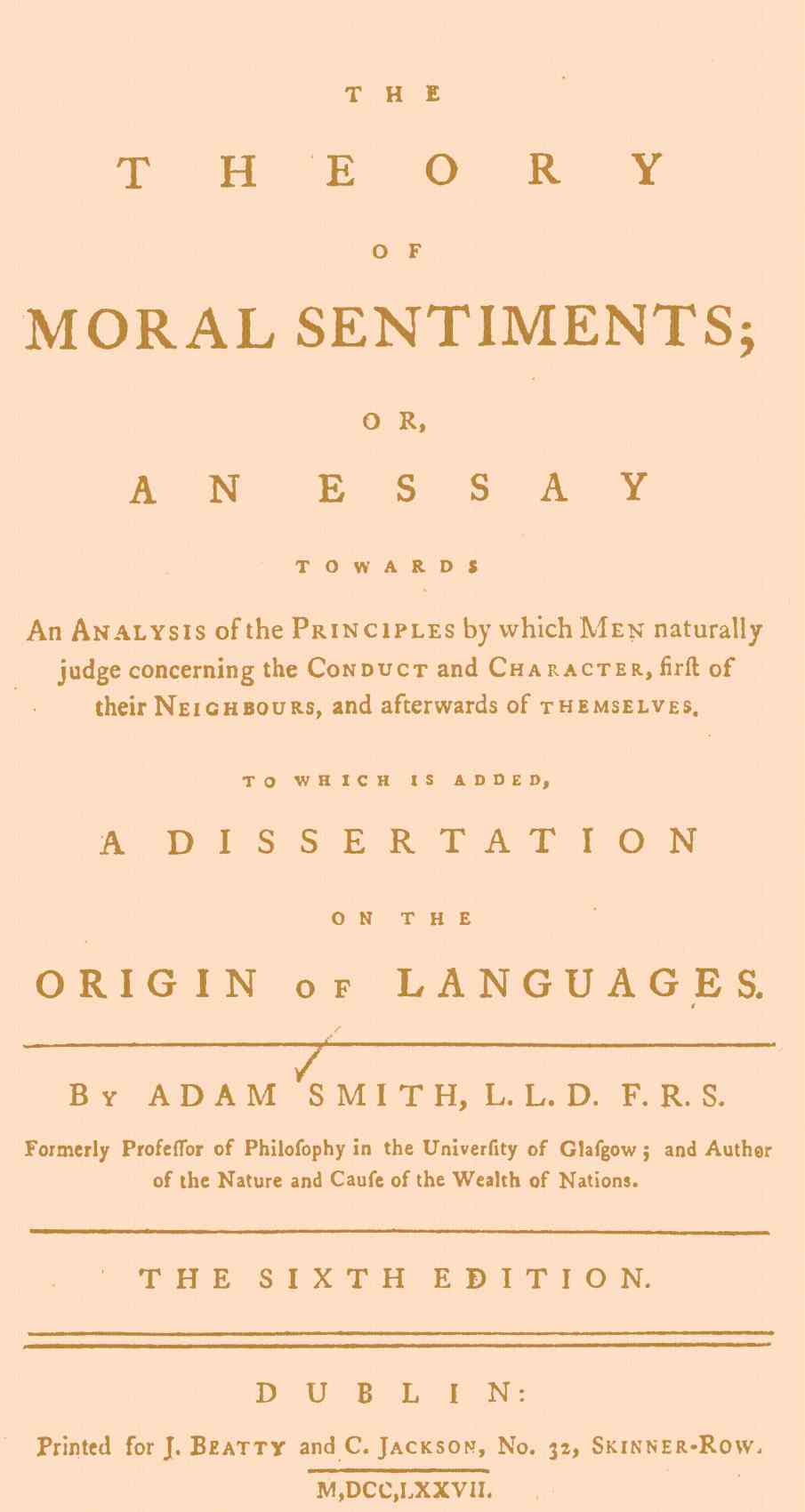
The Theory of Moral Sentiments / Or, an Essay Towards an Analysis of the Principles by Which Men Naturally Judge Concerning the Conduct and Character, First of Their Neighbours, and Afterwards of Themselves. to Which Is Added, a Dissertation on the Origin of Languages.
Explore more books like this:
About This Book
The work argues that moral judgments arise from human sympathy, which enables people to imagine others' feelings and to assess the propriety of actions. It analyzes how approbation and disapprobation create notions of merit and demerit, linking praise to gratitude and blame to resentment. An impartial spectator functions as an internal standard mediating self‑judgment and social evaluation. The author differentiates amiable and respectable virtues and classifies passions as bodily, imaginative, unsocial, social, and selfish, showing how they shape moral appraisal. Chapters examine how prosperity, adversity, and fortune alter public approval and how justice and beneficence become objects of reward and punishment. An appended dissertation considers the origin of language.
About the Author
More Books by This Author

You May Also Like
 "About My Father's Business": Work Amidst the Sick, the Sad, and the Sorrowing
by Thomas Archer
"About My Father's Business": Work Amidst the Sick, the Sad, and the Sorrowing
by Thomas Archer
 "Beautiful Thoughts"
by Henry Drummond
"Beautiful Thoughts"
by Henry Drummond
 "Bethink Yourselves!"
by graf Leo Tolstoy
"Bethink Yourselves!"
by graf Leo Tolstoy
 "How Can I Help to Abolish Slavery?" or, Counsels to the Newly Converted
by Maria Weston Chapman
"How Can I Help to Abolish Slavery?" or, Counsels to the Newly Converted
by Maria Weston Chapman
 "I Believe" and other essays
by Guy Thorne
"I Believe" and other essays
by Guy Thorne
 "Imperialism" and "The Tracks of Our Forefathers"
by Charles Francis Adams
"Imperialism" and "The Tracks of Our Forefathers"
by Charles Francis Adams