
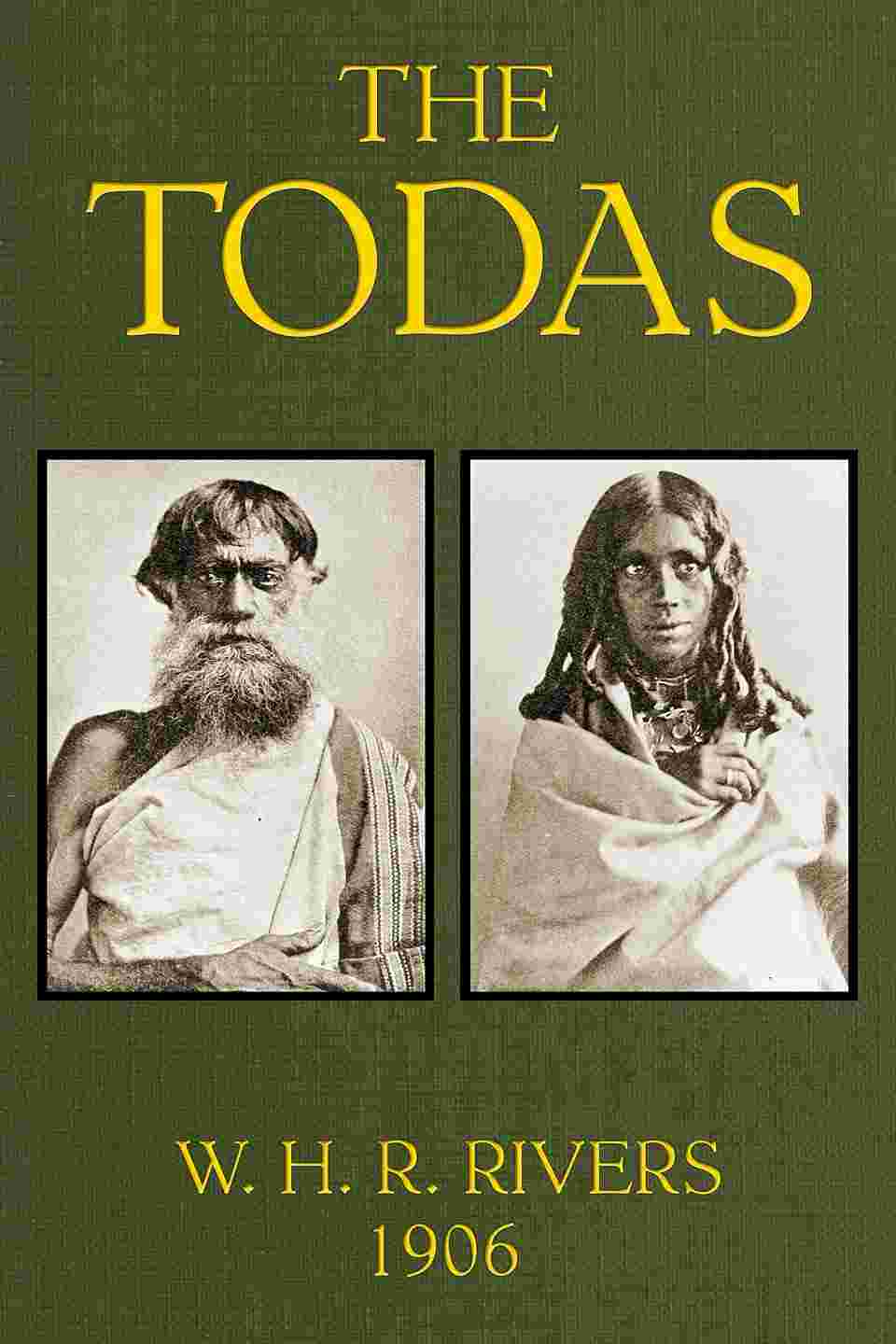
The Project Gutenberg eBook of The Todas
Title: The Todas
Author: W. H. R. Rivers
Release date: October 8, 2023 [eBook #71828]
Language: English
Original publication: London: Macmillan and Co., Limited, 1906
Credits: Jeroen Hellingman and the Online Distributed Proofreading Team at https://www.pgdp.net/ for Project Gutenberg (This file was produced from images generously made available by The Internet Archive/American Libraries.)
THE TODAS
THE TODAS
MACMILLAN AND CO., Limited
NEW YORK: THE MACMILLAN COMPANY
1906
All rights reserved
PREFACE
It has been my object in writing this book to make it, not merely a record of the customs and beliefs of a people, but also a demonstration of anthropological method. The great need of anthropology at the present time is for more exact method, not only in collecting material, but also in recording it, so that readers may be able to assign its proper value to each fact, and may be provided with definite evidence which will enable them to estimate the probable veraciousness and thoroughness of the record.
With this idea in my mind I have tried to describe as fully as possible the way in which my account has been built up, and have been careful to point out the different degrees of trustworthiness of different portions of my story. Perhaps I have been so anxious to make it clear when my record is of doubtful value that sometimes I may have laid undue stress on its uncertainties and deficiencies.
I have tried to make a clear distinction between my description of Toda custom and belief, and any theoretical conclusions drawn by myself, and have kept the latter for sections at the ends of chapters or for special chapters, of which those numbered xi, xix, xxix and xxx are the most important.
It may be thought by some that the book is unduly loaded with minute detail, and I am myself aware that I have often complicated, perhaps even obscured, the story I am telling by the mass of detail with which it is accompanied. I have had, [vi]however, no scruples on this score, partly because I wished my readers thoroughly to grasp the nature of the material on which my account is based, but still more, because details which may seem insignificant or trivial are often of great importance in the comparative study of custom and belief.
I have not attempted such a comparative study of Toda institutions. It was often very tempting to suggest resemblances with the practices of other peoples of the present or the past, but the result would have been to swell the book to unwieldy dimensions, and perhaps to have obscured the description of the life of the people. In giving parallels for Toda custom I have therefore limited myself to examples from other parts of India, and even here I have only dealt with a few resemblances which illustrate certain suggestions made in the final chapter on the origin and affinities of the Toda people.
In conclusion, I am very glad to express my gratitude for help received from many sources. The researches on which the book is based were undertaken in consequence of the award to myself of the income of the Gunning Fund of the Royal Society for the years 1901–2, and my work was also assisted by a grant from the British Association. In India I received every assistance from those whose official positions gave them the means of helping me, and my thanks are especially due to Mr. Edgar Thurston, whose kind interest and assistance I cannot sufficiently acknowledge. I owe much to the care and attention with which my two interpreters, P. Samuel and Albert Urrilla, performed their duties, and I am greatly indebted to the managers of the Church of England Zenana Missionary Society at Ootacamund for the services of the former, and to Mr. C. M. Mullaly and Mr. Hadfield for giving the latter leave from his forest duties in order that he might help me.
Of friends in England I am especially indebted to Dr. C. S. Myers, who kindly read nearly the whole of the book in proof; to Syed Ali Bilgrami for information on various points connected with Indian custom; to Don M. da Zilva [vii]Wickramasinghe for reading Chapter xxv, dealing with the language; and to Mr. H. N. Webber for help, especially in the revision of the genealogical tables.
Most of the illustrations in the book are from photographs taken under my direction by Messrs. Wiele and Klein of Madras, and I am indebted to H. M. India Office for permission to make use of illustrations from “An Account of the Primitive Tribes and Monuments of the Nilagiris,” by the late J. Williamson Breeks (1873), and to Messrs. Longmans Green and Co., for permission to make use of illustrations from “A Phrenologist amongst the Todas,” by the late Colonel William E. Marshall (1873).
W. H. R. R. [ix]
CONTENTS
CHAPTER I
PAGE
CHAPTER II
CHAPTER III
CHAPTER IV
CHAPTER V
THE TI DAIRY 83
CHAPTER VI
CHAPTER VII
CHAPTER VIII
CHAPTER IX
THE TODA GODS 182 [x]
CHAPTER X
PRAYER 213
CHAPTER XI
THE DAIRY RITUAL 231
CHAPTER XII
CHAPTER XIII
CHAPTER XIV
BIRTH AND CHILDHOOD CEREMONIES 313
CHAPTER XV
CHAPTER XVI
FUNERAL CEREMONIES (continued) 372
CHAPTER XVII
CHAPTER XVIII
CHAPTER XIX
CHAPTER XX
GENEALOGIES AND POPULATION 461
CHAPTER XXI
KINSHIP 483
CHAPTER XXII
CHAPTER XXIII
CHAPTER XXIV
CHAPTER XXV
LANGUAGE 602
CHAPTER XXVI
PERSONAL NAMES 619
CHAPTER XXVII
RELATIONS WITH OTHER TRIBES 628
CHAPTER XXVIII
CHAPTER XXIX
CHAPTER XXX
THE ORIGIN AND HISTORY OF THE TODAS 693
APPENDIX I 719
APPENDIX II—BIBLIOGRAPHY 731
APPENDIX III—LIST OF VILLAGES 734
APPENDIX IV—LIST OF PLANTS 738
GLOSSARY 741
INDEX 749
LIST OF ILLUSTRATIONS
| FIG. | PAGE | |
| 1. | Toda Man. Full Face | 19 |
| 2. | Toda Man. Side Face | 20 |
| 3. | Toda Woman. Full Face | 21 |
| 4. | Toda Woman. Side Face | 22 |
| 5. | The Village of Taradr, showing two Dairies in the Foreground and three Houses in the Background | 25 |
| 6. | The Village of Taradr, showing the Houses surrounded by a Wall, in which there is one Opening in the Middle | 27 |
| 7. | The chief House of the Village of Kiudr | 28 |
| 8. | The Village of Peivòrs, showing a Double Hut (in the Background). The two Buildings on the Left are Dairies, and the Structure in the Centre is a Calf-House | 29 |
| 9. | A Toda Man, Siriar (20), with his Wife and Child, showing the ordinary Method of wearing the ‘Putkuli’ | 30 |
| 10. | Kòdrner performing the Salutation called ‘Kaimukhti.’ His Right Arm is bared (‘Kevenarut’), and he has removed his Turban | 31 |
| 11. | Women Pounding and Sifting. The Broom is on the Ground to the Right | 33 |
| 12. | The ‘Kalmelpudithti’ Salutation taking place at the Village of Nòdrs. On the Left is the House; on the Right is the less important Dairy of the Village (the ‘Tarvali’), and in Front of it is the Stone called ‘Menkars’ | 35 |
| 13. | The Conical Dairy of Nòdrs. The Stone at the Right-Hand End of the Wall is the ‘Teidrtolkars’ | 44 |
| 14. | The lower part of the Conical Dairy of Nòdrs, which is hidden by the Wall in Fig. 13. The ‘Wursol’ is shown eating ‘Al’ from a Leaf-Plate | 46 |
| 15. | Òd (26) Churning | 51 |
| 16. | The morning Milking at the Village of Molkush. In the Background is a modern ‘Tu’ made of Wooden Palings | 53 |
| 17. | A Milking Scene | 54 |
| 18. | The chief Dairy Vessels [xiv] | 59 |
| 19. | The ‘Wursol’ of Nòdrs carrying the ‘Adimu’ and ‘Patatpun’ to fetch Water | 63 |
| 20. | The ‘Palikartmokh’ Saluting the Threshold of the Dairy at Kiudr, ‘Pavnersatiti’ | 65 |
| 21. | The ‘Kudrpali’ of Kars, with the ‘Kudrpalikartmokh’ standing on the Wall. In the Foreground is the Mound called ‘Imudrikars.’ In the Background on the Right is the Calf-House | 67 |
| 23. | The ‘Wursol’ of Kars, Kernpisi (56), standing by the side of his Dairy | 75 |
| 24. | The ‘Kugvali’ of Taradr. On its Left is the ‘Kwotars,’ and on the extreme Right, under the Tree, is the ‘Kush.’ The flat Stone to the Right of the ‘Kugvali’ is the ‘Püdrshtikars’ | 77 |
| 25. | The ‘Poh’ of Kanòdrs. The two Walls are shown | 80 |
| 26. | Showing the General Plan of the Ti Dairy | 87 |
| 27. | The ‘Palol’ Karkievan, saluting at Mòdr. He is standing in the ‘Pepkarmus.’ The Building next to the ‘Palol’ is the ‘Ti poh’; that on the Right is the ‘Karenpoh’ and between it and the ‘Ti poh’ can be seen the Hut where the Inhabitants of the ‘Ti mad’ sleep | 95 |
| 28. | To show the Attitude adopted by the ‘Palol’ when Praying | 96 |
| 29. | To show the Method of carrying the Contents of the Dairy. The boy Kalmad (64) is carrying the ‘Patatpur’; Karsüln (15) the ‘Ertatpur.’ In front of Kalmad is the entrance of the Pen at Kars called ‘Althftu’ | 125 |
| 30. | 1. A. The ‘Madth.’ B. A ‘Patat.’ C. Another ‘Patat.’ D. The ‘Parskadrvenmu.’ E. The ‘Irkartpun.’ 2. A. The axe. B. The fire-sticks. C. The ‘Majpariv.’ D. The ‘Pòlmachok.’ E. The ‘Ertatpun.’ F. A ‘Tek.’ G. The lamp | 127 |
| 31. | The Dairy of Kiudr with the ‘Palikartmokh’ Etamudri (58); on the Right of the Dairy above and to the Left of the head of Etamudri is the Stone called ‘Neurzülnkars,’ by which the ‘Patatmani’ is laid | 129 |
| 32. | The ‘Neurzülnkars’ of Kiudr, by the side of which the ‘Ertatmani’ are laid | 130 |
| 33. | The four ‘Neurzülnkars’ at Mòdr. Behind the Stones on the Right is Karkievan, the ‘Palol’ of the ‘Tiir’; on the Left is Nerponers, the ‘Palol’ of the ‘Warsir’; in the Centre is the ‘Kaltmokh,’ Katsog, carrying a sickle-shaped Knife | 141 |
| 34. | Punatvan (53) drinking during his Ordination as ‘Palikartmokh’ of Karia | 146 |
| 35. | Imitation Buffalo Horns | 190 |
| 36. | Midjkudr and Mongudrvan Divining at a Funeral [xv] | 253 |
| 37. | Punatvan and Pichievan attempting to make Fire at the ‘Erkumptthpimi’ Ceremony | 277 |
| 38. | Punatvan uttering the ‘Erkumptthpimi’ Prayer. He is holding the ‘Erkumptthkud,’ and one of the ‘Tudr’ Leaves in his hand can be distinctly seen | 279 |
| 39. | Stroking the back of the Calf with the ‘Toashtitudr.’ Punatvan is beginning the third Movement, and one of the Branches of Leaves can be seen on the Ground behind the Calf | 280 |
| 40. | Punatvan and Pichievan cutting up the Calf. In the Background Kòdrner is sharpening up the ‘Ko’ | 281 |
| 41. | Roasting the pieces of the Calf | 283 |
| 42. | The ‘Irnörtkars’ at Kars. In the Background is the ‘Wursuli’ | 299 |
| 43. | Gap in the Wall at Nòdrs through which the Calf is driven at the ‘Irnörtiti’ Ceremony | 301 |
| 44. | The ‘Nersatiti’ Salutation | 304 |
| 45. | The ‘Puzhars’ at Molkush | 314 |
| 46. | Tersveli sitting at the Door of the ‘Puzhars’ at Karia with her face turned from the Sun | 325 |
| 47. | Sintagars drinking at the ‘Marthk maj atpimi’ Ceremony. The boy, Pongudr, is sitting behind her | 328 |
| 48. | Funeral Hut round which women are lamenting. Several pairs are pressing their foreheads together. The Hut is not within a stone circle, showing that the Funeral is not being held at an old Funeral Place | 339 |
| 49. | The ‘Puzhutpimi’ Ceremony. In the Centre is the Corpse. The foremost man on the Left is kneeling down preparatory to throwing Earth | 346 |
| 50. | The ‘Puzhutpimi’ Ceremony. Throwing Earth backwards on the Corpse | 347 |
| 51. | The Wooden ‘Teiks’ at Inikitj | 350 |
| 52. | Leading the Buffalo to be Killed | 353 |
| 53. | The Corpse by the head of the dying Buffalo | 355 |
| 54. | Saluting the dead Buffalo | 357 |
| 55. | The Mourners round the Body | 358 |
| 56. | Kotas playing Music at a Toda Funeral | 364 |
| 57. | Keinba and Perpakh; the former is holding in his hand the imitation Bow and Arrow and has his Cloak over his Head | 393 |
| 58. | Bough of the ‘Tudr’ Tree. (From Marshall.) | 434 |
| 59. | The Memorial of Keirevan | 440 |
| 60. | Kuriolv and Pilimurg | 552 |
| 61. | Showing Methods of wearing the Toda Garments and of doing the Hair | 573 |
| 62. | Tilipa (12) wearing his Hair long on account of a vow made at a Hindu Temple [xvi] | 575 |
| 63 and 64. | To show Method of Shaving the Head of a Child | 577 |
| 65. | Karol (64), the ‘Wursol’ of Taradr, making Fire | 582 |
| 66. | To show a Stage in the construction of a Hut | 584 |
| 67. | (From Breeks).—The first Man on the Left is holding a Bow and Arrow; the second a Club (probably the ‘Nanmakud’) in his Right Hand, and the ‘Tadri’ in his Left; the third Man is carrying a Club, and the fourth Man is playing the ‘Buguri’ | 587 |
| 68. | (From Breeks).—The five Tribes of the Nilgiri Hills | 629 |
| 69. | A Badaga greeting a Toda | 631 |
| 70. | A view of Nòdrs. The Stone in the Foreground on the Left is the ‘Nerovkars’; that on the Right is the ‘Uteiks.’ In the Background in the Centre is an old ‘Tu.’ The lower part of the Conical Dairy can be seen between the Boy and the ‘Uteiks’ | 646 |
| 71. | The Stones at Pishkwosht called ‘Teuar’ | 657 |
| 72. | The Village of Umgas, showing the ‘Nadrkkars’ in the Centre. Behind the Stones is the ‘Poh’ of this Village, and on its Right are the Dwelling-Huts | 673 |
| 73. | Plan of ‘Etudmad’ | 689 |
| 74. | Plan of Ancient Toda Villages | 690 |
| 75. | (From Breeks).—A Cairn on the Nilgiri Hills | 711 |
| 76. | Various objects found in the Nilgiri Cairns, taken from Breeks | 713 |
[xvii]
PHONETIC SYSTEM
The following is the phonetic system which has been used in this book. The use of many of the signs is more fully described in Chapter XXV.
Vowels.
| â, | the a of father. | ò, | the aw of law. | |
| a, | the u of hut. | û, | the oo of moon. | |
| ä, | the a of hat. | u, | the u of full. | |
| ê, | the ei of their. | ü, | the German vowel. | |
| e, | the e of met. | ai, | the i of bite. | |
| î, | the ee of meet. | au, | the ou of house. | |
| i, | the i of hit. | ei, | the a of date. | |
| ô, | the o of post. | eu, | the French diphthong. | |
| o, | the o of pot. | oi, | the oy of boy. | |
| ö, | the o of word. |
Consonants.
| b, | as in English. | |
| ch, | the ch of church. | |
| d, | used in the text for the English sound and also for the lingual consonant ḍ.1 | |
| f, | as in English. | |
| g, | the g of sing. | |
| gg, | the g of finger. | |
| gh, | the ch of ich. | |
| h, | used for a sound of doubtful nature (see p. 611). | |
| j, | as in English. | |
| k, | as in English. | |
| kh, | the ch of auch. | |
| l, | used in the text for the English sound and for the lingual consonant ḷ.[xviii] | |
| m, | as in English. | |
| n, | as in English. | |
| ñ, | a nasal n, as in French. | |
| p, | as in English. | |
| r, | ||
| s, | a sound resembling the English s. | |
| sh, | as in English. | |
| t, | as in English and also for the lingual ṭ. | |
| th | the th both of though and throw. | |
| v, | as in English. | |
| w, | ||
| z, | the z of zeal. | |
| zh, | the si of occasion. | |
Sounds represented by ch, s, sh, and th, very frequently inserted euphonically in Toda words, have usually been omitted. I have also omitted the signs showing the long vowels whenever a word occurs frequently throughout the book, and the glossary should be consulted to ascertain the correct method of pronouncing such words. Similarly, Appendices III and IV should be consulted to ascertain the proper pronunciation of the names of places and plants.
I do not use the plurals of Toda words, either in the English form or in that proper to the Toda language; thus, I write “the two palol” and not “the two palols” or “the two palolam.”
1 One of the most frequent consonantal sounds in the Toda language is dr which in the text always stands for ḍr; when d comes before sh, it also represents the lingual sound. In both cases the ḍ was hardly appreciated by my ear, and the European will perhaps most nearly imitate the Toda sound if he pronounces dr and dsh as r and sh. ↑