
WeRead Powered by ReaderPub
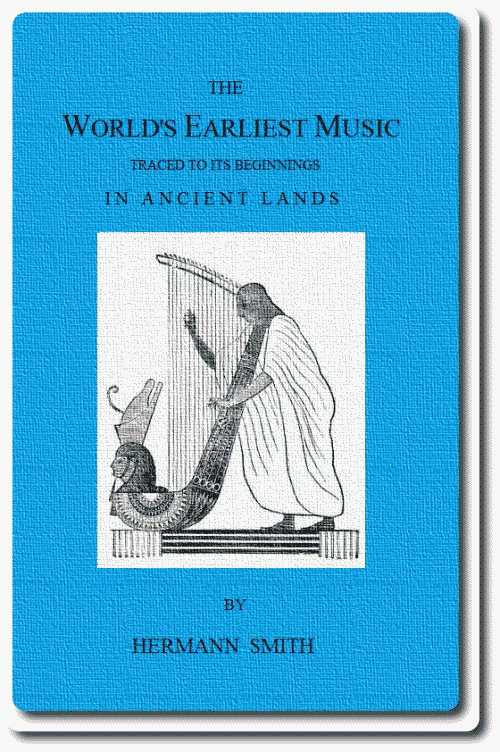
The World's Earliest Music / Traced to Its Beginnings in Ancient Lands by Collected Evidence of Relics, Records, History, and Musical Instruments from Greece, Etruria, Egypt, China, Through Asyria and Babylonia, to the Primitive Home, the Land of Akkad and Sumer cover

The World's Earliest Music / Traced to Its Beginnings in Ancient Lands by Collected Evidence of Relics, Records, History, and Musical Instruments from Greece, Etruria, Egypt, China, Through Asyria and Babylonia, to the Primitive Home, the Land of Akkad and Sumer

Chapter 34: ERRATA.
Open in WeRead

About This Book

The author examines the origins and development of music by surveying archaeological and iconographic evidence from ancient civilizations across the Mediterranean and Asia. Drawing on reliefs, vases, tablets, and surviving instruments, the book traces wind, string, and percussion instruments—double pipes, flutes, lyres, harps, and early free-reed and mouth-organ types—and discusses their construction, acoustic properties, performance techniques, and role in ritual and daily life. Comparative descriptions follow regional traditions from Egypt, Etruria, Greece, China, and other early centers, and the narrative considers scale formation and the gradual evolution of musical systems culminating in classical tuning settlements. Practical experiments and illustrations support reconstructions and interpretive conclusions.


Printed by W. Reeves, 83, Charing Cross Road, London, W.C.


ERRATA.

Page5line16forkytharareadlute.
2228B.C.ago.
4321glossoocmeiaglossocomeia.
5215B 233B♭ 233
7211after length, add,—out of the whole number.
752indelliblereadindelible.
8719wornwarm.
928third century440 B.C.
21917CancasusCaucasus.
2257DiosopolisDiospolis.
23022physicalpsychical.
31211poem insert,—as spoken.


Transcriber's Note: The book cover image was created by the transcriber and is placed in the public domain.