
About This Book
The narrative records travels through the imperial capitals, describing a capital that falls silent when the sovereign is absent and architectural choices unsuited to climate and landscape. It portrays court life as dominated by visible flattery and ambition, where the ruler's presence dictates social animation. The author analyzes a bureaucratic hierarchy that aligns civil and military ranks, concentrates advancement in the sovereign's will, and reshapes nobles' status. Observations compare popular character with neighboring peoples, note soldiers' privations, examine hospitality as a social instrument, and trace how institutions and urban design reflect and reinforce the regime's habits and priorities.
About the Author

More Books by This Author
3 picks
You May Also Like
6 picks
 "1683-1920" / The Fourteen Points and What Became of Them—Foreign Propaganda in the Public Schools—Rewriting the History of the United States—The Espionage Act and How It Worked—"Illegal and Indefensible Blockade" of the Central Powers—1,000,000 Victims of Starvation—Our Debt to France and to Germany—The War Vote in Congress—Truth About the Belgian Atrocities—Our Treaty with Germany and How Observed—The Alien Property Custodianship—Secret Will of Cecil Rhodes—Racial Strains in American Life—Germantown Settlement of 1683 and a Thousand Other Topics
by Frederick Franklin Schrader
"1683-1920" / The Fourteen Points and What Became of Them—Foreign Propaganda in the Public Schools—Rewriting the History of the United States—The Espionage Act and How It Worked—"Illegal and Indefensible Blockade" of the Central Powers—1,000,000 Victims of Starvation—Our Debt to France and to Germany—The War Vote in Congress—Truth About the Belgian Atrocities—Our Treaty with Germany and How Observed—The Alien Property Custodianship—Secret Will of Cecil Rhodes—Racial Strains in American Life—Germantown Settlement of 1683 and a Thousand Other Topics
by Frederick Franklin Schrader
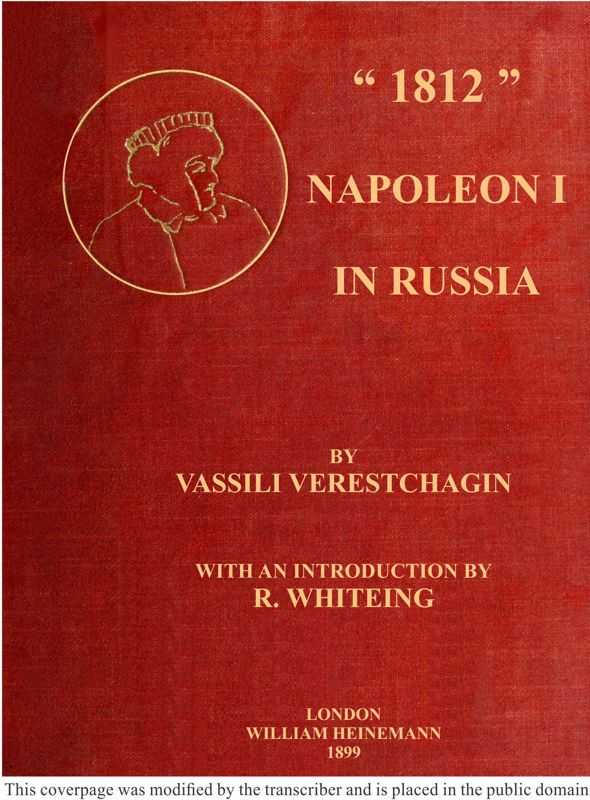 "1812"
by Vasilïĭ Vasilʹevich Vereshchagin
"1812"
by Vasilïĭ Vasilʹevich Vereshchagin
 "Barbarous Soviet Russia"
by Isaac McBride
"Barbarous Soviet Russia"
by Isaac McBride
 "Brother Bosch", an Airman's Escape from Germany
by Gerald Featherstone Knight
"Brother Bosch", an Airman's Escape from Germany
by Gerald Featherstone Knight
 "Monsieur Henri": A Foot-Note to French History
by Louise Imogen Guiney
"Monsieur Henri": A Foot-Note to French History
by Louise Imogen Guiney
 "My country, 'tis of thee!" / Or, the United States of America; past, present and future. A philosophic view of American history and of our present status, to be seen in the Columbian exhibition.
by Willis Fletcher Johnson
"My country, 'tis of thee!" / Or, the United States of America; past, present and future. A philosophic view of American history and of our present status, to be seen in the Columbian exhibition.
by Willis Fletcher Johnson