
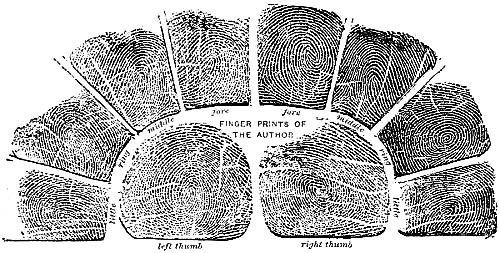
About This Book
The book surveys the structure, formation, and practical recording of the epidermal ridges on fingers and palms, distinguishing ridges from creases and describing pores and development. It traces historical and ethnographic uses of hand- and finger-marks, then systematically reviews techniques for obtaining, reproducing, and enlarging prints including ink impressions, casts, smoke and photographic methods. It develops a classification of patterns—arches, loops, whorls—and describes cores, deltas, measurements, and nomenclature for comparison. Statistical and observational arguments for individuality and permanence are presented, with guidance on apparatus, ink, and handling for reliable scientific identification. Practical applications for personal identification and criminal inquiry conclude the work.
About the Author

More Books by This Author





You May Also Like
 "... és a felelősségtől való rettegés"
by Émile Faguet
"... és a felelősségtől való rettegés"
by Émile Faguet
 "The System," As Uncovered by the San Francisco Graft Prosecution
by Franklin Hichborn
"The System," As Uncovered by the San Francisco Graft Prosecution
by Franklin Hichborn
 ... Et l'horreur des responsabilités (suite au Culte de l'incompétence)
by Émile Faguet
... Et l'horreur des responsabilités (suite au Culte de l'incompétence)
by Émile Faguet
 A Book About Lawyers
by John Cordy Jeaffreson
A Book About Lawyers
by John Cordy Jeaffreson
 A brief summary in plain language of the most important laws concerning women
by Barbara Leigh Smith Bodichon
A brief summary in plain language of the most important laws concerning women
by Barbara Leigh Smith Bodichon
 A collection of Latin maxims & rules, in law and equity
by Peter Halkerston
A collection of Latin maxims & rules, in law and equity
by Peter Halkerston