
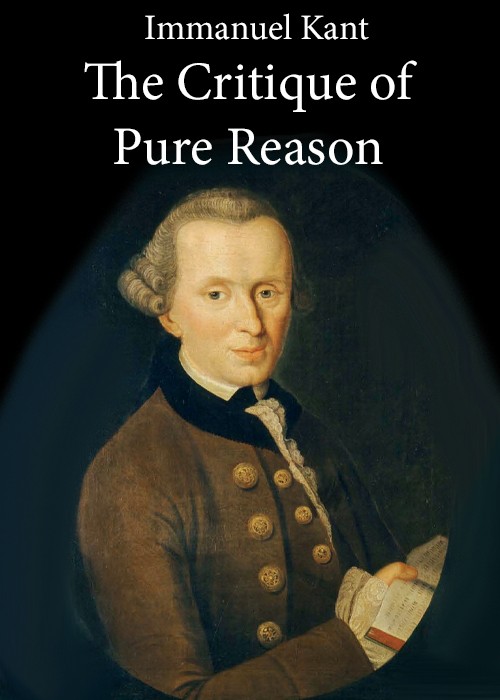
About This Book
The work investigates the conditions, scope, and limits of human cognition by examining how sensory intuitions and concepts combine to produce knowledge a priori. It analyzes space and time as forms of sensibility, derives fundamental categories of the understanding and their transcendental deduction, and distinguishes legitimate theoretical use of reason from its dialectical illusions. Through a structural division into aesthetic, analytic, and dialectic sections, it defends that knowledge pertains to appearances shaped by cognitive forms while things-in-themselves remain unknowable, and it provides a method for delimiting metaphysical claims and resolving antinomies of pure reason.
About the Author

More Books by This Author
6 picks
 Beantwortung der Frage: Was ist Aufklärung?
by Immanuel Kant
Beantwortung der Frage: Was ist Aufklärung?
by Immanuel Kant
 Beobachtungen über das Gefühl des Schönen und Erhabenen
by Immanuel Kant
Beobachtungen über das Gefühl des Schönen und Erhabenen
by Immanuel Kant
 Die Religion innerhalb der Grenzen der bloßen Vernunft / Text der Ausgabe 1793, mit Beifügung der Abweichungen der Ausgabe 1794
by Immanuel Kant
Die Religion innerhalb der Grenzen der bloßen Vernunft / Text der Ausgabe 1793, mit Beifügung der Abweichungen der Ausgabe 1794
by Immanuel Kant
 Fundamental Principles of the Metaphysic of Morals
by Immanuel Kant
Fundamental Principles of the Metaphysic of Morals
by Immanuel Kant
 Ikuiseen rauhaan: Valtio-oikeudellinen tutkielma
by Immanuel Kant
Ikuiseen rauhaan: Valtio-oikeudellinen tutkielma
by Immanuel Kant
 Index of the Project Gutenberg Works of Immanuel Kant
by Immanuel Kant
Index of the Project Gutenberg Works of Immanuel Kant
by Immanuel Kant
You May Also Like
6 picks
 "About My Father's Business": Work Amidst the Sick, the Sad, and the Sorrowing
by Thomas Archer
"About My Father's Business": Work Amidst the Sick, the Sad, and the Sorrowing
by Thomas Archer
 "Beautiful Thoughts"
by Henry Drummond
"Beautiful Thoughts"
by Henry Drummond
 "Bethink Yourselves!"
by graf Leo Tolstoy
"Bethink Yourselves!"
by graf Leo Tolstoy
 "How Can I Help to Abolish Slavery?" or, Counsels to the Newly Converted
by Maria Weston Chapman
"How Can I Help to Abolish Slavery?" or, Counsels to the Newly Converted
by Maria Weston Chapman
 "I Believe" and other essays
by Guy Thorne
"I Believe" and other essays
by Guy Thorne
 "Imperialism" and "The Tracks of Our Forefathers"
by Charles Francis Adams
"Imperialism" and "The Tracks of Our Forefathers"
by Charles Francis Adams