

About This Book
The work advances a hypothesis that large-scale horizontal movements of continental masses account for the present arrangement of land and sea. It examines and rejects competing ideas such as global shrinkage and temporary land bridges while applying isostatic principles to explain elevation and sediment patterns. Detailed treatment of ocean-floor observations, volcanic and magnetic data, and sediment distribution distinguishes oceanic from continental domains. Geophysical discussion outlines compositional and thermal layering of the lithosphere and proposes mechanical processes for rifting, folding, and margin development. Reconstructions of past continental configurations and paleoclimatic indicators are used throughout to test the hypothesis and address contemporary objections.
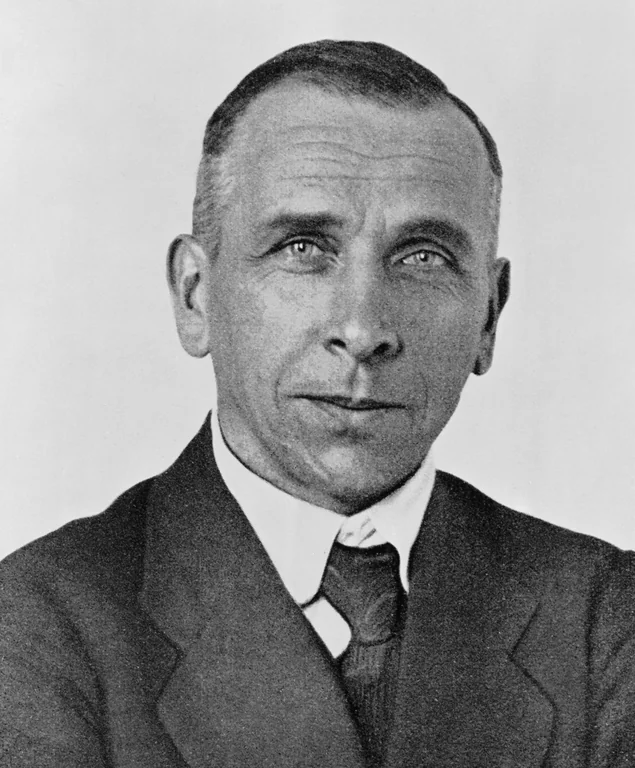
About the Author
You May Also Like
 A bacteriological study of ham souring
by Charles Neil McBryde
A bacteriological study of ham souring
by Charles Neil McBryde
 A Brief History of Forestry. / In Europe, the United States and Other Countries
by B. E. Fernow
A Brief History of Forestry. / In Europe, the United States and Other Countries
by B. E. Fernow
 A Century's Progress in Astronomy
by Hector Macpherson
A Century's Progress in Astronomy
by Hector Macpherson
 A decade of negro extension work, 1914-1924
by O. B. Martin
A decade of negro extension work, 1914-1924
by O. B. Martin
 A Description of the Bar-and-Frame-Hive / With an Abstract of Wildman's Complete Guide for the Management of Bees Throughout the Year
by William Augustus Munn
A Description of the Bar-and-Frame-Hive / With an Abstract of Wildman's Complete Guide for the Management of Bees Throughout the Year
by William Augustus Munn
 A Hand-book of Precious Stones
by Meyer D. Rothschild
A Hand-book of Precious Stones
by Meyer D. Rothschild