
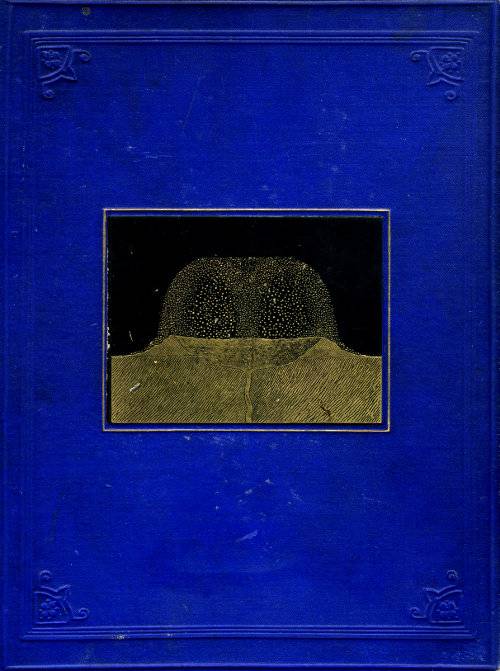
The Moon: considered as a planet, a world, and a satellite.
Explore more books like this:
About This Book
A scientific survey examines lunar origins, internal heat generation, and subsequent cooling to argue how contraction and volcanic activity shaped craters, ridges, and plains. It assesses mass, size, density, and the lack of any substantial atmosphere or surface water, then describes observational methods and detailed topography, including measurements, maps, and high-resolution illustrations produced by model-making and photography. The authors connect surface features to general cosmogonic hypotheses, evaluate habitability under lunar conditions, and conclude with reflections on the moon’s role as a satellite and its effects upon Earth.
About the Author

More Books by This Author
1 picks

You May Also Like
6 picks
 A bacteriological study of ham souring
by Charles Neil McBryde
A bacteriological study of ham souring
by Charles Neil McBryde
 A Brief History of Forestry. / In Europe, the United States and Other Countries
by B. E. Fernow
A Brief History of Forestry. / In Europe, the United States and Other Countries
by B. E. Fernow
 A Century's Progress in Astronomy
by Hector Macpherson
A Century's Progress in Astronomy
by Hector Macpherson
 A decade of negro extension work, 1914-1924
by O. B. Martin
A decade of negro extension work, 1914-1924
by O. B. Martin
 A Description of the Bar-and-Frame-Hive / With an Abstract of Wildman's Complete Guide for the Management of Bees Throughout the Year
by William Augustus Munn
A Description of the Bar-and-Frame-Hive / With an Abstract of Wildman's Complete Guide for the Management of Bees Throughout the Year
by William Augustus Munn
 A Hand-book of Precious Stones
by Meyer D. Rothschild
A Hand-book of Precious Stones
by Meyer D. Rothschild