

About This Book
The author argues that modern industrial society, in which the means of production are concentrated in few hands, tends toward a stable arrangement enforcing compulsory labor and a durable status division between possessors and non-possessors. He defines key terms (capital, property, capitalist and servile states), traces how Christian influence dissolved ancient slavery into serfdom and a distributive order, explains the decline of that order into capitalism (notably in England), and analyzes capitalism's internal instabilities. He contrasts distributive and collectivist remedies, contending collectivism is likely to slide into servility, and points to legal and financial developments as early signs of an emerging servile condition.
About the Author

More Books by This Author
6 picks
 A Change in the Cabinet
by Hilaire Belloc
A Change in the Cabinet
by Hilaire Belloc
 A companion to Mr. Wells's "Outline of history"
by Hilaire Belloc
A companion to Mr. Wells's "Outline of history"
by Hilaire Belloc
 A General Sketch of the European War: The First Phase
by Hilaire Belloc
A General Sketch of the European War: The First Phase
by Hilaire Belloc
 A Moral Alphabet
by Hilaire Belloc
A Moral Alphabet
by Hilaire Belloc
 Avril: Being Essays on the Poetry of the French Renaissance
by Hilaire Belloc
Avril: Being Essays on the Poetry of the French Renaissance
by Hilaire Belloc
 Cautionary Tales for Children
by Hilaire Belloc
Cautionary Tales for Children
by Hilaire Belloc
You May Also Like
6 picks
 A Brief History of Panics and Their Periodical Occurrence in the United States
by Clément Juglar
A Brief History of Panics and Their Periodical Occurrence in the United States
by Clément Juglar
 A Contribution to the Critique of Political Economy
by Karl Marx
A Contribution to the Critique of Political Economy
by Karl Marx
 A Critical Examination of Socialism
by W. H. Mallock
A Critical Examination of Socialism
by W. H. Mallock
 A Discourse on Trade, and Other Matters Relative to it
by John Cary
A Discourse on Trade, and Other Matters Relative to it
by John Cary
 A dissolução do regimen capitalista
by Teixeira Bastos
A dissolução do regimen capitalista
by Teixeira Bastos
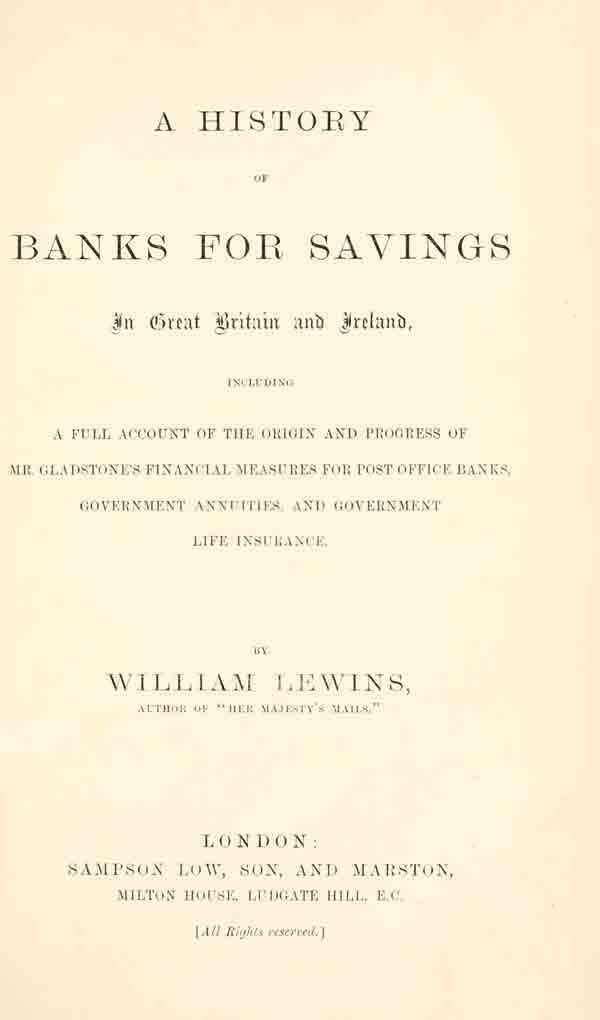 A History of Banks for Savings in Great Britain and Ireland
by William Lewins
A History of Banks for Savings in Great Britain and Ireland
by William Lewins