
Definitions in Political Economy, / Preceded by an Inquiry Into the Rules which Ought to Guide Political Economists in the Definition and Use of Their Terms; with Remarks on the Deviation from These Rules in Their Writings
Explore more books like this:
About This Book
An analytical treatise sets out practical rules for defining and applying terms in political economy, then surveys and critiques how leading economists have used key concepts. It examines competing definitions of wealth, capital, productive labour, value, utility, wages, profits, and demand, tracing ambiguities that produce disputes. The author analyzes the arguments of prominent writers, evaluates proposed measures of value — including metallic standards — and proposes a clarified terminology and measure to reduce confusion. The work concludes with a concise glossary of recommended definitions and remarks on their application.
About the Author

More Books by This Author
5 picks
 An Essay on the Principle of Population
by T. R. Malthus
An Essay on the Principle of Population
by T. R. Malthus
 An Inquiry into the Nature and Progress of Rent, and the Principles by Which It is Regulated
by T. R. Malthus
An Inquiry into the Nature and Progress of Rent, and the Principles by Which It is Regulated
by T. R. Malthus
 Observations on the Effects of the Corn Laws, and of a Rise or Fall in the Price of Corn on the Agriculture and General Wealth of the Country
by T. R. Malthus
Observations on the Effects of the Corn Laws, and of a Rise or Fall in the Price of Corn on the Agriculture and General Wealth of the Country
by T. R. Malthus
 The Grounds of an Opinion on the Policy of Restricting the Importation of Foreign Corn / Intended as an appendix to "Observations on the corn laws"
by T. R. Malthus
The Grounds of an Opinion on the Policy of Restricting the Importation of Foreign Corn / Intended as an appendix to "Observations on the corn laws"
by T. R. Malthus
 The Measure of Value Stated and Illustrated / With an Application of it to the Alterations in the Value of the English Currency since 1790
by T. R. Malthus
The Measure of Value Stated and Illustrated / With an Application of it to the Alterations in the Value of the English Currency since 1790
by T. R. Malthus
You May Also Like
6 picks
 A Brief History of Panics and Their Periodical Occurrence in the United States
by Clément Juglar
A Brief History of Panics and Their Periodical Occurrence in the United States
by Clément Juglar
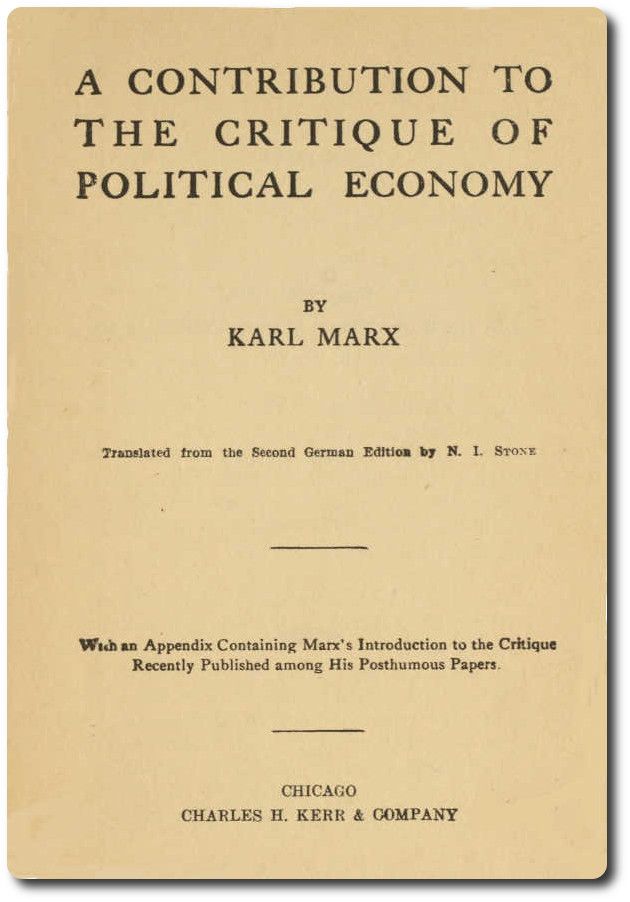 A Contribution to the Critique of Political Economy
by Karl Marx
A Contribution to the Critique of Political Economy
by Karl Marx
 A Critical Examination of Socialism
by W. H. Mallock
A Critical Examination of Socialism
by W. H. Mallock
 A Discourse on Trade, and Other Matters Relative to it
by John Cary
A Discourse on Trade, and Other Matters Relative to it
by John Cary
 A dissolução do regimen capitalista
by Teixeira Bastos
A dissolução do regimen capitalista
by Teixeira Bastos
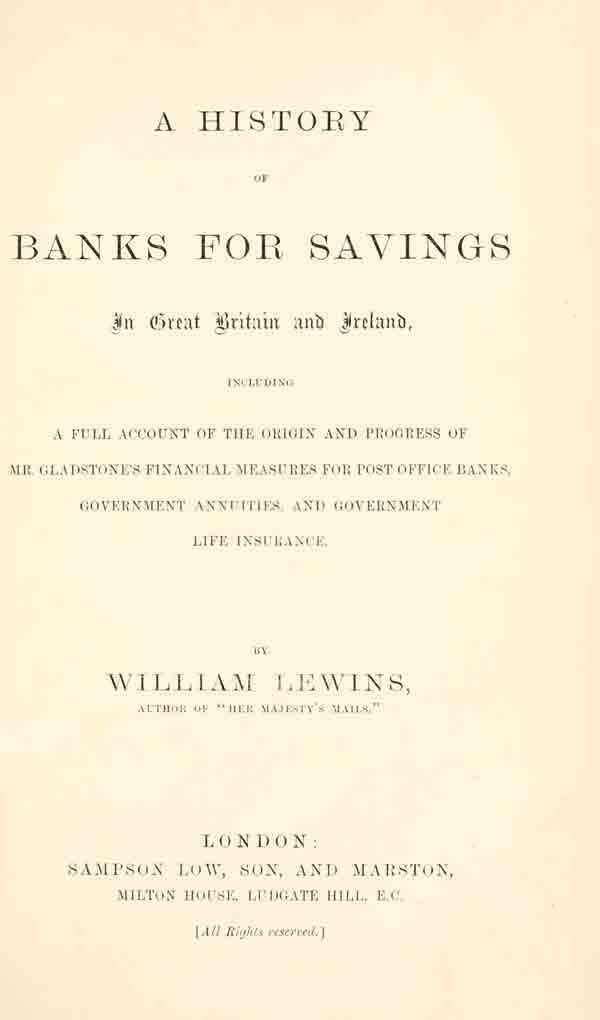 A History of Banks for Savings in Great Britain and Ireland
by William Lewins
A History of Banks for Savings in Great Britain and Ireland
by William Lewins